What total budget are you planning for the floor?
HomeAdvisor's typical polished concrete project is $4,500 within a $1,000–$8,000 range.
No votes yet. Yours will be the first. · saved on this device
Loading...
Concrete Finish Notes · Costs
Finishing an existing concrete floor costs $1 to $3 per square foot to clean and seal, $2 to $5 to grind and seal, $3 to $12 to polish and $3 to $15 to stain, based on HomeGuide, Stelr and Angi. Leveling runs $3 to $12. The slab's condition and how many services you stack set the total.
By Concrete Finish Notes editorial · Updated 2026-09-25
Owners rarely buy one concrete service. A garage might need a grind and a sealer, a living room a grind, a polish and a dye, a basement a leveling pass before anything else. This guide sets the four services side by side so you can see which scope your floor needs and roughly what it adds up to. Each service has its own cost page with line items; this page is the comparison across them.
Every range comes from a named 2025 or 2026 cost guide, and installer-published figures are labeled as such. Where publishers disagree, both figures are shown. Run your own dimensions through the cost calculator once you know which scope you are pricing.
Sealing is the cheapest finish and staining the widest range. HomeGuide puts cleaning and sealing at $1–$3 per sq ft, Stelr prices grind and seal at $2–$5 per sq ft, Angi puts polishing an existing floor at $3–$12 per sq ft, and HomeGuide's staining guide runs $3–$15 per sq ft. Leveling, which is preparation rather than a finish, costs $3–$12 per sq ft.
The comparison table in this section lists each scope with its publisher. Stelr is a contractor marketplace, so treat its figures as an installer's view. For line items within one service, go to its own page: polishing cost per square foot, staining and dyeing cost, grinding and leveling cost and sealing cost.
| Scope | Typical range | Publisher |
|---|---|---|
| Clean and seal (penetrating or acrylic) | $1–$3 per sq ft; urethane, epoxy or polyaspartic up to 3x | HomeGuide, Nov 2025 |
| Grind and seal | $2–$5 per sq ft | Stelr 2026 (contractor) |
| Polish an existing slab | $3–$12 per sq ft | Angi 2026; HomeGuide 2026 |
| Dye added during a polish | $1–$3 per sq ft on top of the polish | HomeGuide 2026 |
| Stain an existing floor | $3–$15 per sq ft; stenciled designs to $25 | HomeGuide, Feb 2026 |
| Each extra grinding pass | $3–$5 per sq ft | HomeAdvisor 2026 |
| Level a floor | $3–$12 per sq ft; self-leveling overlay $2–$5 | HomeGuide, Nov 2025 |
| Stain guard on a polished floor | $1–$3 per sq ft, renewed every 2–5 years | HomeGuide 2026 |
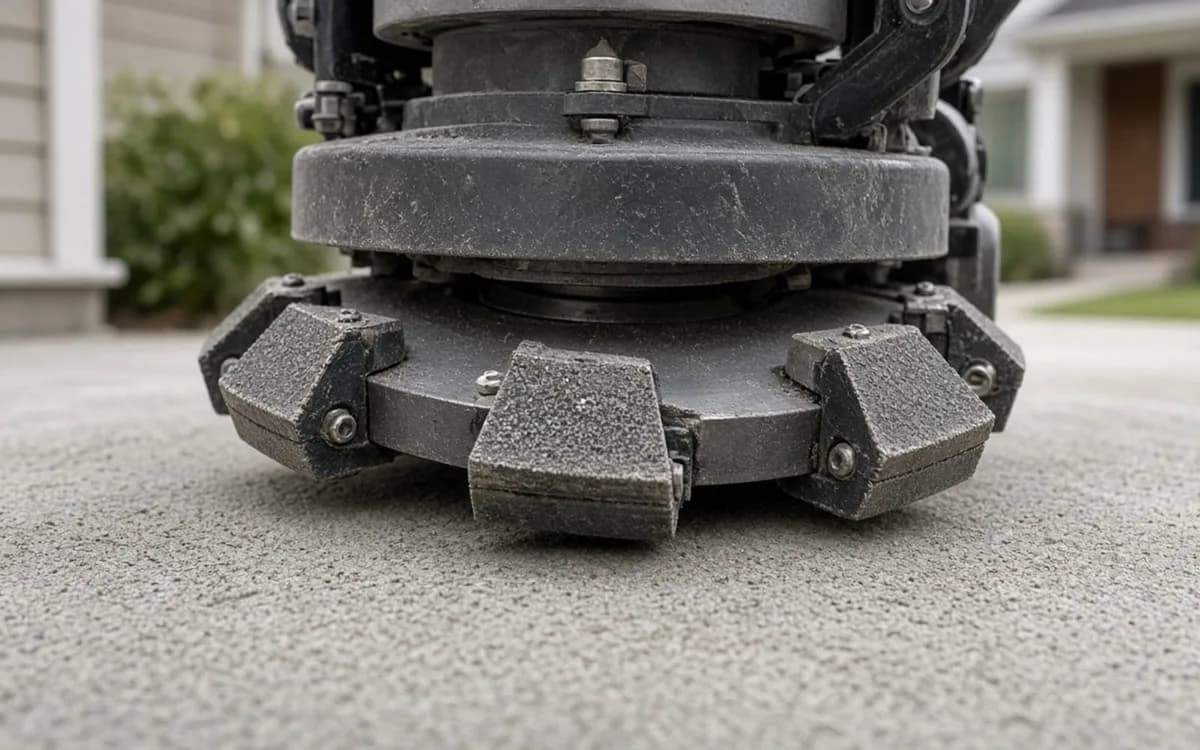
Grinding comes first in almost every scope. It removes coverings and opens the surface, and HomeAdvisor prices each extra pass at $3–$5 per sq ft. A grind-and-seal job stops after a few passes and relies on a sealer for sheen. A polish keeps grinding through finer grits, so its price already includes the preparation; dye then adds $1–$3 dye; $3–$5 stain and a guard adds $1–$3 every 2–5 yrs.
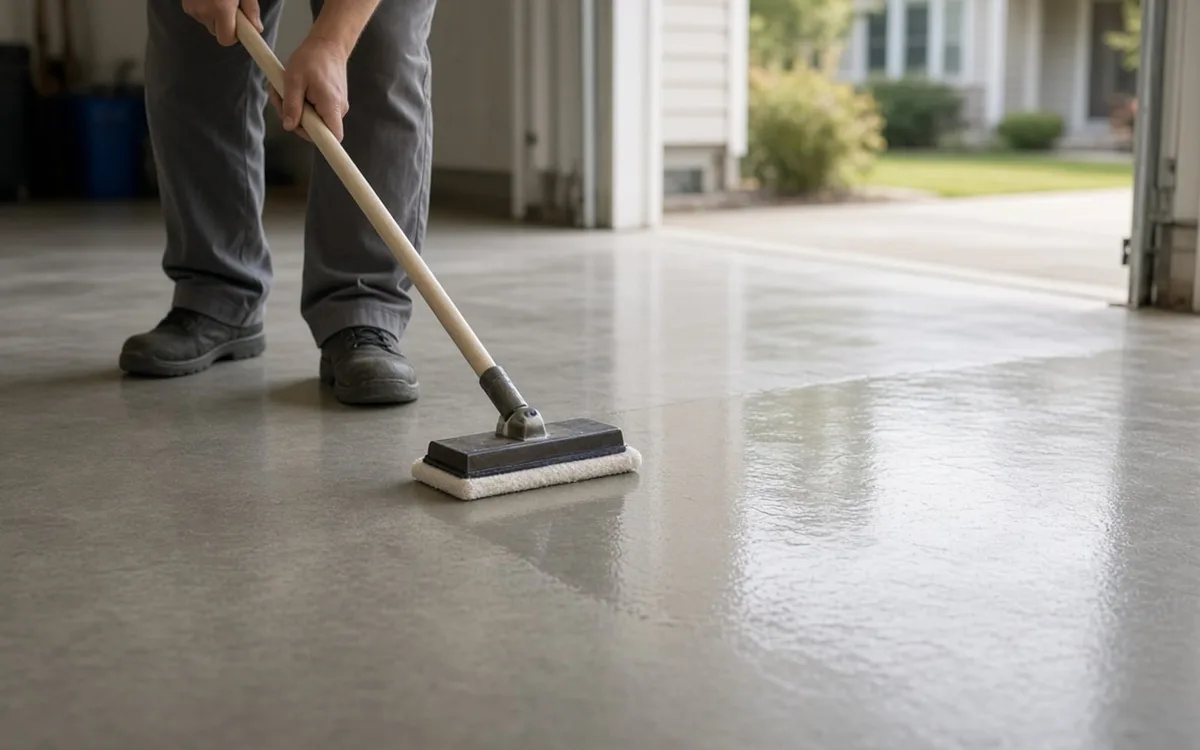
A stand-alone stained floor is prepared, colored, neutralized and sealed, so the sealer is part of its price rather than an extra. Leveling sits underneath any of them when the slab has low spots or sunken sections. The cheapest honest scope is the one that matches the slab: a sound, clean slab can go straight to seal or polish, while a floor under old tile or epoxy pays for removal before any finish. The grind-and-seal versus polish comparison covers the most common fork.
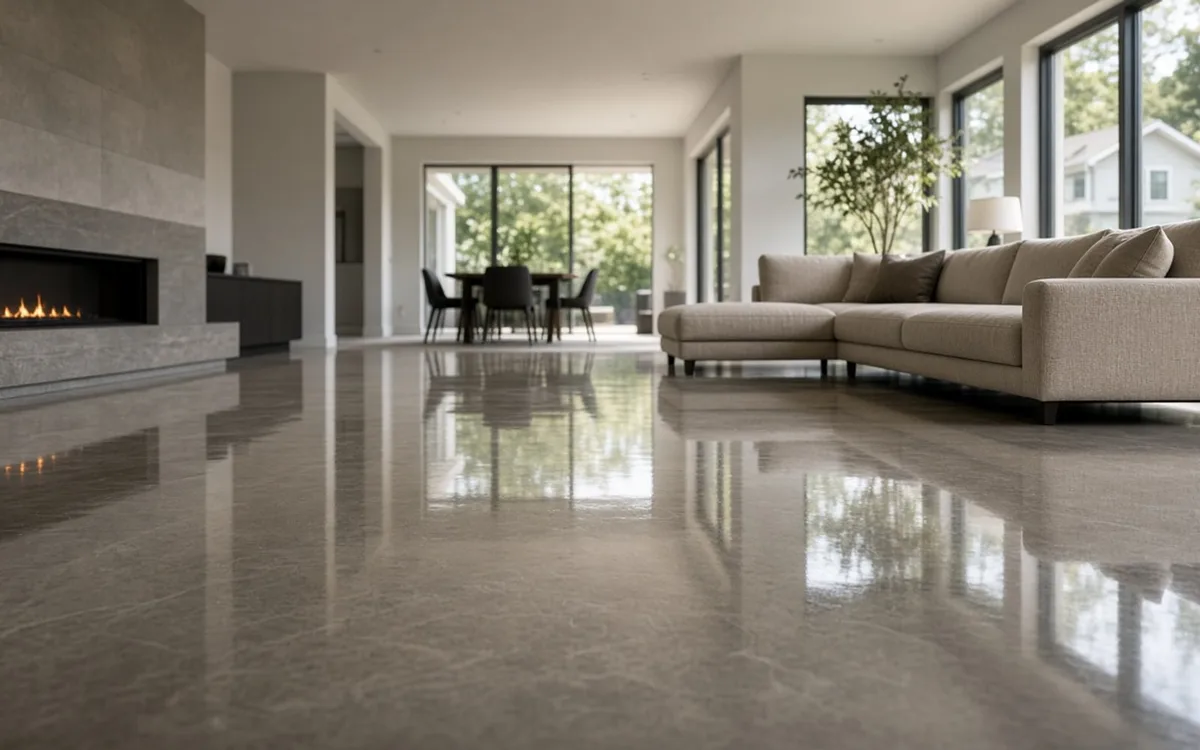
Polished concrete is usually cheaper to install than hardwood or tile when the slab is already there. This Old House's April 2026 guide sets installed costs of $3–$15 vs $6–$25 per square foot for polished concrete against hardwood, and puts tile at $15 to $20. Concrete Network makes the same point in plainer terms: a basic polish can cost half as much as hardwood, or less.
The flooring-comparison table in this section uses This Old House's installed ranges. The comparison flips when the slab needs heavy removal or leveling, or when you want a warm, soft surface underfoot. Polished concrete also wins on upkeep: Millfac's 2026 commercial data puts its maintenance at $0.18–$0.40 per sq ft/yr, and the polished versus epoxy comparison runs the ten-year numbers against a coating.
| Flooring | Installed cost per sq ft | Source |
|---|---|---|
| Polished concrete | $3–$15 | This Old House, Apr 2026 |
| Vinyl | $2–$14 | This Old House, Apr 2026 |
| Laminate | $3–$13 | This Old House, Apr 2026 |
| Hardwood | $6–$25 | This Old House, Apr 2026 |
| Tile | $15–$20 | This Old House, Apr 2026 |
Setup does not shrink with the room. A polishing crew still loads a planetary grinder, dust extractor, edge tools and a full set of diamonds whether the floor is 300 or 3,000 square feet. HomeGuide captures the effect: $8–$15+ vs $3–$6 per square foot for floors under 1,000 square feet against those over 5,000. Most houses fall on the expensive side of that line.
The other services show it as minimum charges. HomeGuide lists minimum service fees of $150 to $300 for sealing and $300 to $700 for leveling. A small room also has more edge per square foot, and edges are ground by hand. Grouping a single room with a garage, basement or second room in the same visit is the most effective way to lower the per-foot cost without changing the finish.
Polishing is almost all labor. HomeGuide reports polishing labor at $40–$100 per hour and calls it most of the project cost, while densifier covers a lot of floor per gallon; PROSOCO lists its lithium densifier at 500–1,000 sq ft/gal. Every grinding pass is operator time, which is why a higher sheen costs more.
Sealing tilts the other way. HomeGuide's sealing guide puts sealer at $30 to $80 per gallon and labor at $0.70 to $1.25 per square foot, so product choice moves the total more there than in a polish. Staining sits between: the stain itself is cheap, but each extra color adds masking and application time. When you compare two bids for the same scope, compare passes, coats and colors before comparing totals.
The hidden costs come from the slab. Removing old tile, thinset, mastic or epoxy can take several coarse passes before any finish starts. Crack and joint filling, patch repair and low-spot leveling are often priced separately, and HomeGuide adds +10% to 30% for hard-to-reach basements. HomeAdvisor's add-on figures for a finished floor are $0.85–$1.60 seal; $2–$10 stain.
Moving furniture, removing baseboards and temporary power are small items that appear late in some proposals and not at all in others. Ask for each as a unit rate so a surprise follows an agreed formula. The materials guide explains when a guard or dye earns its cost and when it can wait.
Regional variation shows up mainly through labor rates and contractor density, not materials. HomeGuide's polishing labor range puts urban and specialist contractors at the top, and metros with more commercial polishing work tend to have more crews and more competitive residential pricing. Rural areas may have fewer specialists and add travel time to a quote.
Housing stock matters too. Our analysis of the federal government's 2024 household survey shows 43% of occupied homes in the South sit on a slab against 32.4% nationally, while 58% of Midwest homes have a basement. The same survey found 53.0% of owner-occupied homes with an attached garage report a slab foundation. Slab-on-grade living areas are the classic polishing job; basements bring the access premium and more moisture questions. None of the national publishers breaks prices out by region, so treat any claimed regional multiplier with caution and compare local bids instead.
The sample-budget table in this section applies each publisher's range to typical rooms and assumes a sound slab with ordinary repairs. The grind-and-seal row multiplies Stelr's $2 to $5 by 500 square feet; the stained-basement row multiplies HomeGuide's $5–$25 per sq ft garage and basement range by 400. Two-car attached garages are 27.8% of homes by our analysis, which is why garages appear twice.
| Project | Scope and basis | Planning range |
|---|---|---|
| 360 sq ft garage | Clean and seal, acrylic or polyurethane (HomeGuide) | $360–$1,080 |
| 500 sq ft garage | Grind and seal at $2–$5 (Stelr) | $1,000–$2,500 |
| 500 sq ft garage | Satin polish at small-floor pricing plus stain guard (HomeGuide) | $4,500–$9,000 |
| 400 sq ft basement room | Stained, $5–$25 per sq ft (HomeGuide) | $2,000–$10,000 |
| 1,000 sq ft main floor | Medium gloss polish, salt-and-pepper (HomeGuide) | $7,000–$12,000 |
| 1,500 sq ft open plan | High gloss $6–$15 plus dye $1–$3 (HomeGuide) | $10,500–$27,000 |
Whatever the service, a complete bid names the square footage per area, the removal method for any existing covering, the number of grinding passes with grits, how cracks and joints are treated, the product names for densifier, dye, stain, sealer or guard, the number of coats, dust control, and the target appearance. For a polish, it should also say whether gloss or DOI readings will be taken; the Concrete Polishing Council's compliance rule calls for 3 tests per 1,000 sq ft.
Red flags include a single lump sum with no scope, a sheen described only as 'high shine', a 'polish' whose shine comes from a topical sealer, no mock-up on a patched slab, and exclusions that quietly remove repairs. When two bids differ widely, lay them side by side and look for the missing step rather than the cheaper contractor.
Homeowner polls
HomeAdvisor's typical polished concrete project is $4,500 within a $1,000–$8,000 range.
No votes yet. Yours will be the first. · saved on this device
No votes yet. Yours will be the first. · saved on this device
CPC defines the levels by Distinctness of Image; HomeGuide prices matte at $3–$6 and high gloss at $6–$15 per sq ft.
No votes yet. Yours will be the first. · saved on this device
Cleaning and sealing a sound slab is the cheapest, at $1 to $3 per square foot in HomeGuide's guide. Grind and seal costs a little more and removes stains and old coatings first. Both need recoating over time, so a polish that costs more once can be cheaper over ten years on a floor you will keep uncovered.
Usually because they describe different floors. One may assume a satin cream polish while the other prices high gloss with aggregate exposure, or one includes adhesive removal while the other excludes it. Compare passes, grits, repairs and final appearance before totals. If both describe the same scope, the gap is labor rate and overhead, and the lower bid deserves questions about its sequence.
Usually at install, and more clearly over time, because the slab is already paid for and upkeep is light. This Old House puts polished concrete well below tile and at the low end of hardwood. A slab that needs heavy removal and repair can cost more than a mid-range floating floor, so price the preparation before deciding.
Drop the sheen by one level before anything else, since every extra pass is mostly labor. Next, choose cream or salt-and-pepper instead of full aggregate, or grind and seal the utility areas while polishing the main room. Keep the mock-up, crack treatment and densifier. Color can often be added later on a dye-ready floor, but a skipped repair is much harder to fix once the floor is finished.
A modest deposit tied to scheduling, with the balance due after the floor matches the approved mock-up, is a sensible structure. Large up-front payments before any work, or full payment before final readings are taken, shift risk to you. Put the payment trigger in writing and connect it to measurable outcomes such as the agreed appearance level.
Very little day to day on a polished floor: a dust mop, a microfiber pad and a pH-neutral cleaner. The main recurring cost is a stain guard, which HomeGuide says is reapplied every two to five years and This Old House puts at every three to five. Sealed and stained floors cost more to keep, because the sealer itself wears and needs recoating in traffic paths.
Partly. Homewyse describes a specific polishing scope with crack repair, three grinding passes, densification and two polishing passes under favorable site conditions, so it sits in the middle of the wider ranges rather than the low end. It is useful as a reference for what a complete mid-level scope costs rather than as a floor or ceiling.
There is no published resale study for residential polished or stained concrete, so treat any claimed return with caution. What you can say is that the floor is permanent, easy to refresh and can be covered by a future owner who prefers something else. Its value is mostly in lifespan and low upkeep during your ownership.
 Service guideConcrete Polishing
Concrete polishing grinds an existing slab with progressively finer diamond abrasives, hardens it with a densifier and refines it to a specified sheen and aggregate exposure.
 Service guideConcrete Staining & Dyeing
Staining and dyeing add color to a concrete slab by penetrating the surface rather than covering it, so the aggregate, patches and variation remain part of the look.
 Service guideConcrete Grinding & Leveling
Grinding uses coarse diamond tooling to remove coatings, adhesives, lips and high spots and to open a surface profile for whatever finish follows.
 Service guideConcrete Sealing & Protection
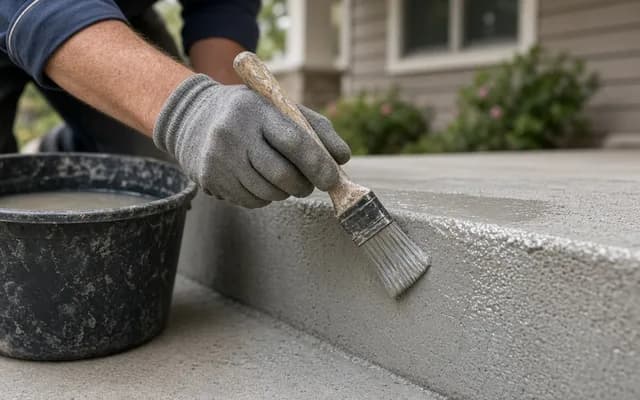
Sealing and protection treatments defend a concrete floor against stains, moisture and wear, and they range from penetrating silicates and siloxanes that leave the look unchanged to film-forming acrylics, urethanes and epoxies that add gloss and a wear layer.
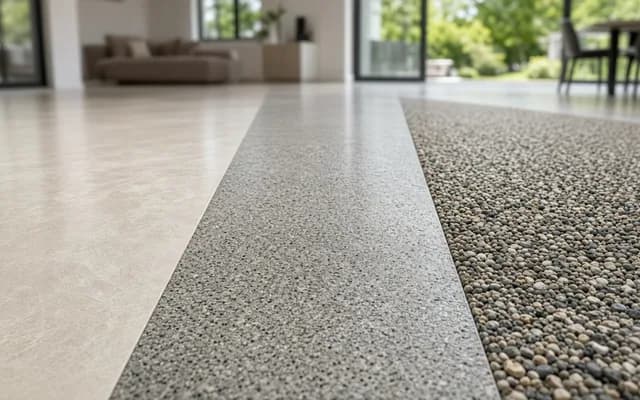 PlanningHow to plan a polished concrete floor, starting with the slab you have
Plan a polished concrete floor in this order: uncover and test a small patch of slab, decide what you will accept in patches and cracks, choose a CPC appearance level and aggregate exposure class, ask for a mock-up on your own floor, then write a one-page brief so every contractor prices the same job.
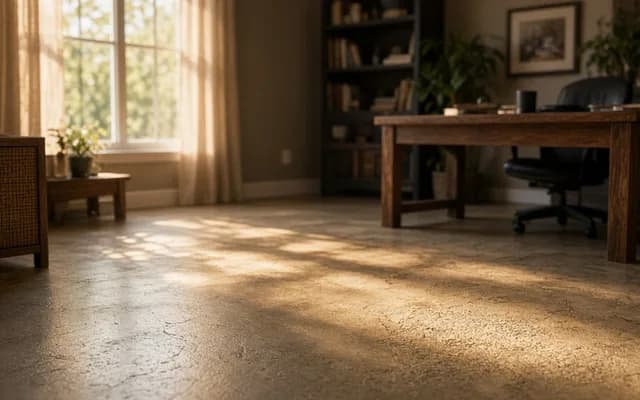 MaterialsConcrete floor finishes and materials: what each product actually does
A concrete floor's finish is built from a short list of materials: diamond tooling that cuts and refines the surface, a silicate densifier that hardens it, optional dye or acid stain for color, a penetrating guard or film-forming sealer for stain protection, and patching or overlay compounds for repairs.
 PermitsPermits, codes and rules for polishing and finishing a concrete floor
Polishing, staining or sealing an existing interior slab is finish work that most jurisdictions do not permit, but rules vary locally.
 Free toolPolished concrete cost calculator: a planning range for your square footage
Size, material tier and complexity in, a realistic budget range out.
 Free toolConcrete floor options compared on the numbers
Side-by-side tables for the decisions that change the price most.
 Free toolConcrete finish quiz: can you read a polishing proposal?
9 questions that show what you already know and what to check next.
 Free toolPolls: what other homeowners planning concrete floors decided
See what other planners chose and add your vote.
Tell us the size, the condition of what is there now, and what you want to change. Concrete Finish Notes passes your request to independent local professionals, who reply with written, no-obligation estimates. The service is free to use.