Are you adding color to the floor?
HomeGuide prices dye at $1–$3 per sq ft and single-color stain at $3–$5.
No votes yet. Yours will be the first. · saved on this device
Loading...
Concrete Finish Notes · Service guide
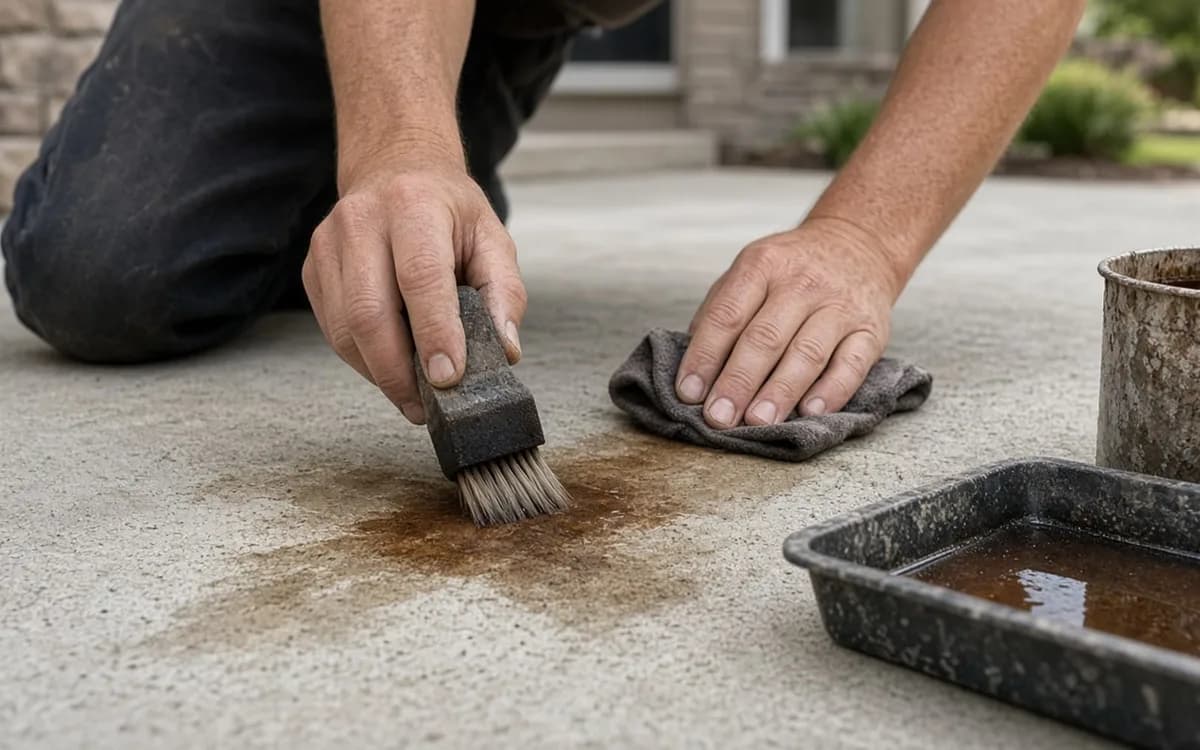
Staining and dyeing add color to a concrete slab by penetrating the surface rather than covering it, so the aggregate, patches and variation remain part of the look. HomeGuide prices stained floors at $3 to $15 per square foot and dye on a polished floor at $1 to $3. They suit owners who want color with the character of concrete and who will approve a sample on their own slab.
Color on concrete is a different proposition from paint. Acid stains react with minerals in the slab and produce mottled, translucent earth tones that no two slabs share. Dyes and water-based stains offer a wider palette and more predictability but still depend on how the concrete absorbs. In every case, the slab is a participant in the color, which is why a sample on your floor is the first and most important step.
The costs are modest relative to the finish beneath. HomeGuide's dye add-on for a polished floor is $1–$3 dye; $3–$5 stain, and its full staining guide runs $3–$15 per sq ft depending on the number of colors and the complexity of the design. What you are paying for is skill and sequence: color applied at the wrong grit stage grinds away or fails to penetrate.
This page explains the product types, what each costs, how the work is sequenced with grinding and polishing, what goes wrong and how to compare proposals. Read it with the polishing page if the color will be part of a polished floor.
Want the numbers only? Read the concrete staining & dyeing cost guide for 2026 ranges, what moves the price, and sample budgets.
| Item | Low | High | Unit | Notes |
|---|---|---|---|---|
| Dye added to a polished floor | $1 | $3 | per sq ft | HomeGuide 2026 |
| Single-color stain and seal | $3 | $5 | per sq ft | HomeGuide 2026 |
| Two-color stain | $5 | $10 | per sq ft | HomeGuide 2026 |
| Multi-color pattern | $10 | $15 | per sq ft | HomeGuide 2026 |
| Stenciled or scored high-end design | $15 | $25 | per sq ft | HomeGuide 2026; acid stain up to $25 |
| Logo or custom graphic | $300 | $2,000 | flat | HomeGuide; more for complex art |
| Stained 2-car garage floor | $2,000 | $14,400 | flat | HomeGuide; intermediate to upgraded levels |
Coloring suits an owner who wants warmth or a specific tone on an exposed slab and enjoys variation. Living rooms, basements, studios, restaurants and retail floors are common. It is also a way to unify a slab with visible patches, because a mid-tone dye reduces the contrast between old and new concrete without hiding it. HomeGuide prices staining an existing concrete floor at $3–$15 per sq ft, and a dyed slab sits between bare concrete and a new covering: a color change that costs less than new flooring.
It does not suit an owner who expects an even color across the floor, or a slab that has been sealed, coated or contaminated so that absorption is blocked. Old adhesive residue, curing compounds and previous sealers leave ghosted areas that take color differently or not at all. Grinding removes most of them, but a sample confirms. A floor that must be one uniform color is a job for a pigmented overlay or a coating, not a stain.
Acid stains are solutions of metallic salts in a mild acid that react with the calcium hydroxide in concrete. The palette is earth tones, tans, browns, terracottas and blue-greens, and the result is mottled and translucent because the reaction varies with the slab's chemistry. They must be neutralized and rinsed, and they do not work on concrete with little free lime, such as heavily densified or very old surfaces. HomeGuide notes acid stain can reach $25 per square foot for high-end designs.
Water-based stains and dyes penetrate with color rather than reacting. Dyes are very fine pigments in solvent or water that go deep and fast, with a wide palette including blues, reds and blacks, and they are the standard for color inside a polishing sequence because they are applied at a mid grit and polished over. Water-based stains sit closer to the surface and are used on floors that will be sealed rather than polished. UV stability varies; some dyes fade in sunlit rooms, so ask for a UV-stable product near windows.
Sequence matters. On a polished floor, dye is typically applied after the 200 to 400 grit stage, then densified and polished through to the final level, which locks the color under the refined surface. On a sealed floor, stain goes on after grinding and cleaning and is protected by a sealer. The stain versus dye comparison sets the two approaches side by side on cost, palette and durability.
| Product | Palette | Behavior | Best with |
|---|---|---|---|
| Acid stain | Earth tones, mottled | Reacts with slab minerals; variable | Sealed floors; rustic looks |
| Dye | Wide, including blues and blacks | Penetrates deep; predictable | Polished floors |
| Water-based stain | Wide, more opaque | Sits near surface | Sealed floors; patterns |
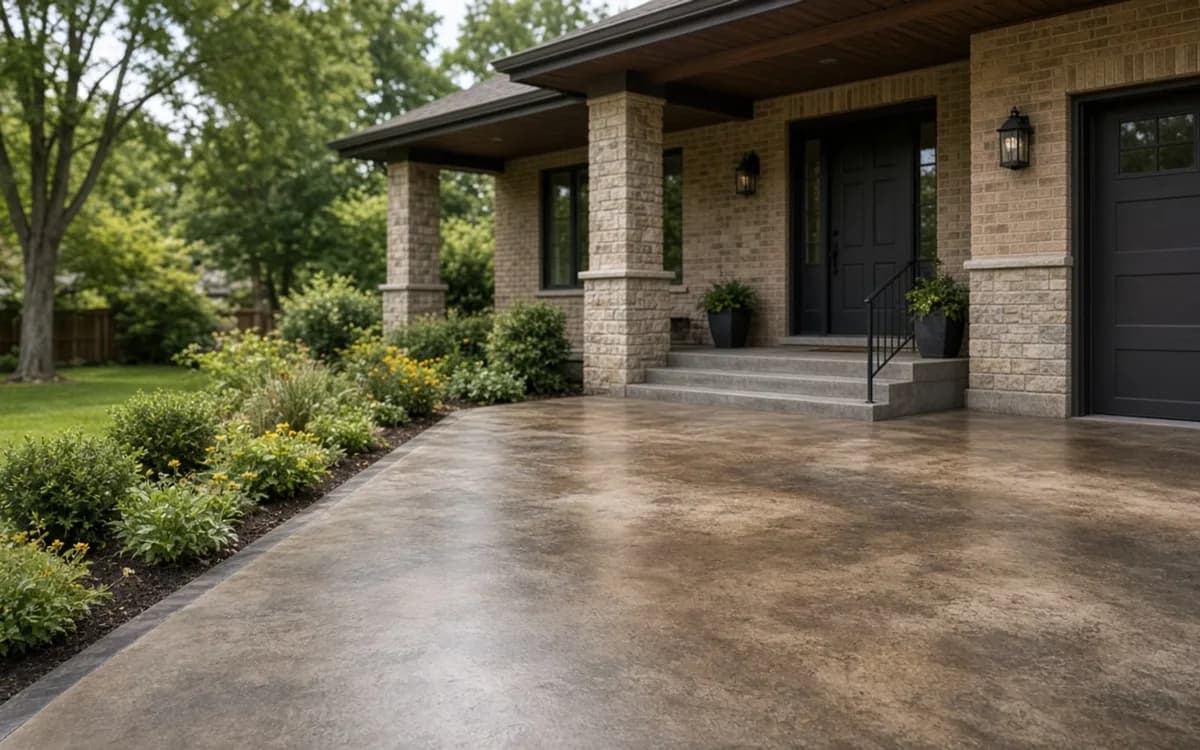
HomeGuide's February 2026 staining guide prices basic single-color stain and seal at $3 to $5 per square foot, two colors at $5 to $10, multi-color patterns at $10 to $15, and stenciled or scored designs at $15 to $25. Its polished concrete guide prices dye at $1 to $3 per square foot as an add-on and single-color stain at $3 to $5, with logos or custom graphics at $300 to $2,000 or more. HomeAdvisor's add-on range for staining is $0.85–$1.60 seal; $2–$10 stain.
Garages and basements run higher because of removal and condition, and there are plenty of them: our analysis of the federal government's 2024 household survey found 41.1% of basement homes report an unfinished basement and 27.8% of all homes have a two-car attached garage, both bare slabs waiting for a finish. HomeGuide's project figures are $5–$25 per sq ft, with an average 800-to-1,200-square-foot basement at $4,000 to $30,000 at the upgraded end. The drivers are the same as polishing: removal of coverings, repairs, the number of colors, and the finish on top, whether a polish sequence or a sealer.
Angi's July 2026 flooring guide shows the same climb, from $2–$6/square foot for simple designs to $5–$8/square foot for moderate and $8–$15/square foot for advanced. The cheap version is a single dye color inside a polish you were already buying; the expensive version is a scored, multi-color, sealed design on a slab that needed heavy prep. Use the calculator for the polish and add the dye line, or ask the pro for staining as a separate scope with its own sealer if the floor will not be polished.
The pro grinds or cleans the slab to open it, repairs cracks, and then applies color to a sample area in the room's light, ideally including a patch or a problem spot. Acid stains need hours to react and must be neutralized and rinsed before the color is judged; dyes read almost immediately. You approve the sample, and the pro records the product, dilution and application method so the full floor matches. Then the full floor is colored, and the polish sequence continues or the sealer goes on.
Timing follows the finish. Inside a polish, color adds a day at most to HomeGuide's 2–4 days for residential work. On a sealed floor, the sealer's drying and recoat times govern; solvent-based sealers may need the room ventilated overnight. There is no long cure in either case, and the floor is usable when the sealer or guard is dry.
Variation is the point and the risk. Dyes applied by sprayer can show overlap lines; acid stains can pool in low spots and read darker. Experienced applicators work in small sections and feather edges. Ask how the pro handles overlaps and whether a second, lighter application is included to even the tone. And ask about UV: a dyed floor in a south-facing room may need a UV-stable dye or a guard with UV inhibitors.
Ghosting is the classic failure: areas where old adhesive, sealer or contamination blocked absorption show as pale shapes. Grinding removes most contamination, but deep oil or curing compound can persist. A sample in the suspect area tells you. Uneven color at patches is not a failure but a fact; new concrete in a patch absorbs differently from the original pour and will always read differently. A mid-tone reduces the contrast.
Fading comes from UV on non-UV-stable dyes and from wear on stains that sit near the surface without adequate protection. Blotching from acid stain comes from uneven application or from a slab with variable lime content. Color grinding away comes from applying dye at too fine a grit in a polish sequence, so the subsequent passes cut through it. Each has a prevention: product choice, sample, application method and sequence, all of which belong in the proposal.
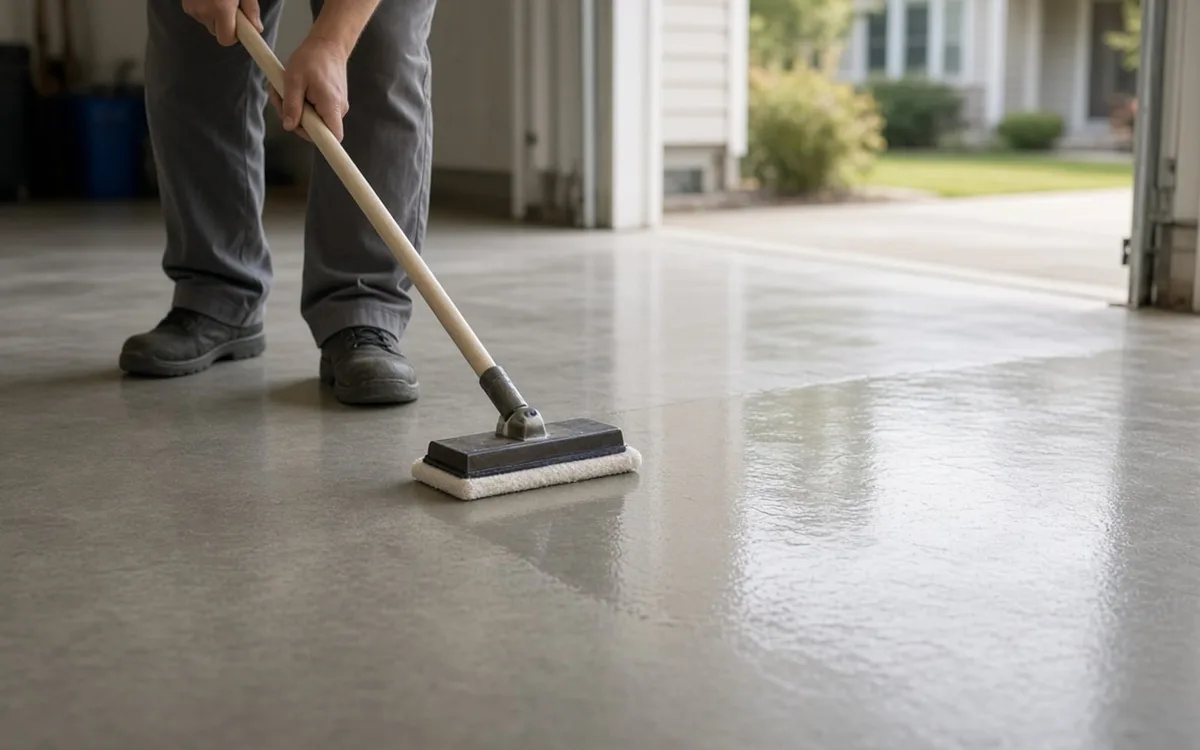
A dyed polished floor is maintained like any polished floor: dust mop, neutral cleaner, mats at doors, and a penetrating guard where spills happen. A stained-and-sealed floor depends on the sealer; film-forming acrylics need reapplication every one to three years and show wear paths, while polyurethanes and epoxies last longer but change the look. HomeGuide prices cleaning and sealing at $1–$3 per sq ft and notes penetrating silicate or siloxane sealers keep a natural look.
Protect the color from grit and sun. Felt pads under furniture, rugs in traffic lanes and window film or a UV-inhibiting guard in sunny rooms extend the finish. If the floor dulls, a polished floor is repolished; a sealed floor is cleaned and resealed. If the color itself wears, a dyed polished floor can often be re-dyed in the worn area and repolished, which is one argument for putting the color inside a polish rather than on top of a seal. The protection page covers sealer choices.
Line up the product first: acid stain, dye or water-based stain, with brand and color, and whether it is UV-stable. Then the sequence: at what stage color is applied and what finish follows. Then the sample terms: where, how large, and whether the full scope is conditional on approval. Then the protection: guard, penetrating sealer or film sealer, and its reapplication interval. Finally the price per square foot for each color and for any pattern, scoring or stencil work.
Ask to see two finished colored floors, preferably one a year or more old in a sunny room, and look at fading and wear paths. Ask the pro how they handled a slab with ghosting. Then use the finish quiz if you are still deciding between color inside a polish and color under a sealer, and request estimates with photos of the areas you think may take color unevenly.
Homeowner polls
HomeGuide prices dye at $1–$3 per sq ft and single-color stain at $3–$5.
No votes yet. Yours will be the first. · saved on this device
No votes yet. Yours will be the first. · saved on this device
The CPC exposure chart recommends a mock-up on the actual slab.
No votes yet. Yours will be the first. · saved on this device
 Service guideConcrete Polishing
Concrete polishing grinds an existing slab with progressively finer diamond abrasives, hardens it with a densifier and refines it to a specified sheen and aggregate exposure.
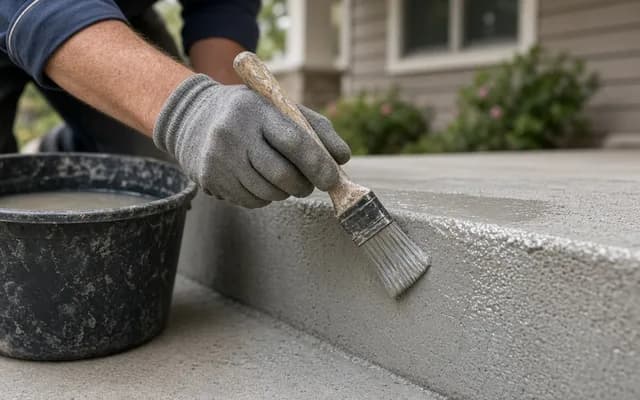 Service guideConcrete Sealing & Protection
Sealing and protection treatments defend a concrete floor against stains, moisture and wear, and they range from penetrating silicates and siloxanes that leave the look unchanged to film-forming acrylics, urethanes and epoxies that add gloss and a wear layer.
 Service guideConcrete Grinding & Leveling
Grinding uses coarse diamond tooling to remove coatings, adhesives, lips and high spots and to open a surface profile for whatever finish follows.
No. Stains and dyes are translucent and follow the slab's absorption, so patches, troweling marks and aggregate show through. An even, opaque color requires a pigmented overlay or a coating. If you want concrete's character with a shift in tone, stain or dye; if you want a paint-like uniform color, choose a different service.
Acid stain becomes part of the concrete chemically and does not fade from UV, but it needs a sealer that wears. Dyes inside a polished floor are protected by the refined surface and last as long as the polish, but some dyes fade in direct sun. On a sunny sealed floor, acid stain is durable; on a polished floor, a UV-stable dye is the standard choice.
Only after the sealer is fully removed by grinding, because color cannot penetrate a film. Even then, residue in the pores may block absorption in places. A sample after grinding tells you whether the slab will take color evenly. Budget for removal as its own line and expect some ghosting risk.
As many as the design calls for, at rising cost: HomeGuide prices two colors at $5 to $10 per square foot and multi-color patterns at $10 to $15. Scored lines separate colors cleanly; without scoring, colors blend at the edges. Complex designs need a skilled applicator and a detailed sample.
Rarely exactly. Charts are printed on paper or shown on a reference slab; your concrete's color, porosity and age shift the result. Dyes come closer than acid stains. The sample on your floor is the only reliable preview, and it should be viewed dry and in the room's light before approval.
It does not. Filled cracks take color differently from the surrounding slab and remain visible as lines. Some owners accept them as part of the look, and a darker tone reduces contrast. Decorative scoring can sometimes incorporate an existing crack into a pattern. Ask the pro how each crack will read after color.
During. In a polish sequence, dye is typically applied after an intermediate grit, around 200 to 400, then densified and polished through the remaining passes so the color sits under the refined surface. Applying it at the end leaves it on top where it wears; applying it too early lets subsequent passes cut it away. The proposal should state the stage.
Yes, with the right protection. A stained garage floor needs a durable sealer or, better, a polish with a stain guard, because tires and oil are hard on surface color. HomeGuide prices stained garage floors at $5 to $25 per square foot depending on service level. Test the sample in the oiliest spot to see how it takes color.
 Free toolPolished concrete cost calculator: a planning range for your square footage
Size, material tier and complexity in, a realistic budget range out.
 Free toolConcrete floor options compared on the numbers
Side-by-side tables for the decisions that change the price most.
 Free toolConcrete finish quiz: can you read a polishing proposal?
9 questions that show what you already know and what to check next.
 Free toolPolls: what other homeowners planning concrete floors decided
See what other planners chose and add your vote.
Tell us the size, the condition of what is there now, and what you want to change. Concrete Finish Notes passes your request to independent local professionals, who reply with written, no-obligation estimates. The service is free to use.