Which alternative to a concrete finish did you seriously consider?
No votes yet. Yours will be the first. · saved on this device
Loading...
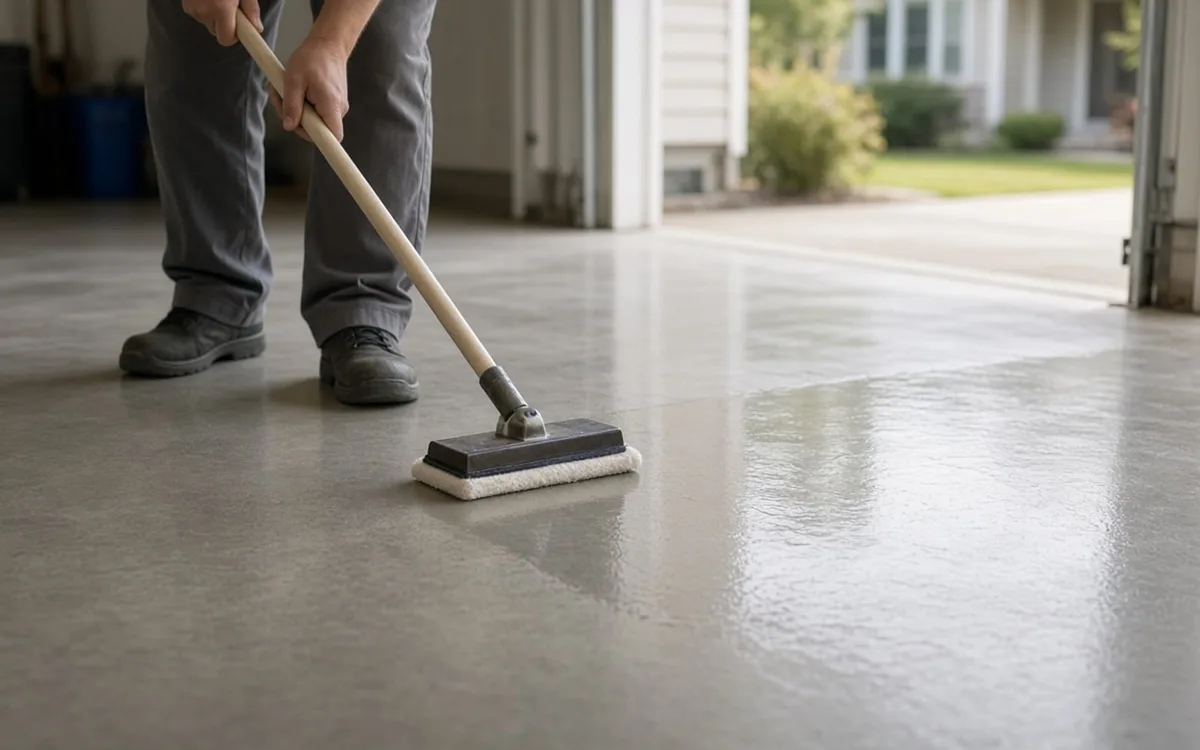
Concrete Finish Notes · Polished concrete vs Epoxy coating
Choose polished concrete when the slab is sound, reasonably clean and you are happy to see its character; it lasts decades and needs little upkeep. Choose epoxy when the slab is stained, heavily patched or exposed to chemicals and you want a uniform color. Both land in similar per-square-foot ranges up front, but epoxy needs recoating and polish does not.
Polished concrete and epoxy are often priced side by side because the same slab could take either. They are opposite ideas. Polishing refines the concrete into the finished surface, so the floor is only as attractive as the slab beneath. Epoxy covers the slab with a film that hides it, and the floor is only as durable as the bond between film and concrete. Most decisions come down to which risk you would rather manage.
This page looks past the summary table to how each finish behaves over time, in different climates and rooms, and when you sell. It also covers the mistakes that make either finish fail and how to compare bids that often use different vocabulary. Where a number appears, the publisher is named beside it.
Polishing refines the slab itself into a hard, low-maintenance surface that shows the concrete's character; epoxy covers the slab with a film that hides it, resists chemicals and eventually peels or must be recoated. The choice is usually decided by the slab's condition and the room's exposure to oil and moisture.
| Factor | Polished concrete | Epoxy coating |
|---|---|---|
| Upfront cost | $3–$12 per sq ft (Angi 2026); $4,500 typical project (HomeAdvisor) | $3–$12 per sq ft typical for residential garage systems; flake and polyaspartic higher |
| Lifespan | 20+ years, repolishable (HomeAdvisor) | 5–10 years before recoat or replacement; peels where moisture or prep fails |
| Maintenance | $0.18–$0.40 per sq ft/yr commercial (Millfac 2026); dust mop and neutral cleaner at home | Sweep and wash; recoat when worn; strip by grinding at end of life |
| Appearance | Slab's aggregate, patches and cracks visible; CPC Level 1–4 sheen | Uniform color or flake; hides the slab entirely |
| Moisture and climate fit | Tolerates vapor from below; no film to blush | Fails over damp slabs without a vapor barrier; needs moisture test and profile |
| Install time | 2–4 days residential (HomeGuide); walkable same day | 2–3 days plus 16–24 hours before foot traffic and days before vehicles |
| Resale signal | Permanent, easily refreshed; next owner can cover it | Must be ground off to change; worn epoxy reads as deferred maintenance |
| Best for | Sound, dry slabs in living areas, basements and clean garages | Oil-saturated or ugly slabs, heavy chemical exposure, owners wanting a uniform color |
Polished wins on a sound, dry slab that the owner is willing to see. It costs about the same to install, lasts far longer, never peels, and Millfac's $0.18–$0.40 per sq ft/yr against a strip-and-wax program shows why facility managers have moved to it; at home the difference is a dust mop versus a recoat every several years. A stain guard covers the oil question in most garages.
Epoxy wins when the slab is a liability: oil soaked deep into the concrete, heavy patching, a color the owner cannot live with, or a workshop with solvent spills. It hides all of that under a uniform film. It loses over damp slabs and on surfaces ground to the wrong profile, and it is the finish most often removed by the grinding contractors who then polish what was underneath.
A slab-on-grade living area with no oil history, a basement with occasional dampness, and a clean garage that sees cars but no fluid leaks are classic polishing candidates. The slab shows its character, the densified surface handles traffic, and there is no film to blister if vapor rises from below. Polished concrete also suits owners who like minimal maintenance and do not mind variation. The same slab under epoxy would lose all of that character, which is the point for some owners and a waste for others.
Epoxy suits a garage with decades of oil soaked into it, a workshop where solvents and chemicals spill, or a slab so heavily patched that polishing would reveal a patchwork. It also suits owners who want a specific color, a flake finish or a uniform look that no existing slab could provide. If you cannot stand the idea of seeing old tack-strip holes, you probably want a coating. It is also the faster route to a finished look when the slab's history is something you would rather not see again.
Up front they overlap. Angi prices polishing an existing floor at $3–$12 per sq ft, and typical residential epoxy systems fall in a similar band, with flake and polyaspartic systems higher. The difference appears later. A polished floor is cleaned, occasionally burnished and has a guard reapplied; HomeGuide gives $1–$3 every 2–5 yrs for that guard. An epoxy floor is cleaned the same way but eventually needs recoating, and at end of life it is ground off.
Commercial data shows the scale of the maintenance gap. Millfac reports polished concrete maintenance at $0.18–$0.40 per sq ft/yr in facilities, and Build and Construct's analysis puts polished floors at $1 vs $2 per sq ft/yr compared with vinyl tile. Film sealers recur too: HomeGuide puts cleaning and sealing at $1–$3 per sq ft, with epoxy or polyaspartic sealers up to three times more. There is no equivalent residential study for epoxy, but the recoat cycle means a ten-year epoxy budget should include at least one significant refresh on a busy floor.
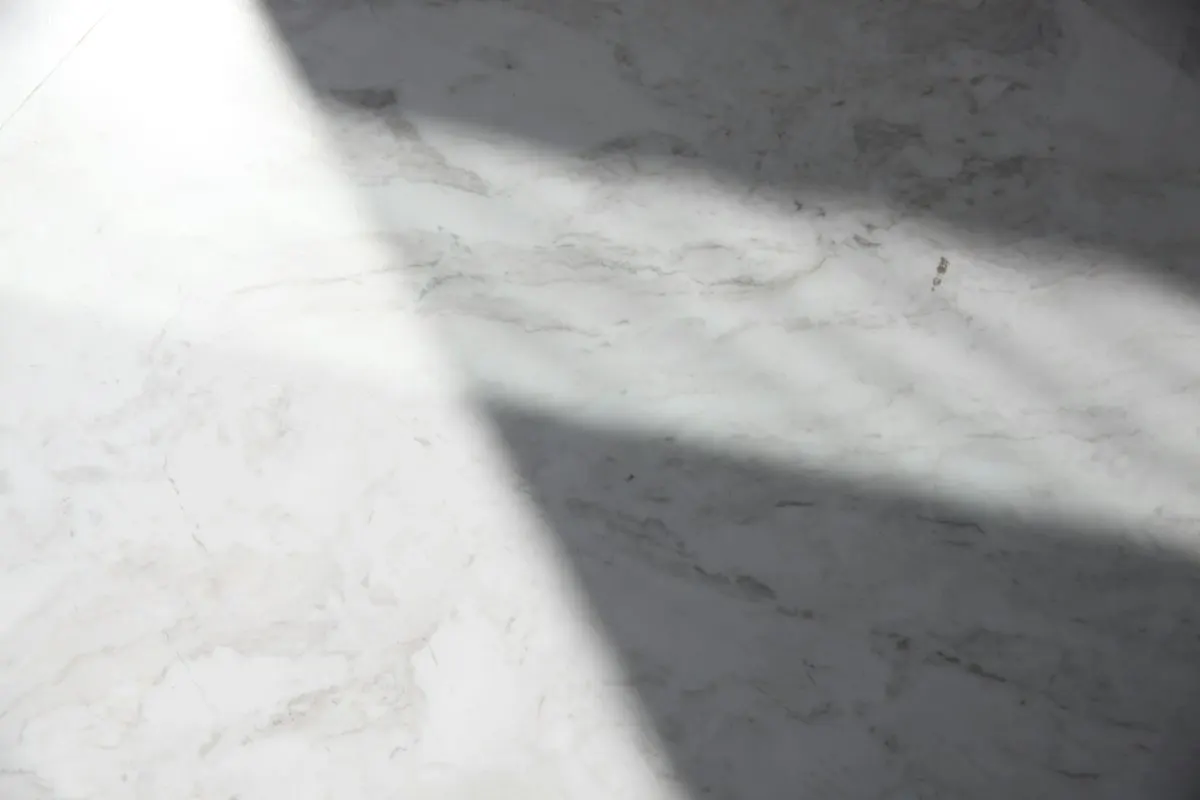
Moisture is the main reason epoxy fails. Vapor rising through a slab without an effective barrier pushes against the film and causes blisters, bubbles and delamination. That makes basements and older slabs in humid regions riskier for coatings unless moisture testing and a vapor-tolerant primer are part of the system. Polishing has no film, so the same vapor passes through without harm to the finish. A moisture test before bidding settles the question and costs little compared with a failed coating.
Cold climates add freeze-thaw and road salt in garages. Salt brine attacks both finishes differently: it can etch and stain a polished floor that lacks a guard, and it can creep under damaged epoxy at chips and edges. In hot, sunny garages, some epoxies yellow under UV. Across climates, the protection service a finish receives matters as much as the finish itself.
No published study measures the resale effect of either finish on a house, so treat claims about return with skepticism. What you can compare is the condition each finish tends to be in when the house is listed. A polished floor ages slowly and can be refreshed with a clean and burnish before photos. A worn or peeling epoxy floor reads as deferred maintenance and may prompt a buyer to budget for removal.
Flexibility matters too. A future owner who dislikes polished concrete can cover it with almost any flooring. An owner who dislikes epoxy has to grind it off first, which costs $3–$5 per sq ft per pass according to HomeAdvisor, before deciding what comes next. That makes polish the more neutral choice for a floor in a house you might sell. It also leaves every option open for the next owner.
Polished floors disappoint when owners skip the mock-up and discover patches, cracks and oil ghosts after the fact, or when a contractor promises a gloss the slab cannot reach. They also disappoint when a high-gloss finish becomes slippery at a wet entry. Most of these problems are avoidable with a test area in the worst part of the floor and a sheen that suits the room. The planning guide explains where to place that test area.
Epoxy floors disappoint when surface preparation is skipped or done by acid etching instead of grinding to the correct profile, when moisture is not tested, or when a thin consumer product is sold as a professional system. ICRI's CSP 1–10 exists so that coating manufacturers and installers agree on the surface texture needed; ask which profile the epoxy system specifies and how it will be achieved.
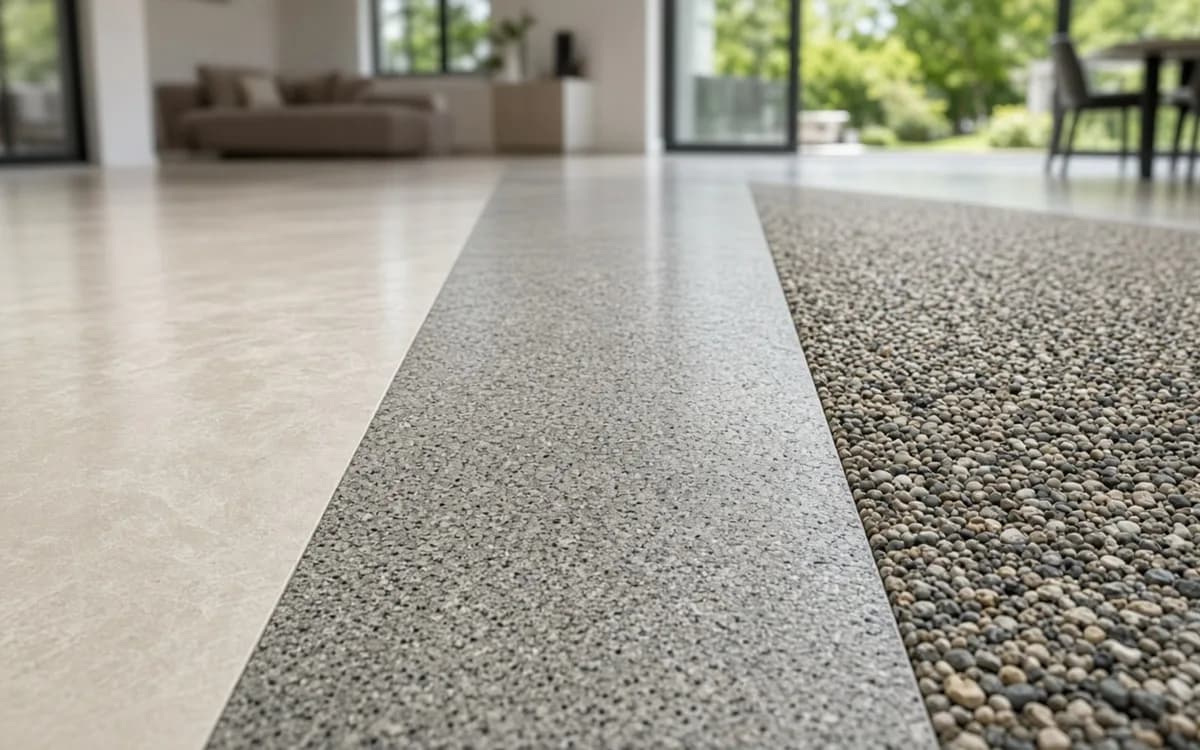
Take a common case: a two-car attached garage, which our analysis of the federal government's 2024 household survey finds in 27.8% of occupied homes. Across all sizes, 42.9% of homes have an attached garage, and 53.0% of owner-occupied attached-garage homes also report a slab foundation. Polished, the slab is ground, densified, honed to a satin level and guarded. Over ten years it is swept, washed now and then, and has its guard renewed a few times. Oil drips that land between renewals may leave marks, and the apron may need a slip-resistant guard. The floor never peels, and a refresh before selling is a clean and burnish.
Coated with epoxy, the same slab is ground to a profile, primed and coated, and it looks uniform and bright for several years. Hot-tire pickup, chips from dropped tools and wear in the parking lanes appear over time, especially with thinner systems. At some point the owner recoats or removes it, and if the slab was damp, failure can come much sooner. The grind-and-seal comparison covers a cheaper middle path.
Neither story is better for every household. The polished garage costs less to keep; the coated garage hides a bad slab. Pricing the polished option against the polishing cost page and setting it beside a written coating quote turns the trade-off into numbers you can compare line by line. Ask both contractors what the floor will need in year five.
Translate both into outcomes. For polishing, the bid should state passes and grits, densifier, crack treatment, CPC appearance level and whether readings will be taken. For epoxy, it should state surface profile, moisture test method and result, primer, number and thickness of coats, topcoat type and cure times before foot and vehicle traffic. Put the two lists side by side and check that each covers repairs, joints and edges.
Then compare lifespan and upkeep in the same terms. Ask each contractor what the floor will need in years three, five and ten, and what that is likely to cost. Use the calculator to check the polishing side against published ranges. If you are still unsure, the finish quiz and a mock-up of each option on your slab will usually settle it.
Homeowner polls
No votes yet. Yours will be the first. · saved on this device
No votes yet. Yours will be the first. · saved on this device
No votes yet. Yours will be the first. · saved on this device
Yes, but the epoxy must be ground off completely first, which HomeAdvisor's per-pass rate of $3 to $5 per square foot makes a real cost, and thick systems take several passes. The reverse is easier: a polished floor can be coated later after a profile is ground into it. If polishing is a possibility, do it first or leave the slab bare and sealed.
Neither is inherently safe wet. Epoxy is often specified with a grit broadcast for texture; polished concrete is specified at a lower sheen with a slip-resistant guard. ANSI A326.3's 0.42 wet DCOF minimum applies to both, and the entry apron is the test spot. Ask the pro for a wet reading after either finish.
No. Oil that has soaked in shows as a darker area after polishing and cannot be ground out. Degreasing and a poultice help; a dye reduces contrast; a mock-up in the worst spot shows what you will get. If the stains are extensive and you want them gone, epoxy or an overlay is the honest answer.
Generally yes. A densified floor is hard and does not soften under hot tires the way some coatings can, so tire marks are less common. Jack stands and dropped tools can chip any concrete edge, but a polished surface has no film to peel, so damage stays local. Use pads under stands and repair chips with a color-matched filler.
A polished floor is walkable almost as soon as the last pass is done, with short waits for dye or guard. HomeGuide gives two to four days for most residential jobs. Epoxy systems need curing between coats and typically a day before foot traffic and several days before vehicles, so the room is out of use longer overall.
Polished concrete, in most cases. A chip or scratch can be filled and locally repolished, and blending improves with a skilled operator. Damaged epoxy can be patched, but patches often show as a slightly different color or sheen, and damage that lets moisture under the film can spread. Large epoxy repairs usually mean recoating a whole area.
Some contractors offer a ground and densified floor topped with a clear polyaspartic or urethane coat, sometimes sold as a grind-and-seal. It gives sheen and stain resistance with the slab visible, but the film wears and needs renewal like any coating. It is neither a true polish nor a full epoxy system.
Neither changes the temperature of the slab. Both are hard, cool surfaces. Rugs, radiant heating and slab-edge insulation affect comfort far more than the finish. If a warm floor is the priority, discuss radiant heat or insulated flooring before choosing between polish and epoxy.
Some will, which is why it helps to ask a polishing specialist and a coating specialist separately and compare their assessments of the same slab. If both agree the slab has heavy oil saturation, that points to coating; if both agree the slab is sound and dry, that points to polish. Disagreement is a reason to request a mock-up.
 ComparisonAcid stain vs Concrete dye
Acid stain reacts chemically with the slab to create permanent, mottled earth tones and usually needs a sealer.
 ComparisonHoned / satin (CPC Level 2) vs High gloss (CPC Level 4)
Honed or satin finishes (CPC Level 2) cost less, hide dust and scuffs, and generally perform better underfoot when wet, which suits most homes.
 ComparisonGrind and seal vs Full polish
Grind and seal smooths the slab with a few passes and relies on a sealer for sheen and protection, so it costs less up front but needs recoating.
 ComparisonMudjacking vs Polyurethane foam jacking
Mudjacking pumps a cement slurry under a sunken slab through larger holes; it costs less per square foot but adds weight and leaves bigger patches.
 Service guideConcrete Polishing
Concrete polishing grinds an existing slab with progressively finer diamond abrasives, hardens it with a densifier and refines it to a specified sheen and aggregate exposure.
 Service guideConcrete Staining & Dyeing
Staining and dyeing add color to a concrete slab by penetrating the surface rather than covering it, so the aggregate, patches and variation remain part of the look.
 Service guideConcrete Grinding & Leveling
Grinding uses coarse diamond tooling to remove coatings, adhesives, lips and high spots and to open a surface profile for whatever finish follows.
 Service guideConcrete Sealing & Protection
Sealing and protection treatments defend a concrete floor against stains, moisture and wear, and they range from penetrating silicates and siloxanes that leave the look unchanged to film-forming acrylics, urethanes and epoxies that add gloss and a wear layer.
 Free toolPolished concrete cost calculator: a planning range for your square footage
Size, material tier and complexity in, a realistic budget range out.
 Free toolConcrete finish quiz: can you read a polishing proposal?
9 questions that show what you already know and what to check next.
 Free toolPolls: what other homeowners planning concrete floors decided
See what other planners chose and add your vote.
Tell us the size, the condition of what is there now, and what you want to change. Concrete Finish Notes passes your request to independent local professionals, who reply with written, no-obligation estimates. The service is free to use.