What worries you most about the project?
No votes yet. Yours will be the first. · saved on this device
Loading...
About Concrete Finish Notes
Concrete Finish Notes is a planning resource for homeowners considering polished, stained, ground or sealed concrete floors. It explains how finishes are specified and priced using published cost guides, industry standards and government housing data, and it matches readers with independent local professionals who provide free written estimates. It does not perform the work, sell products or rate contractors.
Most concrete floor websites belong to contractors, and their job is to show the best floor they ever finished. That is fair, but it leaves a homeowner with a photograph and a phone number. This site exists for the step before the phone call: understanding what a polished or stained slab can look like, what it costs and why, what can go wrong, and what to write into a request so the proposals that come back can be compared.
The method is simple. Every number on the site comes from a named, linkable source, whether that is Angi's polishing guide at $3–$12 per sq ft, the Concrete Polishing Council's appearance chart, EIA's residential energy survey or a market research summary. Where sources disagree, the pages say so. Where a number describes a commercial building or a platform sample, the pages say that too.
It explains. Each service page covers who the service suits, the options, the cost drivers with real figures, the process, the failure modes, maintenance, regional notes and how to compare proposals. The tools turn the same figures into a calculator, comparisons, a quiz and polls. The locations page describes the housing stock and climate issues by region.
It matches. When a reader submits a request through the contact page, independent professionals who serve that area and offer that service receive it and reply with written proposals. The reader chooses whether to respond, and confirms qualifications, insurance, assessment fees and scheduling directly with each pro. There is no fee to the reader and no obligation to hire.
It does not install, sell, inspect or rate. There are no crews behind this site, no ratings and no endorsements. Reviews of individual contractors belong on platforms designed to verify them; the reviews guide explains how to read those platforms critically instead.
Cost figures come from publisher guides: Angi, HomeGuide, HomeAdvisor and Homewyse, each updated in 2025 or 2026 and each cited by URL. They are planning ranges built from reported projects and contractor inputs, not measured prices in your metro. HomeAdvisor's typical polished concrete project of $4,500 is member-reported; Homewyse's $8.26–$9.77 per sq ft is a modeled scope. The pages name which is which.
Standards come from the Concrete Polishing Council of the American Society of Concrete Contractors, whose appearance and aggregate exposure charts define the levels and classes used throughout the site, and from ICRI for surface profiles and ANSI A326.3 for slip resistance. Housing data comes from EIA's 2024 Residential Energy Consumption Survey and the Census Bureau's Characteristics of New Housing, with the denominator preserved: 32.4% of occupied homes sit over a slab by our analysis of that survey, which is installed stock, not annual demand. By our count of Census new-home data, 754,000 single-family homes were completed on slab or other foundations in 2025, a flow of new floors rather than a count of projects.
Market and homeowner-behavior figures come from Research and Markets, Mordor Intelligence, The Business Research Company, Houzz and Angi's spending pulse. These are estimates and platform samples: Mordor Intelligence, for example, puts renovation of existing slabs at 42.72% of polishing work, and Houzz found 47% of its surveyed homeowners made repairs in 2025. The site presents them as context, not as facts about your project. Each stat carries its year and source so you can judge it yourself.

Because polishing, staining and grinding are subtractive or absorptive processes on a slab that already exists, and no photograph of another floor predicts yours. The CPC aggregate exposure chart itself recommends a mock-up on the actual slab, and the site-data checkpoints for every service on this site say the same thing in different words: approve the sample, record what you are accepting, then let the pro finish the floor.
The sample also protects the pro. A homeowner who has seen the tack-strip holes and the patch from the old wall in a 10-by-10 mock-up, and signed off on them, is not a homeowner who calls a month later expecting them gone. Renovation is 42.72% of the polishing market per Mordor Intelligence, and the sample is how renovation work stays honest on both sides.
Professionals register to receive requests for the services and areas they cover. They are independent businesses; the site does not employ, train or certify them, and it does not verify licenses or insurance on your behalf. A request goes to matched pros, who decide whether to respond. You receive written proposals and choose whom to contact. Asking each pro about CPC membership, ASCC's ~750 companies, insurance, and two finished residential floors is on you, and the pages tell you what to ask.
The business model is the reason the writing can be blunt. The site has no floor to sell, so it can say that a slab with oil saturation should not be polished, that a small room carries a mobilization premium, and that a film sealer on a polished floor is a mistake. Pros who work to the CPC charts and offer mock-ups tend to appreciate homeowners who arrive knowing the vocabulary.
Start with the finish quiz to narrow the level, class and color question. Run the calculator for a planning range and read the assumptions. Read the service page for whatever the quiz suggested, and the comparison page if you are torn between two options. Vote in the polls to see what other planners chose. Then write the request with the items on the contact page, attach photos of the worst areas, and send it.
Expect the proposals to differ. The point of the site is that you will know why they differ, and be able to ask the higher bidder what the extra passes buy and the lower bidder what was left out. Homewyse's $8.26–$9.77 per sq ft estimate, for example, assumes a three-pass grind and a two-pass polish; homeowners who plan floors this way tend to get the floor they expected.
 Service guideConcrete Polishing
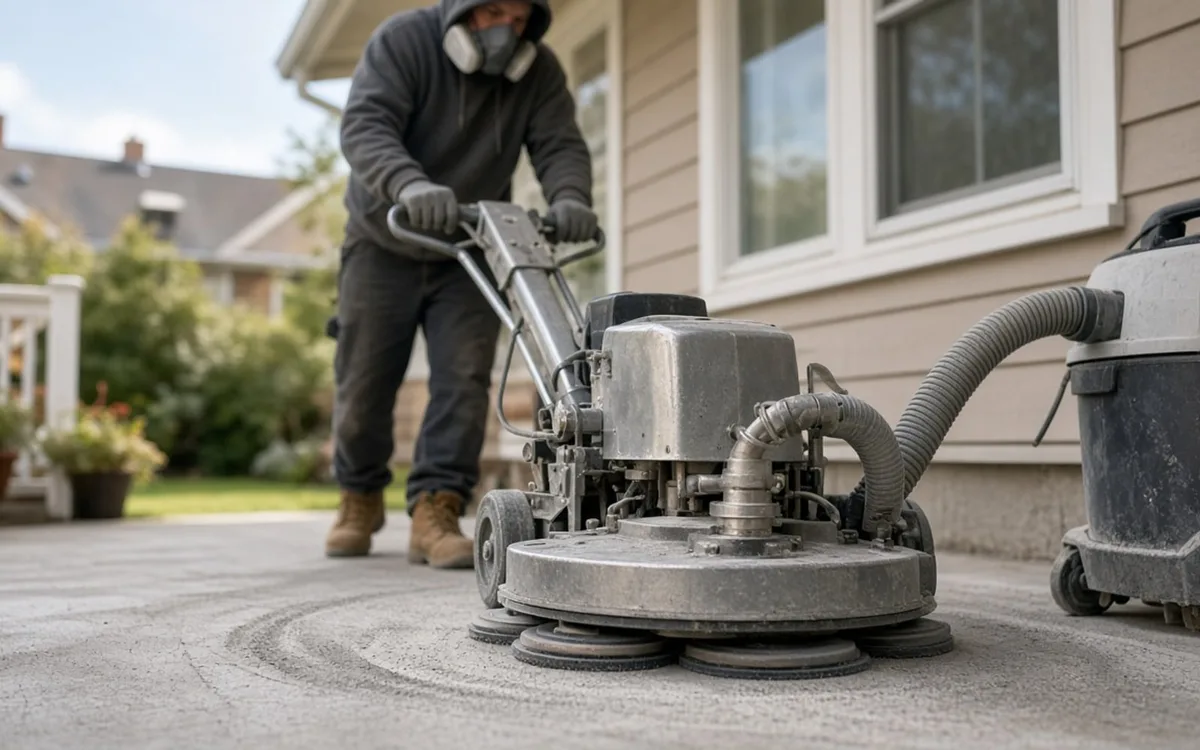
Concrete polishing grinds an existing slab with progressively finer diamond abrasives, hardens it with a densifier and refines it to a specified sheen and aggregate exposure.
 Service guideConcrete Staining & Dyeing
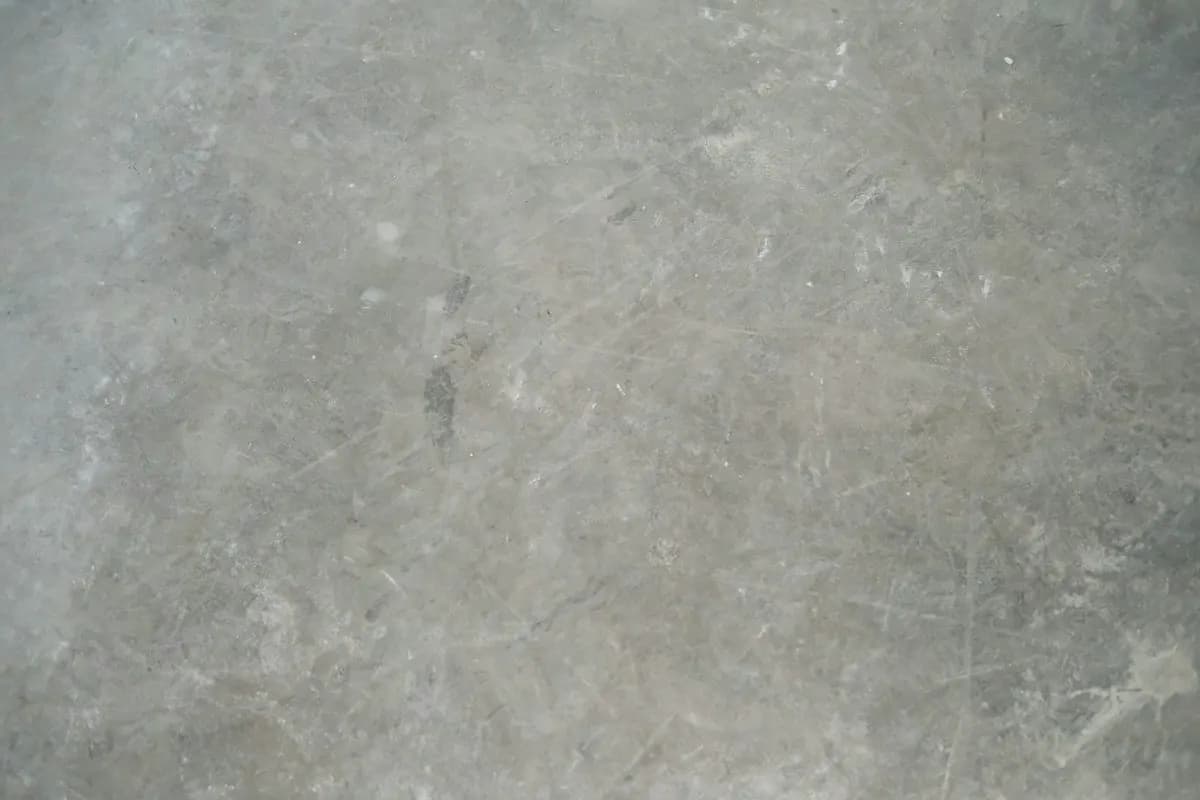
Staining and dyeing add color to a concrete slab by penetrating the surface rather than covering it, so the aggregate, patches and variation remain part of the look.
 Service guideConcrete Grinding & Leveling
Grinding uses coarse diamond tooling to remove coatings, adhesives, lips and high spots and to open a surface profile for whatever finish follows.
 Service guideConcrete Sealing & Protection
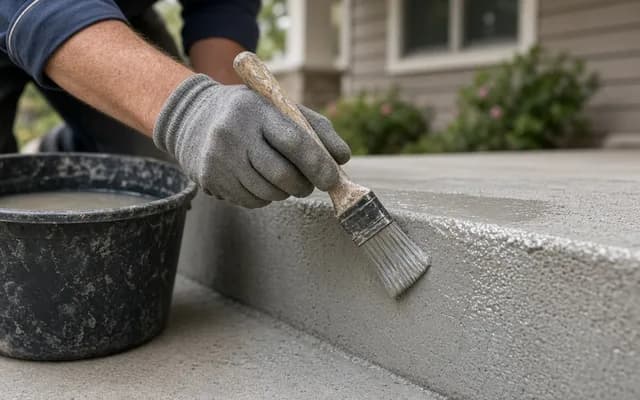
Sealing and protection treatments defend a concrete floor against stains, moisture and wear, and they range from penetrating silicates and siloxanes that leave the look unchanged to film-forming acrylics, urethanes and epoxies that add gloss and a wear layer.
Homeowner polls
No votes yet. Yours will be the first. · saved on this device
No votes yet. Yours will be the first. · saved on this device
No. It is an independent planning and matching resource. It does not perform any concrete work and does not have crews. Professionals who receive requests through the site are separate businesses that you evaluate and hire directly. The content is written from published cost guides, industry standards and government data, with every figure linked to its source.
No. Requesting estimates is free and carries no obligation. Some professionals charge for a detailed on-site assessment or a mock-up if the full job does not proceed; that is between you and the pro and should be stated in their proposal. Ask about assessment and sample fees before agreeing to a visit.
The publisher guides cited on the site were updated between November 2025 and September 2026, and each stat carries its year. Costs move with labor rates and fuel, so treat the figures as a planning range for 2026 and expect local proposals to sit inside or near it. If a proposal is far outside, ask why; there is usually a scope reason.
Because the residential data does not exist at the same quality. Millfac's and Build & Construct's figures come from facility budgets for large floors and show the direction and rough scale of polished concrete's maintenance advantage. A home floor sees far less traffic and far less cleaning cost either way, so the pages present those figures as context rather than a household budget line.
Treat them as estimates. Research and Markets, Mordor Intelligence and The Business Research Company use different definitions and reach different totals for the same market, from $2.5 billion to $2.87 billion in nearby years. The site cites them to show that polishing is a large, mostly commercial trade with a growing residential share, not to claim a precise figure.
No. The site does not rank, rate or endorse contractors. It explains what a good proposal contains, what questions expose a weak one, and how to read third-party reviews critically. The choice, and the checks on licensing, insurance and references, are yours to make directly with each professional.
Yes, through the contact page. Every figure on the site links to its source, and if a source has been updated or a number has been misread, the page will be corrected. The site prefers verified, primary sources: standards bodies, government surveys and publisher cost guides with stated update dates.
 LocationsRegional planning notes
How climate, codes and prices change a project across U.S. regions.
 ArticlesPlanning articles
Cost guides, checklists and mistakes to avoid before you sign.
 ReviewsHow to read reviews
What genuine contractor reviews look like and what they leave out.
Tell us the size, the condition of what is there now, and what you want to change. Concrete Finish Notes passes your request to independent local professionals, who reply with written, no-obligation estimates. The service is free to use.