How old is the slab?
Older slabs often have thinner sections, unknown mixes and more patches, all of which show after grinding.
No votes yet. Yours will be the first. · saved on this device
Loading...
Concrete Finish Notes · Permits
Polishing, staining or sealing an existing interior slab is finish work that most jurisdictions do not permit, but rules vary locally. Permits usually apply when adjacent work changes structure, plumbing, electrical or drainage: cutting trenches, replacing slab sections, adding circuits or altering exterior grades. Dust, asbestos in old flooring and association rules can matter more than the building code. Check with your local building department first.
By Concrete Finish Notes editorial · Updated 2026-09-25
The honest answer to 'do I need a permit to polish my floor?' is usually no, followed by several important exceptions. Most residential codes, including the International Residential Code that many states and cities adopt, exempt finish work such as flooring from permits. Polishing an existing slab changes no structure, plumbing or wiring, so building departments rarely ask for one. But concrete floor projects often bring adjacent work that does change those things, and a few rules outside the building code apply regardless.
Every jurisdiction adopts and amends codes on its own schedule, and some cities, counties and associations are stricter than the model code. This guide explains the typical triggers, what an inspection sequence looks like when one applies, how dust and asbestos rules affect older homes, and what happens when permitted work is done without one. It is general guidance, not legal advice; your local building department has the final word.
Building codes regulate safety: structure, fire, egress, plumbing, electrical and energy. The IRC's administrative section lists work exempt from permits, and flooring, painting and similar finish work fall on that list in most adopted versions. Grinding a slab, applying a densifier, dyeing and guarding it do not alter anything the code regulates. That is why most homeowners and contractors never pull a permit for a standard polishing job, and it covers a lot of floors: our analysis of the federal government's 2024 household survey found 32.4% of homes sit over a concrete slab and 29.5% over a basement.
Local amendments can change this. A handful of jurisdictions require permits for any work above a certain value, and historic districts may regulate visible changes. Condominiums and townhouse associations often have their own approval processes for hard flooring. A quick call or visit to your building department's website answers the local question in minutes and is worth doing before you sign a contract.
The triggers are usually in the work around the polish rather than the polish itself. Cutting a slab to move plumbing, adding floor drains, or installing radiant heating tubing typically needs a plumbing or mechanical permit. Replacing a section of slab may need a building permit, particularly if it involves a new vapor retarder or reinforcement. Adding a dedicated circuit for heavy grinding equipment or future appliances needs an electrical permit. Basement finishing is the common case: 41.1% of basement homes report the basement unfinished by our analysis, and finishing one with new rooms, egress or walls typically needs a building permit.
Exterior work has its own triggers. Replacing a driveway or sidewalk, changing drainage around a foundation, or work in the public right of way can require permits from building, public works or zoning. Lifting a sunken slab by mudjacking or foam jacking is often treated as repair, but check before drilling a public sidewalk. The slab lifting comparison explains the methods.
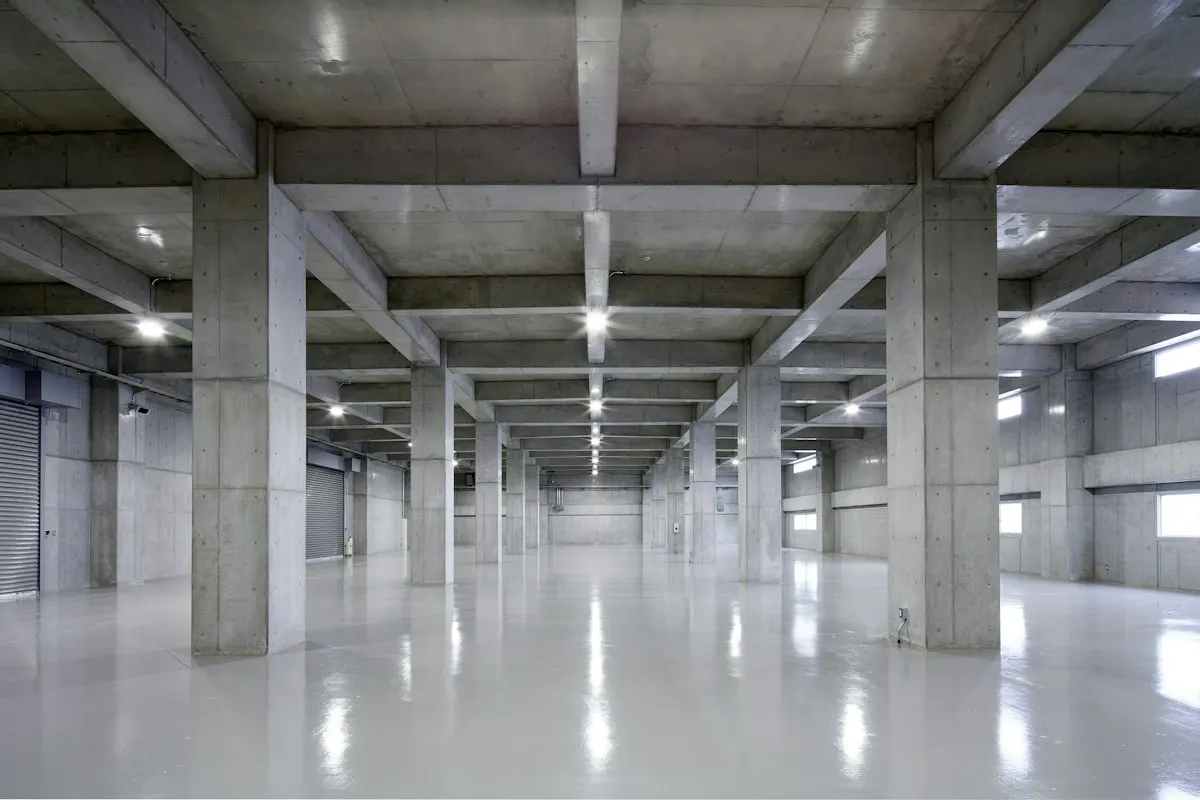
When slab work is permitted, inspections usually follow the order in which work gets covered up. Underground plumbing is inspected before the trench is backfilled. For a new or replaced slab, an inspector may check the base, vapor retarder and reinforcement before concrete is placed; the IRC generally requires a vapor retarder under slabs over habitable space. New construction is where this sequence is routine; by our count of Census new-home data, 754,000 single-family homes were completed on slab or other foundations in 2025. Electrical rough-in is inspected before walls close. Only after those steps does the finish work continue.
Polishing fits at the end of that sequence, and Angi prices a new slab prepared for polishing at $4–$8/square foot. A patched trench must cure before it can be ground, and new concrete generally needs weeks of curing before it polishes evenly. Build that time into the schedule. If the polishing contractor and the plumber or concrete placer are different firms, agree who protects the slab between inspections so the finished floor does not inherit avoidable damage.
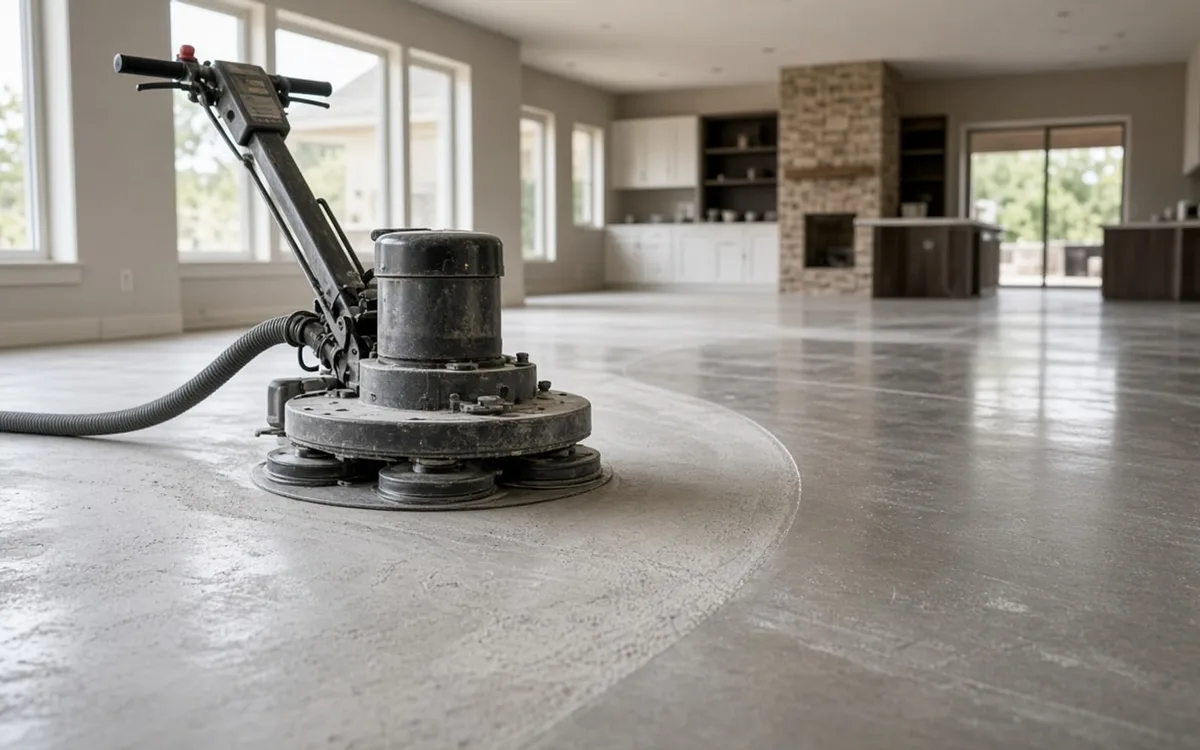
Grinding concrete releases respirable crystalline silica, a recognized lung hazard. OSHA's construction silica standard applies to employers, which means professional polishing contractors must control exposure for their workers. The standard's Table 1 describes accepted controls for walk-behind grinders, typically integrated water delivery or a shroud connected to a dust extractor with a suitable filter. It does not regulate homeowners working on their own floors.
For you, the practical effect is that a responsible contractor arrives with a dust extractor sized to the grinder, seals off the work area, and explains how they will keep dust out of the rest of the house. Ask about it during bidding. A proposal that says nothing about dust control, or a crew that dry-grinds with no extraction, is a health concern for your household and a sign of how carefully the rest of the job will be done.
Older resilient tiles, particularly nine-inch squares, and black cutback adhesive commonly contained asbestos in homes built before the 1980s. Grinding them releases fibers. Federal EPA rules and state programs govern asbestos removal, and while owner-occupied single-family homes are often treated differently from commercial buildings, contractors are usually bound by state licensing and disposal rules. Many states require testing before renovation in certain situations. The grinding and leveling service page explains how removal fits into the wider job.
If your house is old enough and you find tile or dark adhesive, have a sample tested by an accredited laboratory before anyone grinds. The test is inexpensive and quick. A positive result means abatement by a licensed contractor before polishing begins, and it changes the schedule and budget. This is the single most important regulatory issue on older concrete floors, and it is often overlooked because polishing itself needs no permit.

Yes, and associations are often stricter than the building department. Condominium bylaws commonly require acoustic underlayment under hard flooring in upper units, which a polished topping slab cannot provide in the usual way. Associations may also limit working hours, require contractors to carry specific insurance, restrict equipment in elevators, or require notice to neighbors before noisy work.
For houses in planned communities, the concern is usually exterior work: driveway coatings, stained patios and visible color changes may need architectural review. Garage floors are generally private, but staging equipment and dust collection on a shared drive can raise complaints. Read the governing documents, submit any required application, and keep the approval with your contract. The estimate request form lets you note association limits so contractors plan for them.
For a simple polish, nothing, because none was required. The risk arises when adjacent work that needed a permit was skipped. An unpermitted plumbing trench or slab replacement can surface during a sale inspection, an insurance claim or a later renovation. Consequences range from fines and retroactive permits to being required to open the work for inspection, which on a polished floor means cutting into a finish you paid for.
Unpermitted electrical work carries the most serious risks, including insurance complications after a fire. Asbestos disturbed without proper handling can bring state enforcement and costly cleanup. Finished space is common, too: our analysis of EIA data finds 58.9% of basement homes report a finished basement, so keeping permit records is ordinary housekeeping. The simplest protection is to separate the polishing scope from any permitted scope in your contracts, confirm who pulls each permit, and keep inspection records with your house papers. The polishing service page lists what a finish-only contract usually covers.
Homeowner polls
Older slabs often have thinner sections, unknown mixes and more patches, all of which show after grinding.
No votes yet. Yours will be the first. · saved on this device
No votes yet. Yours will be the first. · saved on this device
No votes yet. Yours will be the first. · saved on this device
Not normally. Grinding removes a small amount of surface material to reach the finish, which does not alter the slab's structural role. Very thin toppings, post-tensioned slabs and slabs with radiant tubing are exceptions where cutting too deep could cause damage. Contractors should confirm slab type and thickness before grinding, and in those cases a structural opinion may be sensible.
Often not for private slabs, since lifting is treated as repair in many places, but local practice varies. Drilling a public sidewalk or driveway apron in the right of way usually needs permission from the city. If the slab sank because of a drainage or plumbing problem, the fix for that cause may itself need a permit. Ask your building department.
Building codes do not prohibit it. Local housing codes and lease terms may address slip hazards or noise in multi-unit buildings, and condominium rules can require acoustic measures. For a basement apartment, egress and ceiling height rules for the living space matter far more than the floor finish. Check both the housing code and any association documents.
Usually the contractor doing the permitted work, since the permit is tied to their license. On owner-occupied homes some jurisdictions allow owners to pull their own permits, which then makes the owner responsible for the work. Put permit responsibility in each contract, and do not accept a suggestion to skip a required permit to save time.
Yes. Grinding depth must stay well above the tubing, so the contractor needs to know it exists and how deep it sits. Thermal imaging can locate it. Adding radiant heat to an existing slab usually means trenching or an overlay, and both involve mechanical permits in most places. Existing systems are not usually a permit issue for polishing alone.
Slurry from wet grinding should not go down storm drains, and many localities prohibit it. Dry dust is collected in bags and disposed of as construction debris. Asbestos-containing waste is regulated separately. Ask how the contractor handles waste; responsible firms have a routine and will explain it without hesitation.
Energy codes set insulation requirements for new slabs and major alterations, mainly at the slab edge in colder climate zones. Polishing an existing slab does not trigger them. If you are pouring a new slab for an addition that you plan to polish, the energy code applies to that new work and to the edge insulation detail.
 Service guideConcrete Grinding & Leveling
Grinding uses coarse diamond tooling to remove coatings, adhesives, lips and high spots and to open a surface profile for whatever finish follows.
 Service guideConcrete Polishing
Concrete polishing grinds an existing slab with progressively finer diamond abrasives, hardens it with a densifier and refines it to a specified sheen and aggregate exposure.
 Service guideConcrete Sealing & Protection
Sealing and protection treatments defend a concrete floor against stains, moisture and wear, and they range from penetrating silicates and siloxanes that leave the look unchanged to film-forming acrylics, urethanes and epoxies that add gloss and a wear layer.
 PlanningHow to plan a polished concrete floor, starting with the slab you have
Plan a polished concrete floor in this order: uncover and test a small patch of slab, decide what you will accept in patches and cracks, choose a CPC appearance level and aggregate exposure class, ask for a mock-up on your own floor, then write a one-page brief so every contractor prices the same job.
 CostsConcrete floor finishing costs in 2026: polish, stain, grind or seal
Finishing an existing concrete floor costs $1 to $3 per square foot to clean and seal, $2 to $5 to grind and seal, $3 to $12 to polish and $3 to $15 to stain, based on HomeGuide, Stelr and Angi.
 MaterialsConcrete floor finishes and materials: what each product actually does
A concrete floor's finish is built from a short list of materials: diamond tooling that cuts and refines the surface, a silicate densifier that hardens it, optional dye or acid stain for color, a penetrating guard or film-forming sealer for stain protection, and patching or overlay compounds for repairs.
 Free toolPolished concrete cost calculator: a planning range for your square footage
Size, material tier and complexity in, a realistic budget range out.
 Free toolConcrete floor options compared on the numbers
Side-by-side tables for the decisions that change the price most.
 Free toolConcrete finish quiz: can you read a polishing proposal?
9 questions that show what you already know and what to check next.
 Free toolPolls: what other homeowners planning concrete floors decided
See what other planners chose and add your vote.
Tell us the size, the condition of what is there now, and what you want to change. Concrete Finish Notes passes your request to independent local professionals, who reply with written, no-obligation estimates. The service is free to use.