What protection are you planning on the finished floor?
No votes yet. Yours will be the first. · saved on this device
Loading...
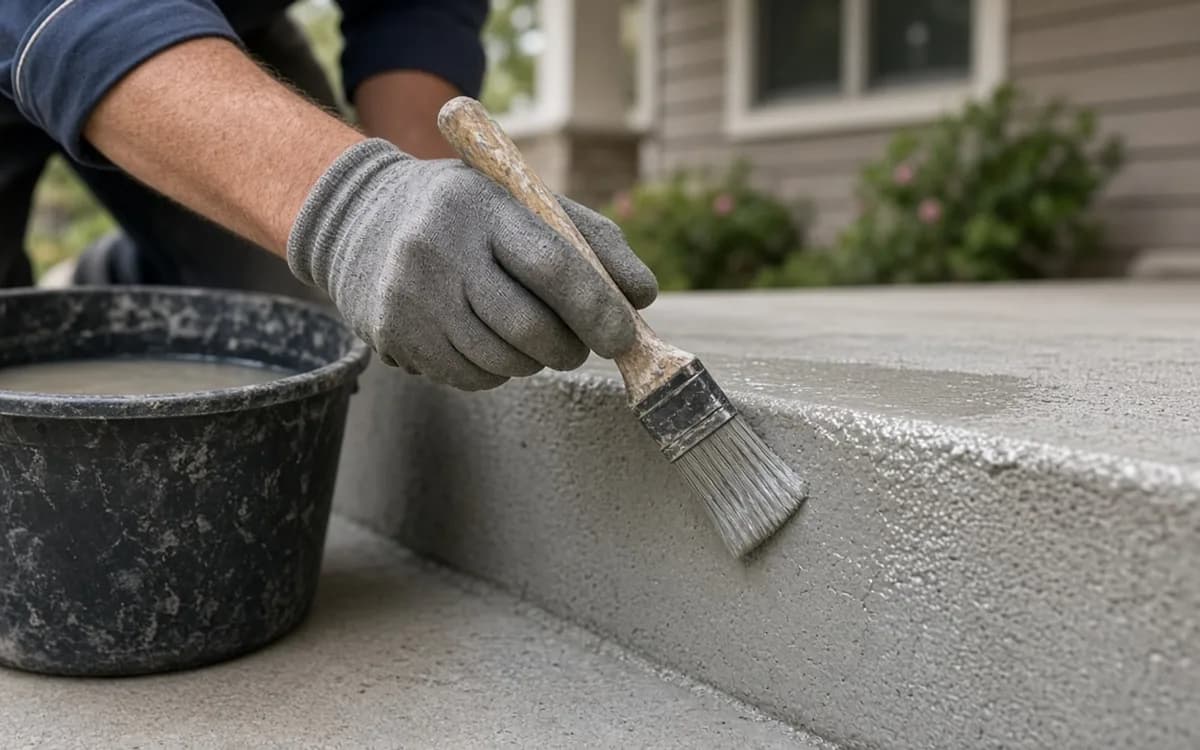
Concrete Finish Notes · Service guide
Sealing and protection treatments defend a concrete floor against stains, moisture and wear, and they range from penetrating silicates and siloxanes that leave the look unchanged to film-forming acrylics, urethanes and epoxies that add gloss and a wear layer. HomeGuide prices cleaning and sealing at $1 to $3 per square foot. The right product depends on the finish beneath, the exposure and how the floor will be cleaned.
Protection is the least expensive step in a concrete floor project and the one most often chosen badly, because the products look alike in the can and behave nothing alike on the floor. A penetrating sealer disappears into the concrete and changes little. A film-forming sealer sits on top, changes gloss and color, and wears. A densifier is not a sealer at all but hardens the surface. A stain guard on a polished floor is a fourth thing again.
The costs are modest. HomeGuide's November 2025 guide prices cleaning and sealing at $1–$3 per sq ft, with epoxy or polyaspartic products up to three times more, and HomeAdvisor's add-on for sealing a finished floor is $0.85–$1.60 seal; $2–$10 stain. What matters more than the price is compatibility: a film sealer on a floor you meant to polish, or a solvent product on a fresh dye, is a mistake that costs many times the sealer.
This page sorts the products by what they do, explains which one fits a polished, stained, bare or exterior surface, covers slip resistance and renewal, and shows how to compare proposals. Read it after the polishing page or the staining page, because the finish decides the protection.
Want the numbers only? Read the concrete sealing & protection cost guide for 2026 ranges, what moves the price, and sample budgets.
| Item | Low | High | Unit | Notes |
|---|---|---|---|---|
| Clean and seal, penetrating or acrylic | $1 | $3 | per sq ft | HomeGuide 2025 |
| Stain guard on a polished floor | $1 | $3 | per sq ft | HomeGuide 2026; every 2–5 years |
| Sealing add-on on a finished floor | $0.85 | $1.6 | per sq ft | HomeAdvisor 2026 |
| Urethane or polyaspartic sealer | $3 | $9 | per sq ft | HomeGuide: up to 3x a basic seal |
| Seal a 360 sq ft garage floor | $360 | $1,080 | flat | HomeGuide 2025; acrylic or polyurethane |
| Minimum service fee | $150 | $300 | flat | HomeGuide 2025 |
A polished floor needs a densifier, which is part of polishing, and optionally a penetrating stain guard. HomeGuide prices that guard at $1–$3 every 2–5 yrs and notes that true polished concrete does not require sealing; the guard is for kitchens, garages and high-traffic areas where oil, wine and road salt land. A film-forming sealer on a polished floor is wrong: it dulls the refined surface, scratches, and must be ground off to repolish.
A stained floor that will not be polished needs a film former or a penetrating sealer with enough body to protect the color. Acrylics are inexpensive and easy to renew but wear in a year or three; urethanes and polyaspartics last longer and resist chemicals but change the look and cost more. A bare, ground slab in a basement or utility space wants a penetrating silicate or siloxane sealer that stops dusting and resists moisture without changing the appearance. Exterior concrete wants a breathable penetrating product that tolerates freeze-thaw.
Garages are the common case. Our analysis of the federal government's 2024 household survey puts homes with an attached garage at 42.9% of U.S. households, from 9.2% with a one-car garage to 6.0% with room for three or more cars. HomeGuide prices sealing a 360-square-foot garage at $360–$1,080 garage with acrylic or polyurethane, or $1,700 to $5,200 for a two-car driveway in epoxy or polyaspartic. The comparison of polishing and epoxy is the place to weigh a hard-wearing coating against a polished, guarded slab for that room.
| Product | Where it goes | Changes look? | Renewal |
|---|---|---|---|
| Densifier (lithium silicate) | Inside every polish | No; adds hardness | Rarely; reapplied at repolish |
| Penetrating stain guard | Polished floors in wet or oily rooms | Slight sheen at most | Every 2–5 years (HomeGuide) |
| Penetrating siloxane / silicate sealer | Bare, ground or exterior slabs | No | Every 5–10 years |
| Acrylic film sealer | Stained interior floors, patios | Adds gloss; wet look | Every 1–3 years |
| Urethane / polyaspartic | Garages, commercial, heavy wear | Adds gloss and thickness | 5–10 years; recoat |
A densifier is a solution of lithium, sodium or potassium silicate that soaks into the concrete and reacts with free lime to form more calcium silicate hydrate, the same crystal that gives concrete its strength. The surface becomes harder, denser and less dusty, and it takes a polish. PROSOCO's Consolideck LS, a common lithium product, covers 500–1,000 sq ft/gal, contains no VOCs, and is applied part way through the polishing sequence and sometimes again at the end.
Because a densifier is absorbed rather than applied as a film, it does not peel, does not need stripping and does not change slip resistance. It also does not stop stains: a densified floor still absorbs oil and wine, slowly. That is the gap a penetrating guard fills. Millfac's facility data puts commercial polished concrete upkeep at $0.18–$0.40 per sq ft/yr, including periodic densifier reapplication, and that low figure is possible only because there is no film to strip and rewax.
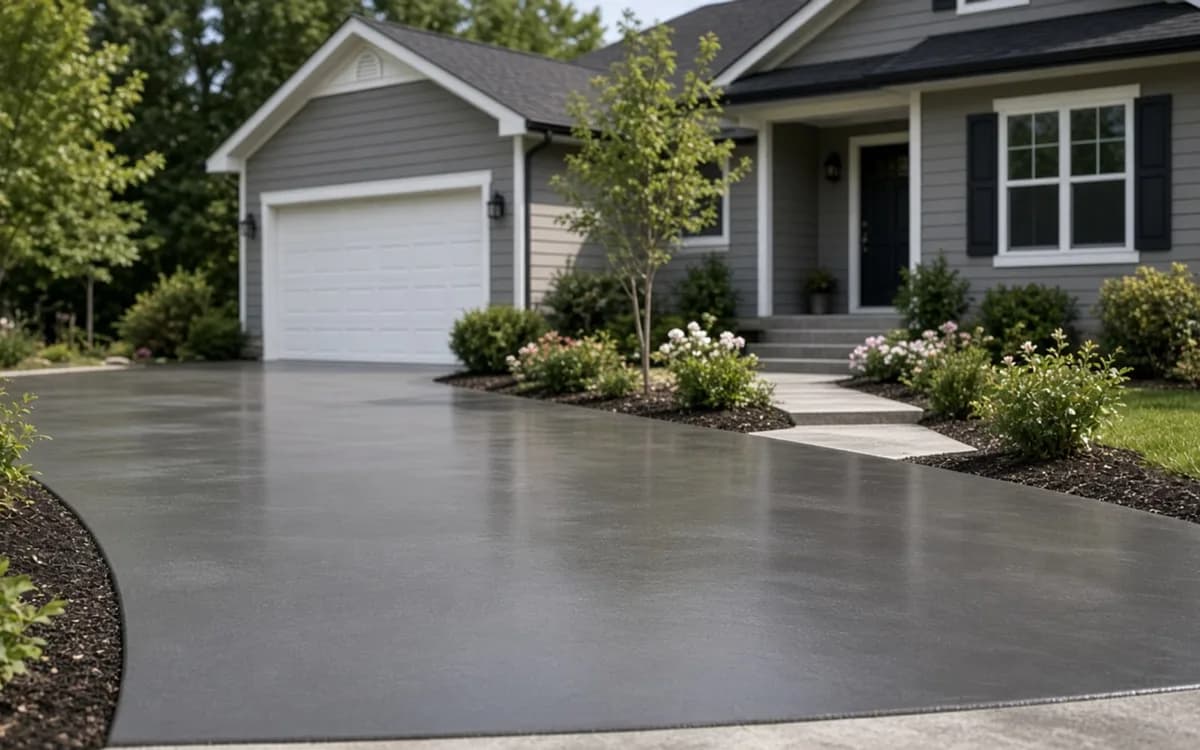
HomeGuide's $1–$3 per sq ft for cleaning and sealing breaks into sealer at $30 to $80 per gallon, labor at $0.70 to $1.25 per square foot and a $150 to $300 minimum service fee. Penetrating products are at the low end; acrylics in the middle; urethanes and polyaspartics up to three times more because the material costs more and the prep is stricter. A stain guard on a polished floor is $1–$3 every 2–5 yrs and takes an hour or two for a typical room.
Prep is the variable. A floor that needs an old sealer stripped, grease removed or a profile ground for a film former can double the price, and that work belongs on the grinding page. Moisture testing is a small line worth paying for before any film former, because vapor from below is the most common reason a sealed floor turns white or peels. Ask for a calcium chloride or relative humidity test and the result in the proposal.
A rough planning number for a stand-alone seal is the room's square footage times $1 to $3, plus the minimum fee for small rooms, plus stripping if there is an old product. The calculator adds a guard line to a polishing estimate; for a sealing-only job, ask each pro for product, coats, coverage rate and labor separately.
Any smooth, sealed or polished surface can be slippery when wet. ANSI A326.3 sets a minimum wet DCOF of 0.42 wet DCOF for level interior floors that will be walked on wet, rising to 0.50 in wet-plus areas and 0.55 where oils and greases are present. A high-gloss film sealer, and a Level 4 polish with a smooth guard, can fall below those numbers at an entry or in front of a sink.
The fixes are product and texture. Guard and sealer products with fine grit additives raise DCOF with little visible change; a lower sheen level helps; mats at doors and a dry-mop routine help most. Where a floor will be routinely wet, a garage entry in a snow state or a kitchen in a restaurant, specify a slip-resistant product and ask the pro to test after application. A pendulum or tribometer test is inexpensive and settles the question before an insurer asks it.
The floor is cleaned and degreased, tested for moisture, and, for film formers, ground or etched to the profile the product requires. The sealer or guard goes on with a microfiber applicator, sprayer or roller in thin, even coats, with the recoat window stated by the manufacturer respected. Solvent products need ventilation; water-based products need a warm, dry floor. Foot traffic returns in hours for penetrating products and guards, and in a day or two for urethanes and polyaspartics.
Failures are almost always compatibility or moisture. A film former over a damp slab blushes white and peels. A guard applied before the densifier has fully reacted sits on top and streaks. An acrylic over an old, unknown sealer delaminates. A solvent sealer over a fresh water-based dye lifts the color. Each is prevented by a test area on the actual floor, which the site data for this service names as the first checkpoint: check whether the treatment changes gloss, color or texture before it goes on the whole room.
Over-application is the other common error. Thick coats of penetrating sealer leave a white haze; thick guard leaves a sticky sheen. Ask the pro for the coverage rate they plan and compare it to the manufacturer's data sheet; PROSOCO's 500–1,000 sq ft/gal is a typical figure for a densifier, and guards and sealers publish their own.
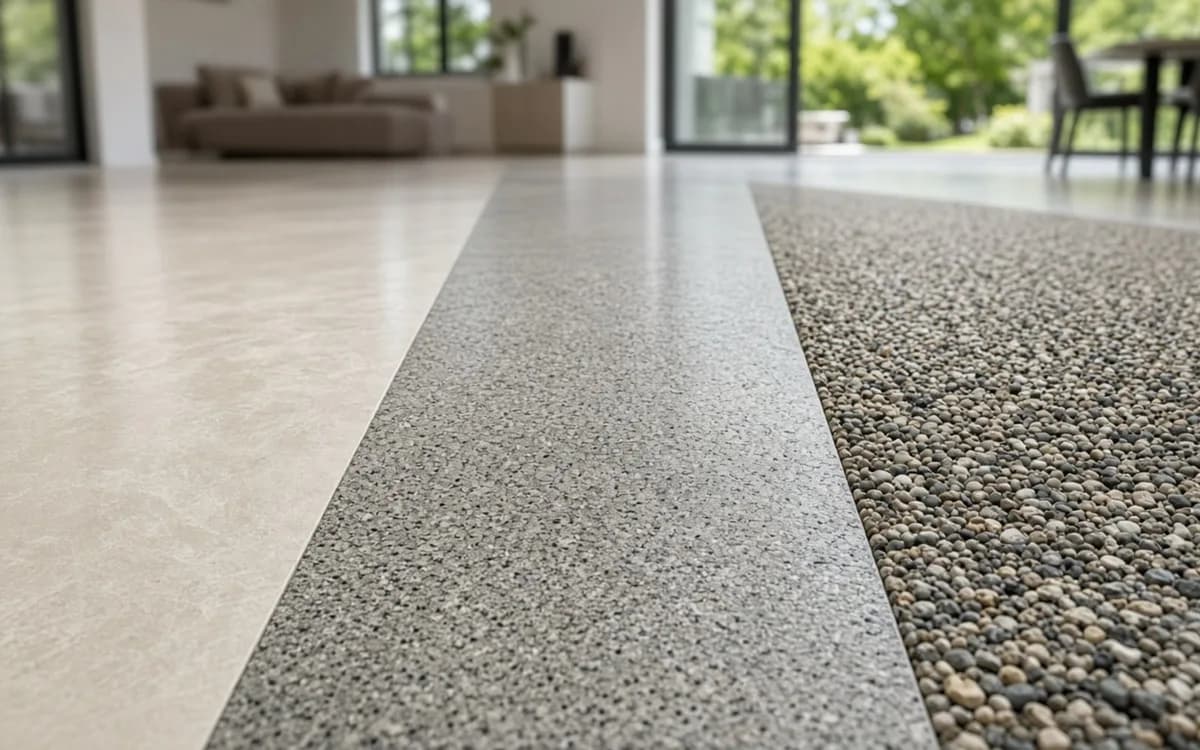
Penetrating sealers and guards want dust mopping, neutral cleaners and prompt attention to spills. A water drop test tells you when the guard has worn: if water darkens the concrete instead of beading, it is time to reapply, on HomeGuide's schedule of every two to five years for a stain guard. HomeGuide puts concrete cleaning and sealing at $1–$3 per sq ft, and a guard renewed on time is the cheapest protection the floor gets. Acrylic film sealers show wear paths and need a light scrub and recoat every one to three years; they can be built up rather than stripped if the old coat is sound.
Urethanes and polyaspartics last longer but cannot simply be recoated; they need abrasion and a compatible product, and eventually removal by grinding. That end-of-life cost is part of the comparison: Build & Construct's 2026 analysis puts polished concrete upkeep at $1 vs $2 per sq ft/yr against vinyl tile, and the same logic applies to a coated slab that must one day be stripped. The planning tools help estimate the difference over ten years.
Outdoors, yes. Freeze-thaw regions need breathable penetrating sealers on patios and driveways so trapped water does not spall the surface; a film sealer on an exterior slab in the Northeast or Midwest is a common cause of flaking. Road salt tracked into garages in snow states argues for a guard on a polished garage or a chemical-resistant film on a coated one. Hot, sunny regions want UV-stable products, since some acrylics and some dyes yellow or fade.
Indoors, humidity governs drying and moisture testing. Slab-on-grade homes in the South, at 43% of housing against 32.4% nationally by our analysis of the federal 2024 household survey, often have no vapor retarder under older slabs, and film formers there fail more often than penetrating products. Basements in the Midwest and Northeast are cool and slow to dry, which lengthens recoat windows. The regional notes summarize what local pros usually recommend for each.
Line up the product by name and type, the number of coats and coverage rate, the prep and moisture test, the test area, the slip-resistance measure if any, the expected renewal interval and the price per square foot. A proposal that names a brand and a data sheet is comparable; one that says 'seal the floor' is not. Ask whether the product is compatible with what is on the floor now and with anything planned later, such as a polish.
Then ask for two floors the pro protected more than a year ago, ideally one garage and one interior, and look at wear paths, whitening and peeling. Use the reviews guide to read what others reported about durability, and request estimates with the finish, the room's use and any known moisture issues stated up front so each pro proposes the right family of product.
Homeowner polls
No votes yet. Yours will be the first. · saved on this device
ANSI A326.3 sets a 0.42 wet DCOF minimum for level interior floors walked on wet.
No votes yet. Yours will be the first. · saved on this device
No votes yet. Yours will be the first. · saved on this device
 Service guideConcrete Polishing
Concrete polishing grinds an existing slab with progressively finer diamond abrasives, hardens it with a densifier and refines it to a specified sheen and aggregate exposure.
 Service guideConcrete Staining & Dyeing
Staining and dyeing add color to a concrete slab by penetrating the surface rather than covering it, so the aggregate, patches and variation remain part of the look.
 Service guideConcrete Grinding & Leveling
Grinding uses coarse diamond tooling to remove coatings, adhesives, lips and high spots and to open a surface profile for whatever finish follows.
Not with a film sealer; the densifier makes the surface hard and dust-free, and a film would dull it and need stripping later. What a polished floor may need is a penetrating stain guard in rooms where oil, wine or salt land, priced by HomeGuide at $1 to $3 per square foot and renewed every two to five years. A living room polish often needs nothing beyond the densifier.
Drop water on it: if it beads and the concrete stays light, a sealer is present. Drop a little xylene on an inconspicuous spot: if the surface softens or turns tacky, it is an acrylic; if nothing happens, it is likely a urethane, epoxy or penetrating product. A pro can test further. Knowing the existing product decides whether the new one will bond or must be stripped.
A penetrating siloxane or silicate sealer reduces moisture wicking and dusting, and it will not trap vapor. It does not fix a slab that is wet from hydrostatic pressure or a missing vapor retarder; that moisture will find another path. A film sealer on a damp basement slab will blush and peel. Test moisture first and match the product to the result.
Almost certainly a film-forming sealer applied over a slab with moisture beneath it, or too thickly, or before the previous coat cured. Water vapor pushes through, whitens the film and lifts it, and freeze-thaw finishes the job. The fix is to strip the film and use a breathable penetrating sealer. Ask the pro for a moisture test before any exterior film product.
Same chemistry, different thickness. A polyaspartic sealer is a thin clear coat over concrete or a stain; a polyaspartic coating is a thicker system, often with flakes, that hides the slab. Both are hard, fast-curing and UV-stable, and both need a ground profile to bond. If you want to see the concrete, ask for the clear sealer; if you want to cover it, the coating.
Penetrating guards and sealers are dry to walk on in an hour or two and ready for furniture the same day. Acrylic film sealers need overnight. Urethanes and polyaspartics vary by product but usually allow foot traffic in a day and furniture in two or three, with felt pads underneath. The proposal should state cure times for the specific product.
On a polished floor, the product is easy to apply with a microfiber pad, but the timing and coverage matter, and most polishing contractors include the first application in the job. Reapplication every few years is a reasonable owner task if you use the same product and follow the coverage rate. Film formers and any exterior sealing are better left to a pro with a moisture meter.
Film sealers deepen and enrich stain color with a wet look, which most owners like; penetrating sealers leave the color as it reads dry. That difference is large enough to change a color decision, so the stain sample should be viewed with the intended sealer applied to part of it. Some solvent sealers lift fresh water-based dye; check compatibility first.
 Free toolPolished concrete cost calculator: a planning range for your square footage
Size, material tier and complexity in, a realistic budget range out.
 Free toolConcrete floor options compared on the numbers
Side-by-side tables for the decisions that change the price most.
 Free toolConcrete finish quiz: can you read a polishing proposal?
9 questions that show what you already know and what to check next.
 Free toolPolls: what other homeowners planning concrete floors decided
See what other planners chose and add your vote.
Tell us the size, the condition of what is there now, and what you want to change. Concrete Finish Notes passes your request to independent local professionals, who reply with written, no-obligation estimates. The service is free to use.