Which sheen level are you choosing or did you choose?
CPC defines the levels by Distinctness of Image; HomeGuide prices matte at $3–$6 and high gloss at $6–$15 per sq ft.
No votes yet. Yours will be the first. · saved on this device
Loading...
Concrete Finish Notes · Polls
These anonymous polls ask homeowners planning or completing polished, stained, ground or sealed concrete floors what they chose and worried about: sheen level, exposure class, the room, current coverings, color, protection, slip, budget and how many bids they collected. Results accumulate across visitors and sit alongside the sourced figures so you can compare your instincts with both.
Go to the pollsEvery poll below is answered by visitors planning concrete polishing. Results update the moment you vote, one vote per poll per browser, and your own choices stay highlighted so you can compare them with everyone else's. Nothing here is a sales survey; use it to see which trade-offs other homeowners are weighing before you request estimates.
16 polls · newly opened, so every vote shapes the first results · results saved on this device. Vote on any poll you have not answered; your own votes are highlighted.
CPC defines the levels by Distinctness of Image; HomeGuide prices matte at $3–$6 and high gloss at $6–$15 per sq ft.
No votes yet. Yours will be the first. · saved on this device
Deeper exposure means more passes; HomeGuide prices cream at $3–$8 and full aggregate at $6–$12 per sq ft.
No votes yet. Yours will be the first. · saved on this device
No votes yet. Yours will be the first. · saved on this device
No votes yet. Yours will be the first. · saved on this device
Older slabs often have thinner sections, unknown mixes and more patches, all of which show after grinding.
No votes yet. Yours will be the first. · saved on this device
No votes yet. Yours will be the first. · saved on this device
No votes yet. Yours will be the first. · saved on this device
The CPC exposure chart recommends a mock-up on the actual slab.
No votes yet. Yours will be the first. · saved on this device
No votes yet. Yours will be the first. · saved on this device
No votes yet. Yours will be the first. · saved on this device
HomeGuide prices dye at $1–$3 per sq ft and single-color stain at $3–$5.
No votes yet. Yours will be the first. · saved on this device
No votes yet. Yours will be the first. · saved on this device
No votes yet. Yours will be the first. · saved on this device
ANSI A326.3 sets a 0.42 wet DCOF minimum for level interior floors walked on wet.
No votes yet. Yours will be the first. · saved on this device
HomeAdvisor's typical polished concrete project is $4,500 within a $1,000–$8,000 range.
No votes yet. Yours will be the first. · saved on this device
No votes yet. Yours will be the first. · saved on this device
By the numbers
Poll results above are from visitors to this site; these figures come from published research.
31.89%
Residential projects are about 32% of polished concrete demand; non-residential 68%
Mordor Intelligence's 2025 end-user split, with non-residential growing faster at 6.88% CAGR through 2031. Polished concrete remains primarily a commercial finish, but homes are a substantial minority.
Mordor Intelligence polished concrete market report (2026)$8–$15+ vs $3–$6
Jobs under 1,000 sq ft cost $8–$15+ per sq ft; over 5,000 sq ft can drop to $3–$6
HomeGuide notes mobilization and equipment setup make small residential floors far more expensive per square foot than warehouses or big-box stores.
HomeGuide polished concrete floor cost guide (2026)71%
of surveyed homeowners who hired a pro had postponed a project (Angi, April 2025)
Angi's 2025 Home Spending Pulse surveyed homeowners who hired a professional in the previous year on April 15–16, 2025. Postponement and affordability concern are the context in which polished concrete's low upkeep is a selling point.
Angi 2025 Home Spending Pulse (2025)$3–$12 per sq ft
Angi prices polishing an existing concrete floor at $3 to $12 per square foot
Angi's polishing cost guide describes polishing existing floors; removal of coverings, repairs, design effects and new slab construction are separate scope items. It is the benchmark behind this site's calculator.
Angi cost to polish concrete floors (2026)Market research tells you that residential work is 31.89% of polished concrete demand; it does not tell you what the homeowner next to you in that share chose for the basement. The polls fill that gap crudely but usefully. They are self-selected, unaudited and small, and they are still the only place to see whether most planners considering a garage picked Level 2 with a guard.
Vote once per poll, see the tally, and treat it as calibration rather than data. The sourced stats on each page are the data. Where a poll result and a stat point the same way, you have a reasonable starting point; where they diverge, the service page explains which to trust for your slab.
The first group covers the finish: sheen level, exposure class and comfort with variation, because those decide the specification and the price. The second covers the space: the room, the slab's age and what covers it now, because HomeGuide's $8–$15+ vs $3–$6 contrast and the +10% to 30% basement premium mean the room shapes the cost as much as the finish does.
The third covers planning: the biggest worry, whether a mock-up was done, which service is of interest and how many bids were collected. The fourth covers color and protection, and the last covers budget and what alternative was considered. Together they map the decisions on the quiz onto what people actually chose.
As a distribution among people with your question. If 60% of voters chose satin or Level 2 and you were leaning toward high gloss, that is not a reason to change, but it is a reason to sample both. If most voters worried about patches showing, and you had not thought about it, read the polishing page section on what goes wrong before you request estimates.
Watch for small tallies. A poll with twenty votes swings with every new one. The stats beside each poll, such as our analysis of EIA survey data showing 32.4% of occupied U.S. homes sit over a concrete slab, are the larger samples; the polls show how the visitors to this site compare.
Early patterns, subject to change: satin and medium gloss lead high gloss; salt-and-pepper leads cream and full aggregate; basements and garages lead living areas among rooms, which fits the housing stock, since our analysis of the federal government's 2024 household survey found 41.1% of basement homes report an unfinished basement and 27.8% of homes have a two-car attached garage; 'patches and cracks showing' leads the worry poll; most voters wanted a mock-up but fewer had one offered; and three bids is the most common count. Those patterns match what the trade reports and what the reviews guide says separates a good process from a poor one.
The budget poll spreads widely, which is what Angi's $3–$12 per sq ft range predicts once room size and level vary. Millfac puts commercial polished concrete maintenance at just $0.18–$0.40 per sq ft/yr, which may help explain why low-upkeep finishes poll well. The alternative poll shows epoxy as the most-considered alternative in garages and luxury vinyl in basements, which is why the comparison pages start with polished versus epoxy.
Votes are anonymous and recorded once per poll per browser. No account is needed and nothing you vote on is tied to an estimate request unless you send one. Tallies are cumulative from the day each poll opened and are not weighted or cleaned; if a result looks odd, it probably reflects a small sample rather than a trend.
New polls are added when a question recurs in estimate requests. If there is a decision you wish other homeowners had been asked about, the contact page is the place to suggest it, and the tools hub lists the other planning aids alongside the polls.
No. They are visitors to this site who chose to vote, which skews toward people actively planning a concrete floor and toward the rooms and regions the site's readers live in. Use them to calibrate against people with the same question. The sourced surveys on the site are the larger and more representative samples; EIA's 2024 household survey, for example, found 43% of occupied homes in the South sit over a concrete slab.
Tallies appear after you vote, which keeps the results honest by reducing casual clicks. Voting takes a second and is anonymous. If you have already completed a project, vote for what you chose; if you are planning, vote for what you are leaning toward. Both are useful to the next reader.
Because 'not sure' is the honest answer for many planners early on, and it is useful data: a high share of 'not sure' on exposure class means the concept needs a better explanation, which the service pages then provide. Choosing it does not affect anything else on the site.
Contractors can vote like anyone else, and there is no way to identify or exclude them. The polls carry no commercial weight and are not used to match professionals, so there is little incentive to game them. Treat unusually lopsided results on small tallies with the skepticism any open poll deserves.
No. The tools are independent. The calculator uses published cost figures, the quiz uses standards and product data, and the polls record opinions. Reading them together is the intended use: a calculator range, a quiz score and a poll distribution give three different views of the same decision.
The mock-up poll and the bid-count poll. Together they show how many planners were offered a sample area and how many proposals they gathered, which are the two habits that most reliably lead to a floor that matches expectations. If your answers to both would be 'none,' the contact page explains how to change that.
Yes; each poll has a link that shows the current tally. Share it as what it is, an informal snapshot of this site's visitors, not as a survey. For a citable figure, use the sourced stat next to the poll, which links to its publisher.
 Free toolPolished concrete cost calculator: a planning range for your square footage
Size, material tier and complexity in, a realistic budget range out.
 Free toolConcrete floor options compared on the numbers
Side-by-side tables for the decisions that change the price most.
 Free toolConcrete finish quiz: can you read a polishing proposal?
9 questions that show what you already know and what to check next.
 Service guideConcrete Polishing
Concrete polishing grinds an existing slab with progressively finer diamond abrasives, hardens it with a densifier and refines it to a specified sheen and aggregate exposure.
 Service guideConcrete Staining & Dyeing
Staining and dyeing add color to a concrete slab by penetrating the surface rather than covering it, so the aggregate, patches and variation remain part of the look.
 Service guideConcrete Grinding & Leveling
Grinding uses coarse diamond tooling to remove coatings, adhesives, lips and high spots and to open a surface profile for whatever finish follows.
 Service guideConcrete Sealing & Protection
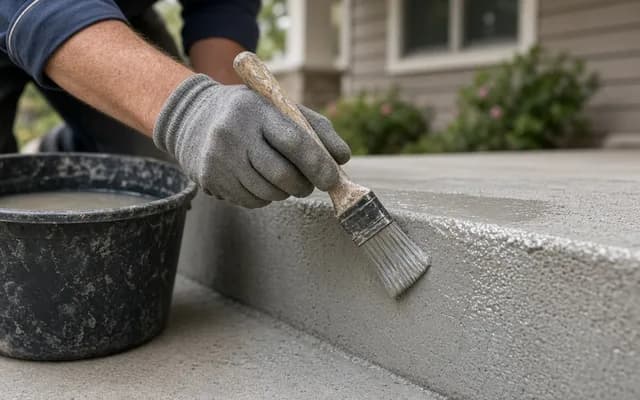
Sealing and protection treatments defend a concrete floor against stains, moisture and wear, and they range from penetrating silicates and siloxanes that leave the look unchanged to film-forming acrylics, urethanes and epoxies that add gloss and a wear layer.
Tell us the size, the condition of what is there now, and what you want to change. Concrete Finish Notes passes your request to independent local professionals, who reply with written, no-obligation estimates. The service is free to use.