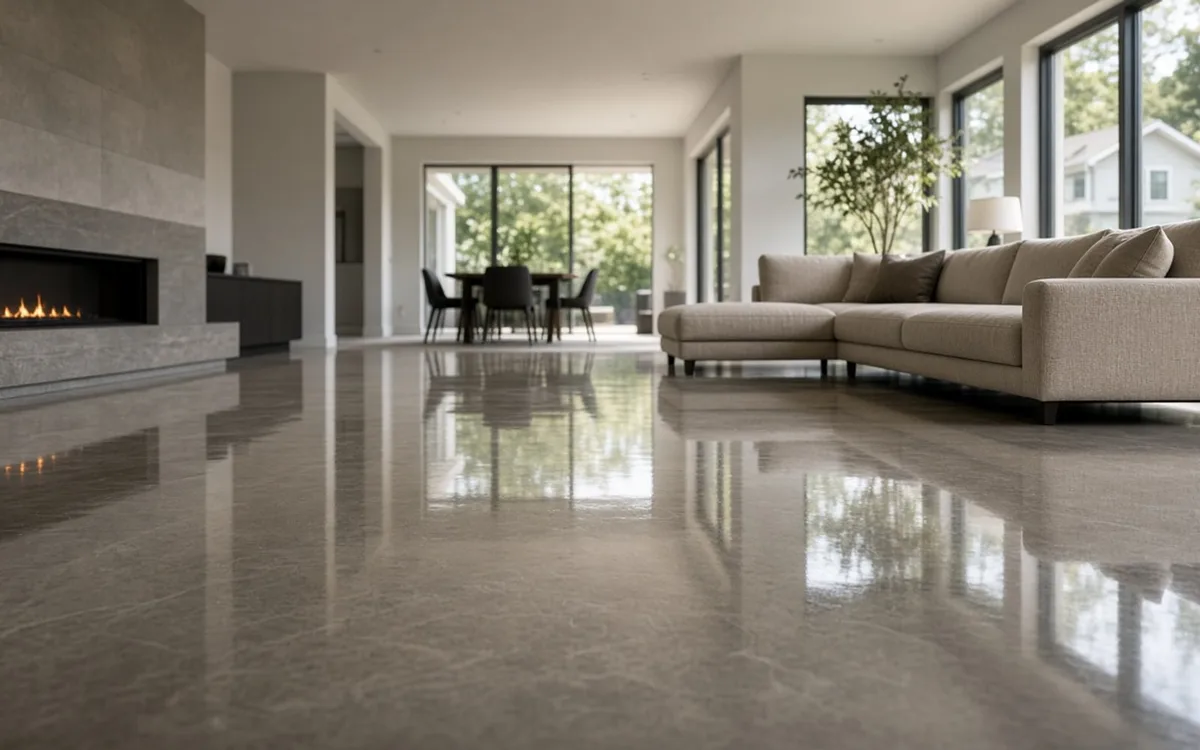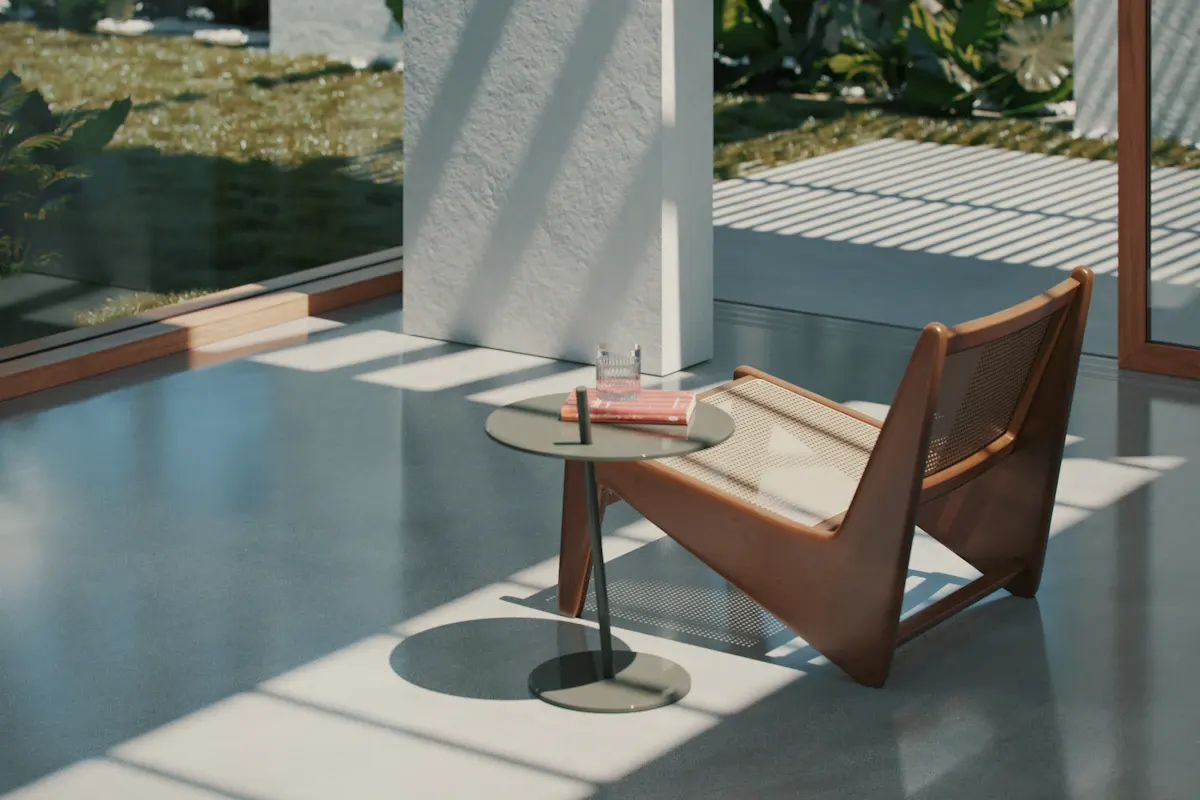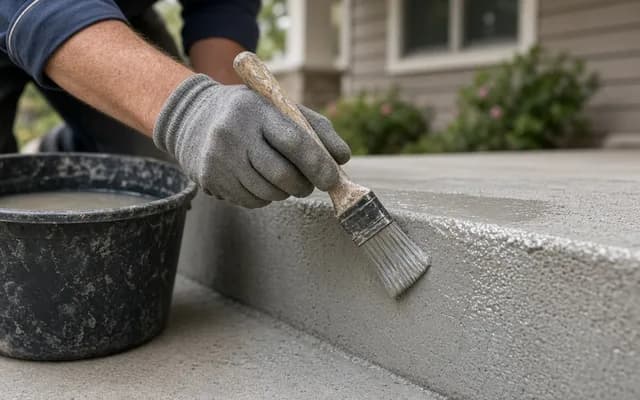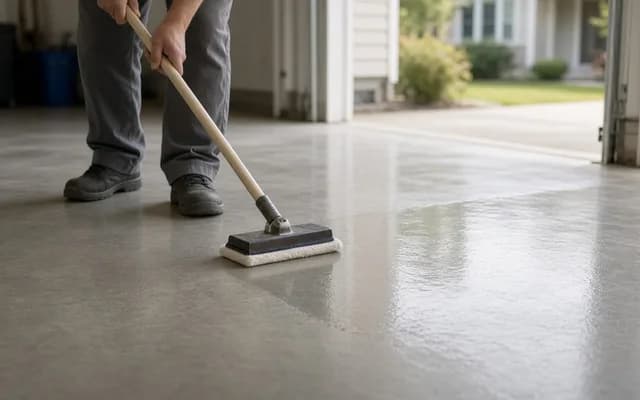
Polishing refines the slab itself into a hard, low-maintenance surface that shows the concrete's character; epoxy covers the slab with a film that hides it, resists chemicals and eventually peels or must be recoated. The choice is usually decided by the slab's condition and the room's exposure to oil and moisture.
- Upfront cost
- $3–$12 per sq ft (Angi 2026); $4,500 typical project (HomeAdvisor)
- $3–$12 per sq ft typical for residential garage systems; flake and polyaspartic higher
- Lifespan
- 20+ years, repolishable (HomeAdvisor)
- 5–10 years before recoat or replacement; peels where moisture or prep fails
- Maintenance
- $0.18–$0.40 per sq ft/yr commercial (Millfac 2026); dust mop and neutral cleaner at home
- Sweep and wash; recoat when worn; strip by grinding at end of life
Full comparison, verdict and FAQs →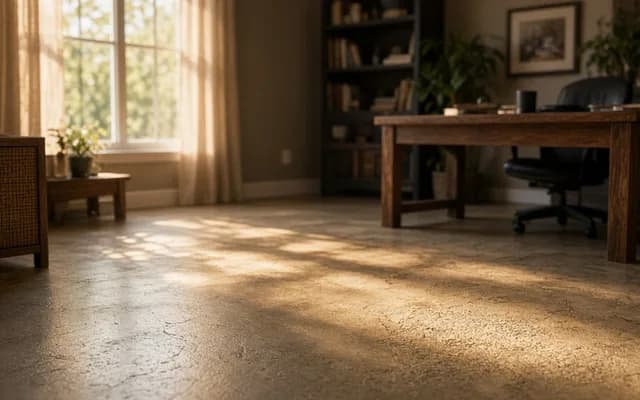
Acid stain reacts with the concrete's minerals to produce mottled, translucent earth tones that are permanent and UV-stable but need a sealer; dye penetrates with pigment in a wide palette and is the standard for color inside a polished floor, protected by the polish itself but sometimes sensitive to sun.
- Upfront cost
- $3–$5 single color, to $25 for high-end designs (HomeGuide 2026)
- $1–$3 added to a polished floor (HomeGuide 2026)
- Palette
- Earth tones, tans, browns, blue-greens; mottled
- Wide, including blues, reds and blacks; more even
- Lifespan
- Permanent color; sealer wears every 1–3 years (acrylic)
- As long as the polish; some dyes fade in direct sun
Full comparison, verdict and FAQs →
The same polishing process stopped at different points: a honed floor ends at a satin sheen with DOI 10 to 39, hides scuffs and glare and costs less; a high-gloss floor continues through the finest passes to DOI over 70, reflects light dramatically, costs more and shows every mark.
- Upfront cost
- $3–$6 matte, $4–$8 low sheen (HomeGuide 2026)
- $6–$15 (HomeGuide); $8–$15 (Angi)
- Passes
- Roughly 4–5 grinding and polishing passes
- 7 or more; each extra pass $3–$5 per sq ft (HomeAdvisor)
- Specification
- DOI 10–39, gloss 5–25 (CPC chart)
- DOI 70+, gloss over 50 (CPC chart)
Full comparison, verdict and FAQs →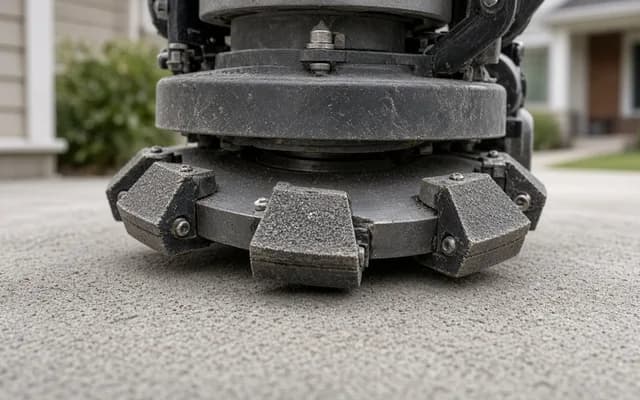
Grind-and-seal takes the slab through the coarse passes, then applies a sealer for protection and sheen; a full polish continues through fine passes with a densifier so the sheen is the concrete itself. Grind-and-seal is cheaper and faster but relies on a film that wears; polish costs more and lasts longer.
- Upfront cost
- Grinding passes plus $1–$3 per sq ft seal (HomeGuide 2025)
- $3–$12 per sq ft (Angi 2026)
- Lifespan
- Sealer renewed every 1–3 years (acrylic) or 5–10 (urethane)
- 20+ years; repolish to refresh
- Maintenance
- Wear paths in the film; recoat
- Dust mop; guard every 2–5 years
Full comparison, verdict and FAQs →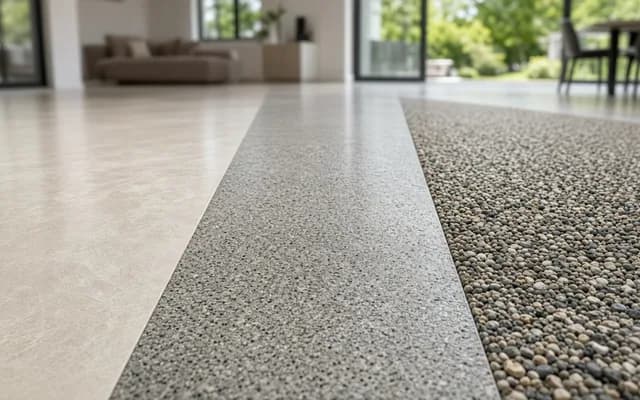
Both lift a settled slab by pumping material beneath it. Mudjacking uses a cement slurry through larger holes at lower cost; foam jacking uses expanding polyurethane through small holes at higher cost with less weight and faster cure. Neither fixes the cause of settlement.
- Upfront cost
- $4–$9 per sq ft (HomeGuide 2025)
- $8–$25 per sq ft (HomeGuide 2025)
- Hole size
- About 1–2 inch holes, patched
- About 5/8 inch holes, nearly invisible
- Weight added
- Heavy slurry; can resettle soft soils
- Light foam; less load on weak fill
Full comparison, verdict and FAQs →