Which sheen level are you choosing or did you choose?
CPC defines the levels by Distinctness of Image; HomeGuide prices matte at $3–$6 and high gloss at $6–$15 per sq ft.
No votes yet. Yours will be the first. · saved on this device
Loading...
Concrete Finish Notes · Planning quiz
This nine-question quiz tests the vocabulary and numbers a homeowner needs to specify and compare a polished, stained or sealed concrete floor: CPC appearance levels and exposure classes, what a densifier does, why small floors cost more per square foot, slip-resistance thresholds and the order of operations. Each answer is explained with the figure it comes from.
Start the quiz0 of 9 answered
The polishing trade has a precise vocabulary, and a homeowner who knows it gets better proposals. Level 3, Class B, DOI, densifier, guard, profile: each is a word that turns 'make it shiny' into something a pro can price and a meter can verify. The Concrete Polishing Council's charts define the first few, DOI 0–9 to 70+ for sheen and the exposure classes for depth, and the rest come from product data and standards.
The quiz is short and the explanations are the point. Take it cold to find out what you do not know, read the service pages, and take it again. A homeowner who scores well can look at two proposals at different prices and say why they differ, which is the whole purpose of this site.
Three questions on specification: the CPC levels, the exposure classes and the closeout readings, because those three lines are what make a proposal testable. Two on cost: HomeGuide's small-job contrast of $8–$15+ vs $3–$6 and HomeAdvisor's per-pass figure of $3–$5 per sq ft, because those explain most of the spread between bids. One each on the densifier, the stain guard, slip resistance and the order of dye and polish, because those are the questions pros say homeowners get wrong most often.
Every explanation cites the figure it rests on. The point is not to memorize numbers but to recognize which number a proposal is silently assuming. When a bid says 'high gloss' without a DOI or gloss target, you should hear the CPC chart's 3 tests per 1,000 sq ft compliance rule and ask for readings.
The densifier. Most homeowners assume polished floors are sealed, and many ask for a sealer, which a film former would ruin. PROSOCO's data for a lithium densifier, 500–1,000 sq ft/gal, describes a product that is absorbed and hardens the surface, not a coating. The second most common miss is the small-job premium: people expect a 400-square-foot room to cost a third of a 1,200-square-foot one, and HomeGuide's data says otherwise. The fourth is sheen cost: Angi's July 2026 guide prices matte at $2–$6/square foot and high gloss at $8–$15/square foot, so a level chosen from a photo rather than the room can double the bill.
The third is the order of dye and polishing. Color applied at the end sits on top and wears; color applied too early is ground away. The staining page explains the mid-grit stage where dye belongs, and a proposal that does not state that stage is the one to question.
A high score means you can write the request on the contact page with a level, a class and a protection named, and read the proposals against the polishing page's checklist. A middling score means reading the explanations you missed, which each link to the page that covers them. A low score is normal before reading anything, and it means an hour with the service pages will change your project.
Then run the calculator with the level you now know you want, and vote in the polls to see whether other planners landed in the same place. Research and Markets values the U.S. polished concrete market at $679 million, and the homeowners who plan floors with a specification in hand are the ones whose proposals can be compared.
Homeowner polls
CPC defines the levels by Distinctness of Image; HomeGuide prices matte at $3–$6 and high gloss at $6–$15 per sq ft.
No votes yet. Yours will be the first. · saved on this device
Deeper exposure means more passes; HomeGuide prices cream at $3–$8 and full aggregate at $6–$12 per sq ft.
No votes yet. Yours will be the first. · saved on this device
No. The quiz is a learning tool, and pros will explain terms during an assessment. But a homeowner who knows the levels and classes writes a request that produces comparable proposals and spots the one that omits the mock-up. Ten minutes with the explanations is usually enough.
From the sourced statistics on this site: the CPC appearance and exposure charts, HomeGuide's and HomeAdvisor's 2026 cost guides, PROSOCO's product data and the ANSI A326.3 slip standard. Each explanation names its source, and the stats section links to every one.
Because it is the safety question homeowners forget and the one that matters most in kitchens, entries and garages. A high-gloss floor with a smooth guard can fall below ANSI A326.3's 0.42 wet DCOF threshold. Knowing the number lets you ask for a test and a slip-resistant product before the floor is finished rather than after a fall.
Pros who follow the Concrete Polishing Council's charts will, and ASCC counts ~750 companies as members working to them. Others may say 'satin,' 'semi-gloss' or 'cream' without numbers. Either way, asking for a DOI or gloss target and an exposure class in writing tells you quickly which kind of pro you are talking to.
As often as you like. Nothing is stored beyond the current page. Taking it before and after reading the service pages is the intended use, and the second score is usually much higher. If a question still trips you after reading, the explanation names the page to revisit.
The nine questions include dye timing and stain guards, which cover the most common staining and sealing mistakes. The staining and sealing service pages have their own FAQs that go deeper into product types, compatibility and renewal. The comparison pages test the same knowledge in a different form.
Check the source the explanation names. The CPC charts and ANSI standard are published documents; the cost figures are publisher guides with update dates. If a source has changed or an answer is wrong, use the contact page to say so and the question will be corrected.
 Free toolPolished concrete cost calculator: a planning range for your square footage
Size, material tier and complexity in, a realistic budget range out.
 Free toolConcrete floor options compared on the numbers
Side-by-side tables for the decisions that change the price most.
 Free toolPolls: what other homeowners planning concrete floors decided
See what other planners chose and add your vote.
 Service guideConcrete Polishing
Concrete polishing grinds an existing slab with progressively finer diamond abrasives, hardens it with a densifier and refines it to a specified sheen and aggregate exposure.
 Service guideConcrete Staining & Dyeing
Staining and dyeing add color to a concrete slab by penetrating the surface rather than covering it, so the aggregate, patches and variation remain part of the look.
 Service guideConcrete Grinding & Leveling
Grinding uses coarse diamond tooling to remove coatings, adhesives, lips and high spots and to open a surface profile for whatever finish follows.
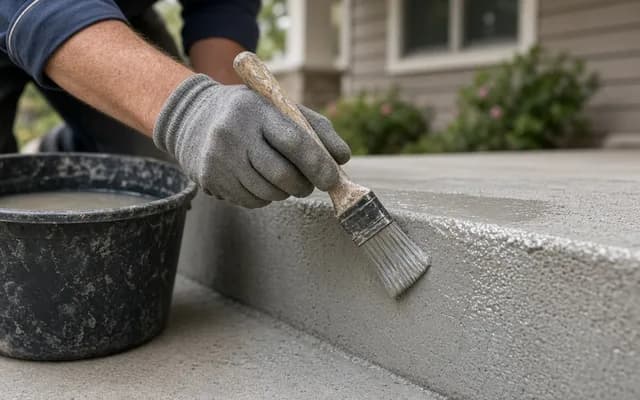 Service guideConcrete Sealing & Protection
Sealing and protection treatments defend a concrete floor against stains, moisture and wear, and they range from penetrating silicates and siloxanes that leave the look unchanged to film-forming acrylics, urethanes and epoxies that add gloss and a wear layer.
Tell us the size, the condition of what is there now, and what you want to change. Concrete Finish Notes passes your request to independent local professionals, who reply with written, no-obligation estimates. The service is free to use.