Which sheen level are you choosing or did you choose?
CPC defines the levels by Distinctness of Image; HomeGuide prices matte at $3–$6 and high gloss at $6–$15 per sq ft.
No votes yet. Yours will be the first. · saved on this device
Loading...
Concrete Finish Notes · Service guide
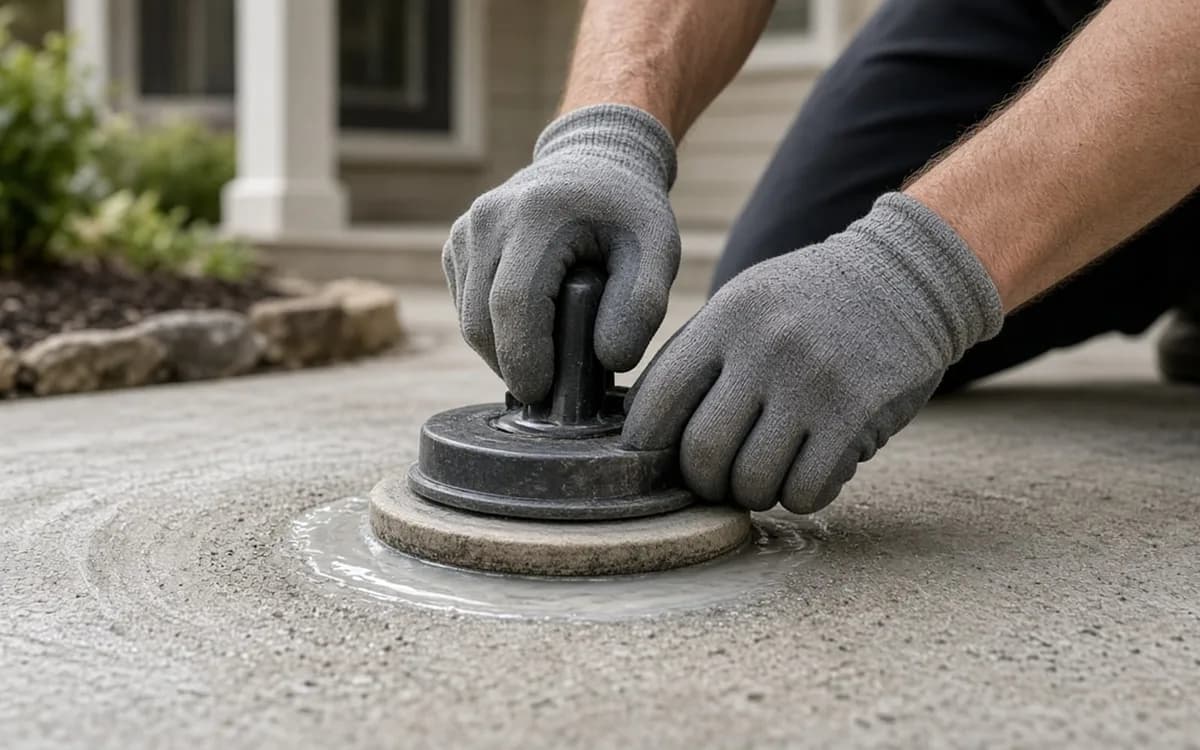
Concrete polishing grinds an existing slab with progressively finer diamond abrasives, hardens it with a densifier and refines it to a specified sheen and aggregate exposure. Angi prices it at $3 to $12 per square foot. It suits sound slabs in homes, basements, garages, shops and retail spaces for owners who accept that patches, cracks and aggregate become part of the finish.
Polishing is the only floor finish that removes material rather than adding it, and that changes everything about how to buy it. The result is not a product you can look at on a shelf; it is your slab, cut to a depth and refined to a sheen. The Concrete Polishing Council's charts give both a number, and this page explains how to use those numbers to write a proposal you can verify.
The economics reward planning. HomeAdvisor reports that each additional grinding pass for a higher shine adds $3–$5 per sq ft, and HomeGuide prices the three exposure levels at $3–$8 / $4–$10 / $6–$12. Deciding on level and class before collecting bids is what makes the bids comparable.
Read this alongside the calculator for your square footage and the comparison pages if you are weighing polish against epoxy or honed against high gloss.
Want the numbers only? Read the concrete polishing cost guide for 2026 ranges, what moves the price, and sample budgets.
| Item | Low | High | Unit | Notes |
|---|---|---|---|---|
| Matte or honed polish (CPC Level 1–2) | $3 | $6 | per sq ft | HomeGuide 2026 |
| Medium gloss polish (Level 3) | $5 | $10 | per sq ft | HomeGuide 2026 |
| High gloss polish (Level 4) | $6 | $15 | per sq ft | HomeGuide 2026; Angi $8–$15 |
| Full aggregate exposure (Class C) | $6 | $12 | per sq ft | HomeGuide; deeper cut, more passes |
| Additional grinding pass | $3 | $5 | per sq ft | HomeAdvisor |
| Stain-guard treatment | $1 | $3 | per sq ft | HomeGuide; reapply every 2–5 years |
| Basement access premium | $10 | $30 | percent | HomeGuide |
Polishing suits an owner who likes concrete as a material and wants a hard, dust-free, low-upkeep floor with the variation that comes from the slab. Basements being finished, slab-on-grade living areas, garages, workshops, studios and retail floors are the usual candidates. Mordor Intelligence puts residential projects at 31.89% of demand, a substantial minority of a mostly commercial market, and that residential share is growing.
It suits less well the owner who wants a uniform color, a warm surface underfoot, or a floor that hides its history. Soft or low-strength concrete, slabs saturated with oil, or heavily patched slabs polish unevenly. Small rooms carry a mobilization premium that HomeGuide describes as $8–$15+ vs $3–$6. For those situations an overlay, a coating or a different flooring may serve better, and the services overview says when.
The CPC appearance chart defines four levels by Distinctness of Image: DOI 0–9 to 70+. Level 1 is flat or ground, Level 2 satin or honed, Level 3 polished and Level 4 highly polished, each with haze under 12. The chart also gives optional 60-degree gloss targets, <10 to >50 gloss, measured per ASTM D4039 before any guard product is applied. Most homes land at Level 2 or 3.
The aggregate exposure chart defines depth. Class A cream shows 85% to 95% cement fines with little aggregate; Class B salt-and-pepper shows fine aggregate; Class C shows coarse aggregate across 80% to 90% of the surface. HomeGuide's pricing follows the classes: cream $3 to $8, salt-and-pepper $4 to $10, full aggregate $6 to $12 per square foot. Deeper cuts are more passes with coarser tooling and more risk of exposing patches and voids.
Writing 'Level 3, Class B' into a proposal makes it testable. CPC's compliance rule calls for 3 tests per 1,000 sq ft, read with an image clarity meter and a glossmeter. Ask the pro to take those readings at closeout and record them. The exposure chart's instruction to evaluate within a random 10-by-10-foot square and to do a mock-up on the actual slab is the standard you should hold every proposal to.
| CPC level | DOI | Optional 60° gloss | Typical use |
|---|---|---|---|
| Level 1 flat / ground | 0–9 | Under 10 | Utility, prep for coating |
| Level 2 satin / honed | 10–39 | 5–25 | Living areas, low glare |
| Level 3 polished | 40–69 | Over 35 | Most homes and retail |
| Level 4 highly polished | 70+ | Over 50 | Showrooms; shows every scuff |
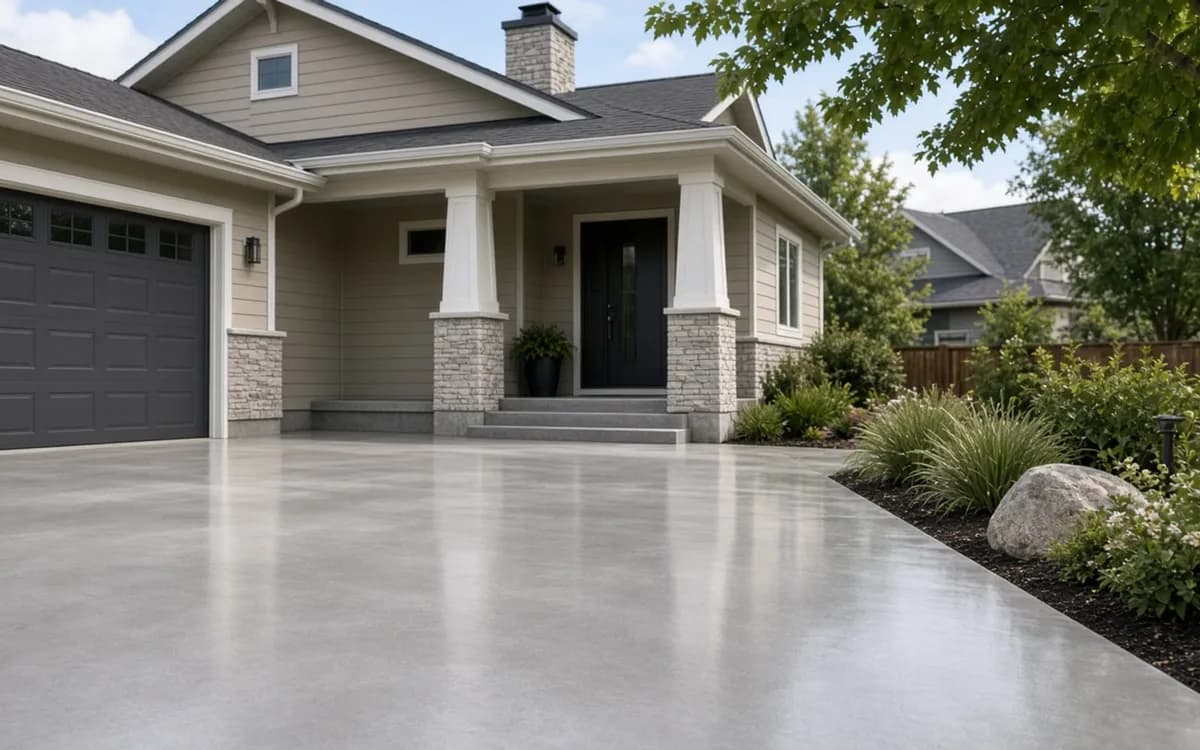
Angi's 2026 guide runs $3–$12 per sq ft for concrete flooring, with matte at $2–$6/square foot, semigloss at $3–$8/square foot and high gloss at $8–$15/square foot. HomeGuide's gloss tiers are $3–$6 up to $6–$15, and HomeAdvisor's typical project is $4,500 within a $1,000 to $8,000 range. Homewyse's contractor-scope figure of $8.26 to $9.77 per square foot describes sweeping, washing, crack repair, three grinding passes, densification and two polishing passes.
Labor is most of it. HomeGuide reports polishing labor at $40–$100 per hour, with urban and specialist contractors at the top. A Level 4 floor may take seven or more passes; a Level 2 floor perhaps four. Each pass is the grinder covering the entire floor, so passes scale with area and level together. Edges are separate: hand grinders work the last few inches at walls and around posts, slowly.
Repairs and removal are the other lines. Old adhesive, coatings or sealers must come off before grinding proper, and HomeGuide's leveling guide prices overlays at $2 to $5 per square foot where the slab is uneven. Basement access adds 10% to 30%. Ask that removal, repairs, edges, passes, densifier and any guard be listed separately so a proposal for Level 2 Class A and another for Level 3 Class B can be compared line by line.
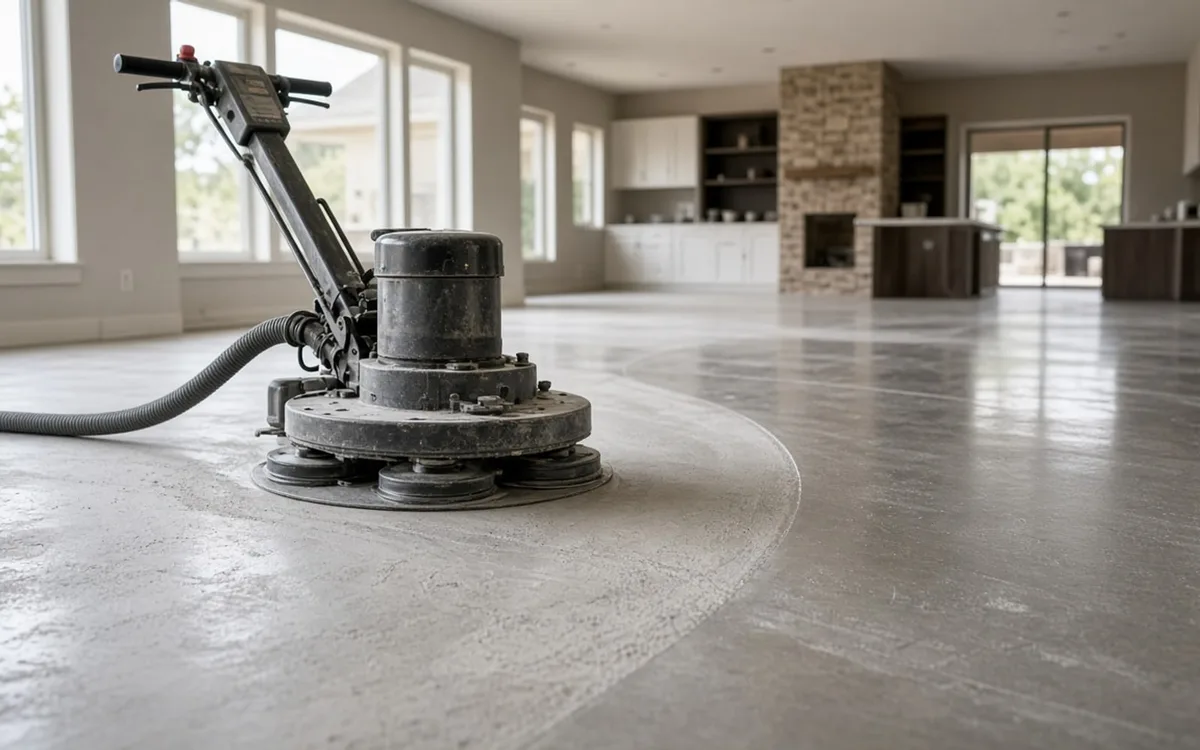
A polish runs coarse to fine. Metal-bond diamonds at 30 to 80 grit cut the slab to the target exposure, resin-bond pads refine it, densifier hardens it partway through, and final passes at 800, 1,500 or 3,000 grit set the sheen. A residential floor takes 2–4 days, with the mock-up approved first.
Dust is the main nuisance. Mordor Intelligence notes dry polishing is 58% of work by method, with vacuum extraction capturing dust; wet methods produce slurry that must be contained. There is no cure: the floor is walkable as soon as the last pass and any guard dry. Furniture can usually return the same day.
Expect noise, sealed doorways and covered HVAC returns. Expect the crew to want the room fully empty, including baseboards if edges are to be ground close. Expect the mock-up to happen before the full grind, ideally on a day of its own, so you can see the result in the room's light and sign off. If the pro proposes to skip the mock-up on a slab with a history, ask why.
The most common disappointment is expectation. The floor looks like the slab, with patches from a removed wall, tack-strip holes along old carpet lines, a darker area where a planter sat, aggregate that is coarser in one pour than another. None of that is a defect; all of it is visible. The mock-up is the prevention, and a written note of what was seen and accepted is the record.
The second is inconsistency from the process: swirl marks from skipped grits, a band of different exposure where two passes overlapped, edges that read lighter or duller than the field because hand tools cannot match the planetary grinder. Ask how close to the wall the main machine reaches and what the edge method is. Ask whether a burnisher will be used to blend. Renovation of existing slabs is 42.72% of the market, so experienced pros have answers.
The third is the slab itself: soft concrete that will not take a polish, voids that open under a deep cut, moving cracks that reopen through the filler, moisture that leaves efflorescence on the surface. A pro's assessment should cover hardness, flatness and moisture, and a slab that fails may need a hardener, an overlay or a different finish. The grinding page explains the preparation options when polishing alone is not enough.
Dust mop, damp mop with a neutral cleaner, and keep grit off the surface with mats at doors. Do not use acidic or alkaline cleaners, which etch or dull the densified surface. Where spills are routine, a penetrating stain guard applied after polishing resists oil and wine; HomeGuide prices it at $1–$3 every 2–5 yrs. A film-forming sealer is not needed and undoes the point of densification.
The savings are documented at commercial scale. Millfac's 2026 data puts polished concrete maintenance at $0.18–$0.40 per sq ft/yr against $0.65 to $1.10 for a vinyl tile strip-and-wax program, and Build & Construct's 2026 analysis says the higher install cost pays back in about two years. HomeAdvisor says polished floors last 20 years or more; when they dull, a repolish with fine pads restores them without removing material. The protection page covers guards and slip products.
Polishing is indoor work and largely climate-neutral, but the housing stock is not. Our analysis of the federal government's 2024 household survey shows homes over a concrete slab at 32.4% nationally and 43% in the South, where slab-on-grade living areas are the typical residential polishing job. The same survey found 53.0% of owner-occupied homes with an attached garage also report a slab foundation. Basements dominate in the Midwest and Northeast, at 57.7% and 51.6% of homes by our count. By our count of Census new-home data, 754,000 single-family homes were completed on slab or other foundations in 2025.
Humidity affects densifier and guard drying times and can bring moisture to the surface as efflorescence on slabs without vapor retarders. Cold basements slow drying. None of this prevents polishing; it changes the schedule and occasionally the guard product. The regional notes cover what local pros typically encounter.
Settle the finish before you settle the price. HomeAdvisor says each additional grinding pass for a higher shine adds $3–$5 per sq ft, so on a polished floor the cheaper line is usually fewer passes, which is a lower level rather than a discount. Align the specification first: level, class, passes, densifier, edge method, crack and joint treatment, removal, repairs, guard, dust control and closeout readings. Two bids at the same level and class can then be compared on price per square foot and on what is excluded. Two bids at different levels are different floors; ask the higher one what the extra passes buy on your slab.
Then look at the mock-up terms. A pro who includes a mock-up and prices it separately, with the full scope conditional on approval, is protecting you. One who treats it as an extra you must ask for is less so. Finally, ask for two finished residential floors of your slab's approximate age and go see them, looking at edges, patches and cracks rather than the center of the room. Use the reviews guide and request estimates with the same brief for every pro.
Concrete Finish Notes ran these numbers on the federal government's own household data. You won't find them in a contractor's brochure.
Concrete Finish Notes analysis · 2024
95% interval 51.8%–54.3% · about 27.5 million homes · 7,070 survey households
Just over half of homes with an attached garage report a concrete-slab foundation, the surface every coating or polish goes onto. Moisture testing that slab is the step that decides whether a floor lasts.
Source: Concrete Finish Notes analysis of 2024 federal household survey data from the U.S. Energy Information Administration. How we calculated it
Homeowner polls
CPC defines the levels by Distinctness of Image; HomeGuide prices matte at $3–$6 and high gloss at $6–$15 per sq ft.
No votes yet. Yours will be the first. · saved on this device
Deeper exposure means more passes; HomeGuide prices cream at $3–$8 and full aggregate at $6–$12 per sq ft.
No votes yet. Yours will be the first. · saved on this device
The CPC exposure chart recommends a mock-up on the actual slab.
No votes yet. Yours will be the first. · saved on this device
 Service guideConcrete Grinding & Leveling
Grinding uses coarse diamond tooling to remove coatings, adhesives, lips and high spots and to open a surface profile for whatever finish follows.
 Service guideConcrete Staining & Dyeing
Staining and dyeing add color to a concrete slab by penetrating the surface rather than covering it, so the aggregate, patches and variation remain part of the look.
 Service guideConcrete Sealing & Protection
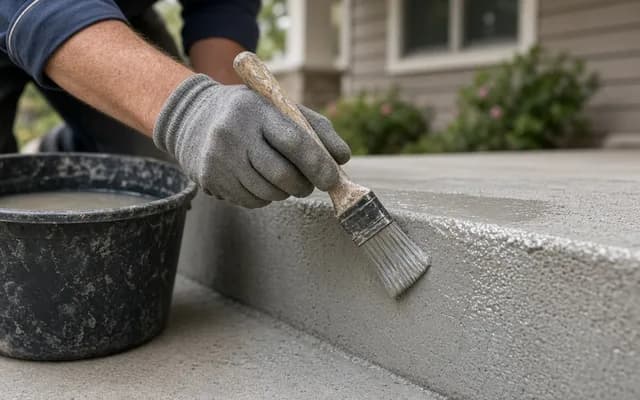
Sealing and protection treatments defend a concrete floor against stains, moisture and wear, and they range from penetrating silicates and siloxanes that leave the look unchanged to film-forming acrylics, urethanes and epoxies that add gloss and a wear layer.
Typically four to eight, depending on the starting condition and the target level. Homewyse's basis is three grinding passes and two polishing passes for a standard floor. A Level 4 finish adds finer passes, and HomeAdvisor prices each additional pass at $3 to $5 per square foot. Ask the pro to list the grit sequence so you can see where the money goes.
Yes. They are filled and ground flush, and they remain as a line of small filled dots along the former wall. The same is true of anchor holes, plumbing patches and saw cuts. A mock-up placed over one of these areas shows exactly how they will read. Owners who find them charming keep them; those who do not may prefer a dyed floor or an overlay.
No. A densifier is a lithium, sodium or potassium silicate that reacts with the concrete to form additional hard crystals in the surface; PROSOCO's Consolideck LS is one example. It is absorbed, not a film. A sealer is a coating on top. Polished floors use densifier and, optionally, a penetrating guard; they do not need a film sealer.
Scratches and dull areas are repolished with fine pads, often invisibly. Chips and gouges are filled and ground, and the repair shows as a patch, like any other patch in the slab. A whole-floor repolish restores sheen after years of wear. Because nothing is applied, there is no coating to peel, which is a major reason maintenance costs stay low.
Because soft concrete will not take a polish. Low-strength or high-water mixes crumble under fine grits rather than refining, and the floor stays dull and dusty. A hardness test, often a Mohs pick or a rebound hammer, tells the pro whether extra densifier or a hardening overlay is needed. It is a quick check that prevents an expensive disappointment.
A dry polished floor generally tests well, but a wet high-gloss surface can fall below the ANSI A326.3 minimum of 0.42 wet DCOF for level interior floors. Entries, kitchens and bathrooms are the risk zones. Guard products with slip-resistant formulations exist, and a Level 2 or 3 finish is less slippery than Level 4. Ask for a wet test at entries after the guard is applied.
A sample board is another piece of concrete polished to show the technique. A mock-up is a section of your slab, ideally 10 by 10 feet as the CPC exposure chart recommends, polished to the proposed level and class. Only the mock-up shows your aggregate, your patches and your cracks. Insist on the mock-up for any slab with a history.
Check the level and class first. A Level 2 Class A bid at $4 and a Level 3 Class B bid at $9 are different floors, consistent with HomeGuide's tiers. If both claim the same level, compare passes, edge method, removal, repairs and closeout readings. A low bid that omits the mock-up, the edges or the readings is not cheaper; it is less specified.
 Free toolPolished concrete cost calculator: a planning range for your square footage
Size, material tier and complexity in, a realistic budget range out.
 Free toolConcrete floor options compared on the numbers
Side-by-side tables for the decisions that change the price most.
 Free toolConcrete finish quiz: can you read a polishing proposal?
9 questions that show what you already know and what to check next.
 Free toolPolls: what other homeowners planning concrete floors decided
See what other planners chose and add your vote.
Tell us the size, the condition of what is there now, and what you want to change. Concrete Finish Notes passes your request to independent local professionals, who reply with written, no-obligation estimates. The service is free to use.