If adding color, which method?
No votes yet. Yours will be the first. · saved on this device
Loading...
Concrete Finish Notes · Materials
A concrete floor's finish is built from a short list of materials: diamond tooling that cuts and refines the surface, a silicate densifier that hardens it, optional dye or acid stain for color, a penetrating guard or film-forming sealer for stain protection, and patching or overlay compounds for repairs. The right combination depends on the room, the slab and how much upkeep you accept.
By Concrete Finish Notes editorial · Updated 2026-09-25
Owners often think of polished, stained and sealed concrete as three different floors. In practice they are combinations of the same few materials applied in different orders. A polished floor is ground with diamonds, hardened with densifier and refined to a sheen; a stained floor adds a reactive or pigment color and usually a sealer; a sealed floor puts a protective layer on a ground or cleaned surface. Understanding each ingredient makes proposals far easier to read.
This guide walks through the materials in the order they are applied, then looks at how they combine for common rooms. It names products only where a published data sheet supplies a figure. Prices come from HomeGuide, HomeAdvisor and Angi. The goal is not to make you a specifier but to let you ask why a proposal chose one product over another, and to recognize a combination that does not suit your space.
Diamonds do the real work. Coarse metal-bond segments remove coatings, adhesive and the top layer of the slab, and they decide how deep the cut goes and therefore which exposure class you get. Finer resin-bond pads follow, refining scratches until the surface reflects light. Each change of grit is a pass across the whole floor. Skipping a grit leaves scratches from the previous one, which show up as haze once the floor is polished.
You do not need to choose the tooling, but the proposal should describe the sequence. A floor finished at a coarse resin grit will read as satin; one taken to very fine grits reaches the high DOI of a Level 4 polish. Angi's July 2026 guide puts that sequence in dollars: matte at $2–$6/square foot, semigloss at $3–$8/square foot and high gloss at $8–$15/square foot. HomeAdvisor's price of $3–$5 per sq ft per additional pass is effectively the cost of each extra step in that sequence. More steps are not automatically better; they are only worth paying for if you want the sheen they produce.
A densifier is a silicate solution, usually lithium, sodium or potassium based, that soaks into the concrete and reacts with free lime to form additional hard material inside the surface. It leaves no film. It reduces dusting, tightens the surface so it takes a polish, and makes the floor more resistant to abrasion. It is applied mid-sequence, after the coarse grinding and before the fine polishing passes.
Lithium products dominate residential work because they spread easily and leave little residue. PROSOCO's data sheet for one widely used lithium densifier lists coverage of 500–1,000 sq ft/gal with no VOCs, which is part of why the product cost is small next to labor. Research and Markets identifies densifiers as the largest product segment in the polished concrete market. If a proposal does not name a densifier, ask which one will be used and when.

Dyes are fine pigments carried in water or solvent. They penetrate the surface, offer a wide and predictable palette, and on a polished floor are applied at a mid grit and then polished over so the color sits inside the surface. HomeGuide prices dye on a polished floor at $1–$3 dye; $3–$5 stain per square foot. Some dyes fade in strong direct sun, so ask about UV stability for sunlit rooms.
Acid stains are metallic salts in a mild acid that react with minerals in the concrete to produce mottled, permanent earth tones. They need neutralizing and rinsing, and most are protected with a sealer. HomeGuide's broader staining guide lists $3–$15 per sq ft, with single colors at $3 to $5 and stenciled or scored designs up to $25. The acid stain versus dye comparison goes deeper on the choice.
| Material | Color character | Typical protection |
|---|---|---|
| Water or solvent dye | Even, wide palette, translucent | Polished over; guard optional |
| Acid stain | Mottled earth tones, varies with slab | Sealer usually required |
| Integral color (new slabs) | Uniform through the depth | Polished or sealed |
A properly densified polished floor does not strictly need a sealer, and HomeGuide says as much. What it often benefits from is a stain guard: a penetrating treatment that resists oil, wine, citrus and salt without forming a visible film. HomeGuide prices a guard at $1–$3 every 2–5 yrs. Kitchens, dining areas and garages are the usual candidates. Guards wear gradually and are reapplied, typically after a light clean and burnish.
Film-forming sealers, such as acrylics, urethanes and polyaspartics, sit on the surface. They are the standard protection for acid-stained or ground-only floors and for exterior concrete. HomeGuide puts cleaning and sealing at $1–$3 per sq ft, with epoxy and polyaspartic sealers costing up to three times more. Films give sheen and strong stain resistance but show wear paths and can whiten over damp slabs. The sealing and protection service covers the product families.
Cracks, joints and patches are filled with epoxy, polyurea or cementitious products before or during grinding. Rigid epoxies can be polished flush with the slab; semi-rigid polyureas are used in control joints that still move. Neither will exactly match the surrounding concrete. Color-matched fillers and a dye can reduce contrast, but a filled crack remains visible as a line. Plan for that, and see it in the mock-up.
Larger defects need patching mortar or an overlay. HomeGuide's leveling guide lists self-leveling overlays for interior floors at $2 to $5 per square foot. Standard underlayment products are meant to go under other flooring and will not polish well. Polishable overlays exist and can be ground like a slab, but they look different from original concrete and add cost. A grinding and leveling contractor can tell you which your floor needs.
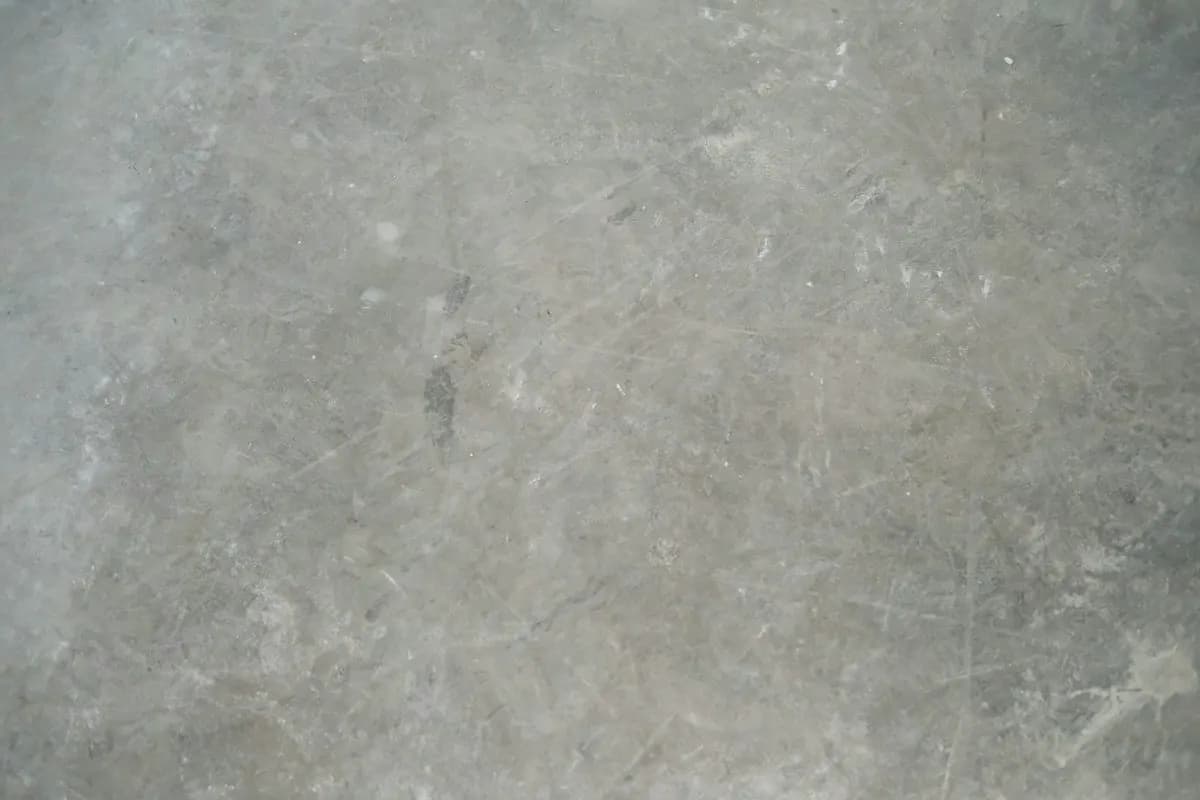
Living areas usually suit a densified satin or Level 3 polish in cream or salt-and-pepper, with a dye if the slab color is uneven, and a guard if food and drink are common. Basements benefit from polishing's tolerance of vapor, since there is no film to blister, and many are still bare: our analysis of the federal government's 2024 household survey found 41.1% of basement homes report an unfinished basement; a satin finish hides the dust that basements accumulate. Kitchens need a guard and attention to wet slip resistance near the sink.
Garages divide owners, and there are many: the same survey found 42.9% of homes have an attached garage, and 53.0% of owner-occupied attached-garage homes report a slab foundation. A densified honed floor with a guard handles tire traffic and is easy to clean, but deep oil staining will show. Owners with badly stained garage slabs often prefer a coating, which the polished versus epoxy comparison explains. For outdoor slabs, polishing is uncommon; acid stain or penetrating sealer is the usual route. The finish quiz is a quick way to test whether the right combination for your room is clear yet.
Shine and slip resistance pull in opposite directions when a floor is wet. ANSI A326.3 sets a minimum of 0.42 wet DCOF for level interior floors expected to be walked on wet, with higher thresholds for wet-plus areas and places where oils are present. A dry high-gloss polish is not inherently slippery, but water, grease or dust on the surface changes that quickly.
The main levers are sheen and guard selection. A satin finish generally tests better wet than a mirror polish, and some guards are formulated to improve wet traction. Mats at entries and near sinks matter more than any product. If slip resistance is a priority, ask the contractor whether they can take a wet DCOF reading after the work, and make the target part of the specification rather than a hope.
Homeowner polls
No votes yet. Yours will be the first. · saved on this device
No votes yet. Yours will be the first. · saved on this device
Deeper exposure means more passes; HomeGuide prices cream at $3–$8 and full aggregate at $6–$12 per sq ft.
No votes yet. Yours will be the first. · saved on this device
Yes. Densifying a ground floor hardens it and reduces dusting even if you stop at a flat or satin finish. It is a common choice for utility basements and workshops. The floor will be less reflective than a full polish, and without a guard it will absorb spills more readily, but it is a sound, low-cost improvement over bare concrete.
They reduce contrast but rarely hide a patch. Patching materials absorb color differently from the original concrete, so a patch may take a dye lighter or darker than its surroundings. Acid stains depend on minerals in the concrete and often react weakly with patch materials. A mock-up across a patch is the only way to know how obvious it will be.
Rarely inside a house. A film covers the polished surface you paid for, changes its look, and becomes the part that wears and needs recoating. There are exceptions, such as a heavy-use commercial kitchen or a floor that must resist aggressive chemicals, but for most residential rooms a penetrating guard gives adequate protection without hiding the concrete.
Generally they carry lower odor and fewer volatile compounds than solvent-based versions, which matters in basements and living areas with limited ventilation. Some solvent-based dyes penetrate differently and are preferred for particular looks. Ask for the product data sheets and follow the ventilation guidance they give, and keep children and pets away during application.
HomeGuide gives two to five years, and the range reflects traffic and cleaning habits. Kitchens and entries wear the guard faster than bedrooms. A simple test is whether a drop of water still beads or starts to darken the surface after a minute; darkening suggests it is time to clean, burnish and reapply.
Usually, because the stain is inside the concrete and the sealer can be ground off. Grinding removes the sealer and some stained surface, and deeper grinding for aggregate exposure may remove much of the color. Expect the polished result to look lighter and more varied than the sealed floor did. A small test area shows how much color survives.
Integral color is pigment mixed into concrete before it is placed, so it runs through the full depth. It matters only for new slabs or overlays; you cannot add it to an existing floor. If you are building, integral color gives the most even tone and survives deep grinding, whereas dyes and stains live near the surface.
 Service guideConcrete Polishing
Concrete polishing grinds an existing slab with progressively finer diamond abrasives, hardens it with a densifier and refines it to a specified sheen and aggregate exposure.
 Service guideConcrete Staining & Dyeing
Staining and dyeing add color to a concrete slab by penetrating the surface rather than covering it, so the aggregate, patches and variation remain part of the look.
 Service guideConcrete Sealing & Protection
Sealing and protection treatments defend a concrete floor against stains, moisture and wear, and they range from penetrating silicates and siloxanes that leave the look unchanged to film-forming acrylics, urethanes and epoxies that add gloss and a wear layer.
 PlanningHow to plan a polished concrete floor, starting with the slab you have
Plan a polished concrete floor in this order: uncover and test a small patch of slab, decide what you will accept in patches and cracks, choose a CPC appearance level and aggregate exposure class, ask for a mock-up on your own floor, then write a one-page brief so every contractor prices the same job.
 CostsConcrete floor finishing costs in 2026: polish, stain, grind or seal
Finishing an existing concrete floor costs $1 to $3 per square foot to clean and seal, $2 to $5 to grind and seal, $3 to $12 to polish and $3 to $15 to stain, based on HomeGuide, Stelr and Angi.
 PermitsPermits, codes and rules for polishing and finishing a concrete floor
Polishing, staining or sealing an existing interior slab is finish work that most jurisdictions do not permit, but rules vary locally.
 Free toolPolished concrete cost calculator: a planning range for your square footage
Size, material tier and complexity in, a realistic budget range out.
 Free toolConcrete floor options compared on the numbers
Side-by-side tables for the decisions that change the price most.
 Free toolConcrete finish quiz: can you read a polishing proposal?
9 questions that show what you already know and what to check next.
 Free toolPolls: what other homeowners planning concrete floors decided
See what other planners chose and add your vote.
Tell us the size, the condition of what is there now, and what you want to change. Concrete Finish Notes passes your request to independent local professionals, who reply with written, no-obligation estimates. The service is free to use.