What is on the slab right now?
No votes yet. Yours will be the first. · saved on this device
Loading...
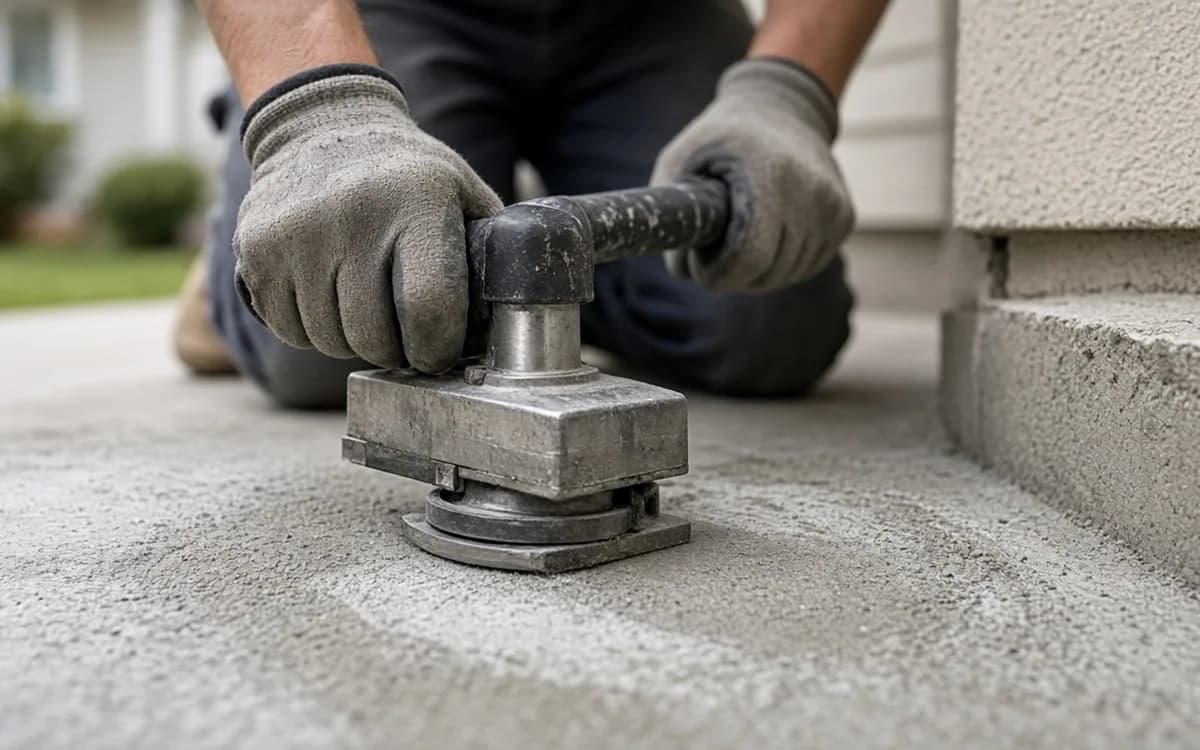
Concrete Finish Notes · Concrete Grinding & Leveling cost guide
Each grinding pass costs $3 to $5 per square foot in HomeAdvisor's 2026 guide, and HomeGuide puts concrete leveling at $3 to $12 per square foot or $700 to $5,000 per project. Self-leveling overlays run $2 to $5, mudjacking $4 to $9 and foam lifting $8 to $25 per square foot. Coating removal and basement access push costs up.
Grinding and leveling are often the hidden part of a concrete floor budget. They prepare the slab for polishing, staining, sealing or a coating, and the amount needed depends on what is on the floor now and how flat it is. A clean, flat slab needs a light grind; a floor with thick adhesive, old epoxy or sunken sections can need more work than the finish itself.
This page explains how grinding and leveling are priced, what drives the number of passes, how overlays and lifting compare, and how to plan a budget when the slab's condition is uncertain. Because the slab's condition is often uncertain until work starts, it also covers how to structure a bid so surprises are priced fairly rather than argued about on the day the crew finds them.
| Item | Low | High | Unit | Notes |
|---|---|---|---|---|
| Grinding pass (coating removal or prep) | $3 | $5 | per sq ft | HomeAdvisor; per pass |
| Self-leveling overlay | $2 | $5 | per sq ft | HomeGuide 2025; overlay area only |
| Mudjacking | $4 | $9 | per sq ft | HomeGuide 2025 |
| Polyurethane foam jacking | $8 | $25 | per sq ft | HomeGuide 2025 |
| Leveling minimum job fee | $300 | $700 | flat | HomeGuide 2025 |
| Basement access premium | $10 | $30 | percent | HomeGuide 2026 |
HomeAdvisor gives $3–$5 per sq ft for each additional grinding pass. The number of passes depends on the goal. Preparing a surface for a coating needs enough grinding to reach a specified profile. Removing a thin sealer might take one pass; removing thick epoxy or mastic can take several with coarse tooling. Ask the contractor to test a small area before bidding so the pass estimate rests on your floor rather than a guess.
Coatings and overlays specify the surface texture they need, measured on ICRI's CSP 1–10 scale. Thin sealers want a low profile, while thick overlays need a rougher one. Ask the contractor which profile they will deliver and how many passes that takes on your slab. Grinding rougher than needed wastes passes, and grinding too smooth can make a coating fail, so the number matters.
HomeGuide's leveling guide places concrete leveling at $3–$12 per sq ft. Within that, self-leveling overlays for interior floors run $2 to $5 per square foot for the overlay area, mudjacking runs $4 to $9, and polyurethane foam lifting runs $8 to $25. Minimum job fees of $300 to $700 apply. For small repairs the per-project figure matters more than the per-foot one, because minimums often apply.
The method depends on the problem. Low spots and undulation in a sound slab are filled with an overlay or patching compound. Sunken or tilted slabs are lifted with mudjacking or foam. The lifting comparison explains when each makes sense. Getting the diagnosis right matters more than the method: a slab lifted without fixing the cause may sink again, and an overlay over a moving slab will crack.
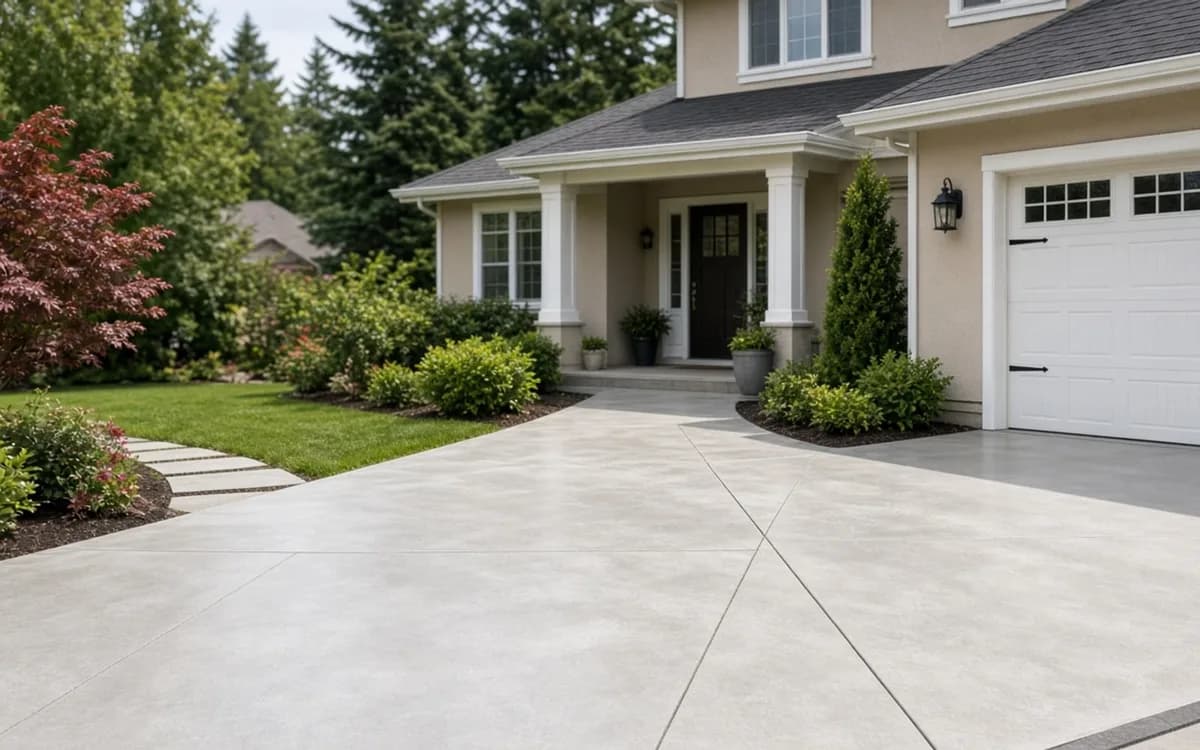
Coatings and adhesives are the main factor. Thick epoxy, rubbery mastic and thinset clog diamonds and slow progress. Removing them often calls for specialized tooling. Hard concrete grinds slowly; soft concrete grinds fast but may need more densifier later. Uneven floors need more passes to bring high spots down. A contractor who tests a patch before bidding can estimate this far more accurately.
Access matters too. HomeGuide notes a +10% to 30% premium for basements. Edges, stairs and tight spaces require hand grinding. Labor, at HomeGuide's $40–$100 per hour, is the main cost. Stairs, narrow doors and low ceilings slow the work, and heavy equipment may need to be broken down to fit. Upper-floor slabs raise weight and dust questions. Mention every access limit in your request so the bid reflects it.
Grinding itself is usually quick, a day or two for most residential floors. Overlays need curing time before polishing, coating or flooring, and patches need to cure before grinding over them. If an overlay will be polished, the cure time may be longer. Coordinate schedules to avoid paying for return visits.
Lifting with foam is fast; mudjacking slurry needs some time to set. Either way, hole patches need time before grinding or polishing. Planning the sequence reduces the risk of rushed work or extra mobilization fees. If lifting and finishing are separate contracts, agree the gap between them in writing so neither contractor is blamed for problems caused by rushing.
Grinding reveals the slab, and what it reveals can change the budget. Unfinished basements, 41.1% of basement homes by our analysis of the same survey, are common places for surprises because their slabs have often gone decades without a finish. Old adhesive may turn out thicker than a test patch suggested. A tile floor may hide a second layer or an old leveling compound that does not grind cleanly. Cracks that looked hairline can open wider once loose material is removed, and trenches from earlier plumbing work may need patching before any finish goes down.
Contractors handle these surprises differently. Some price contingencies per square foot or per linear foot of crack in advance; others quote a time-and-materials rate for extra work. Neither is wrong, but you should know which one you are signing. Ask for unit prices for extra passes, crack repair and patching so any change order has an agreed basis rather than a number invented on the day.
National guides do not publish regional multipliers for grinding or leveling, so the differences you see come mainly from local labor rates and contractor availability. HomeGuide's polishing labor range of $40–$100 per hour is a reasonable proxy, since the same crews and equipment do this preparation work. Metros with plenty of commercial flooring tend to have more grinding contractors and keener pricing for residential jobs.
Housing stock matters too. Our analysis of the federal government's 2024 household survey shows 58% of Midwest homes sit over a basement against 29.5% nationally, so basement access premiums show up more often there, while slab-on-grade homes, 32.4% nationally, are more common in the South. The 2026 cost guide covers regional factors across all four services and explains how to compare local bids.
Remove carpet and tack strips yourself, and clear the room. If only part of the floor needs leveling, confine overlays to those areas. For slabs that will be covered with other flooring, a standard underlayment is cheaper than a polishable overlay. HomeGuide prices self-leveling overlays at $2 to $5 per square foot, so confining them saves. Grouping grinding with the finish work in one mobilization also saves setup costs, since the same equipment serves both.
Do not skip moisture testing before a coating or overlay, and do not accept a vague scope. ICRI's surface profile scale runs CSP 1–10, and a scope naming both the target profile and a moisture test is cheap protection. Grinding and leveling are where cheap bids most often cut corners, with results that show later as peeling coatings or uneven finishes. The grinding and leveling service page describes a complete scope. A clear scope protects you from change orders later.
| Example | Scope | Planning range |
|---|---|---|
| 400 sq ft room, thin sealer removal | One pass | $1,200–$2,000 |
| 600 sq ft basement, epoxy removal | Two to three passes plus access | $3,600–$9,000 before access |
| 200 sq ft low area, overlay | Self-leveling overlay | $400–$1,000 plus minimum fees |
| Garage slab lift, foam | Around 200 sq ft | $1,600–$5,000 |
Look for the number of passes and grit sequence, the target surface profile, how coatings and adhesives will be removed, dust control, and how patches, cracks and joints will be treated. For leveling, check the product, the area covered, the depth, and cure time. For lifting, check the method, hole count and size, and patching.
Compare scopes before totals. A bid that assumes one pass when your floor has thick mastic will grow later. Request estimates through the estimate request form with photos of existing coverings so bidders understand the job. Photos of the adhesive, coating edges and any cracks help bidders estimate passes accurately and reduce disputes once work begins.
By the numbers
Planning figures from published U.S. sources; every card links to where the number came from.
$3–$5 per sq ft
Each additional grinding pass for a higher shine adds $3 to $5 per square foot
HomeAdvisor's explanation of why gloss level drives price: more passes with finer diamonds cost more labor and tooling.
HomeAdvisor polished concrete floor cost guide (2026)$3–$12 per sq ft
Concrete leveling costs $3 to $12 per sq ft, or $700 to $5,000 per project
HomeGuide's November 2025 guide: self-leveling overlays for interior floors run $2–$5 per sq ft, mudjacking $4–$9, and polyurethane foam jacking $8–$25, with $300–$700 minimum job fees.
HomeGuide concrete leveling cost guide (2025)CSP 1–10
ICRI Guideline 310.2R defines ten concrete surface profiles for sealers, coatings and overlays
ICRI's guideline runs from CSP 1 (minimal roughness) to CSP 10; its worked example targets CSP 3–5 after removing an old sealer. Grinding contractors should state the profile they will deliver for any coating or overlay that follows.
ICRI Concrete Repair Bulletin, introduction to Guideline 310.2R-2013 (2014)+10% to 30%
Polishing in hard-to-reach basements can cost 10% to 30% more
HomeGuide attributes the premium to moving heavy planetary grinders into spaces with limited access and to more hand-grinding around obstructions.
HomeGuide polished concrete floor cost guide (2026)The calculator uses the same concrete polishing benchmarks as this guide. Set the size and tier, then request a written estimate to check it against a real proposal.
Homeowner polls
No votes yet. Yours will be the first. · saved on this device
Older slabs often have thinner sections, unknown mixes and more patches, all of which show after grinding.
No votes yet. Yours will be the first. · saved on this device
It depends on thickness and type. Thin coatings may come off in one or two passes; thick, multi-coat systems can take several with coarse tooling. At HomeAdvisor's per-pass rate, removal can add meaningfully to the budget, so ask for an estimate of passes after the contractor tests a small area.
If the floor needs it, yes. Grinding follows the existing surface and will not remove significant dips or slopes. Low spots are filled or overlays applied first, then allowed to cure. The patched areas will look different when polished, so include them in the mock-up.
Setup costs are the same whether the job is large or small. Equipment, material mixing and travel make small jobs unprofitable without a minimum. HomeGuide lists minimum fees of $300 to $700 for leveling work. On a small patch, ask whether the contractor can combine it with other work to spread the fee.
Generally yes. Polishable overlays use specialized mixes designed to be ground and polished like concrete, and they need careful placement. Standard self-leveling underlayments are cheaper but are meant to go under other flooring. If the floor will be polished, confirm the overlay is rated for it and see a sample, since it will look different from the original slab.
It removes surface staining, but oil that has soaked deep may remain as a darker area. Degreasing and poultices help before grinding. If staining is extensive, a coating may be the more cost-effective finish. A mock-up in the worst spot shows what will remain.
Not necessarily. Dry grinding with dust extraction is common indoors and avoids slurry cleanup. Wet grinding controls dust but creates slurry that must be collected and disposed of. The method affects cleanup and scheduling more than price. Ask which method the contractor uses and how waste is handled.
Rarely for small areas. Replacement involves demolition, disposal, new concrete and curing, and sometimes permits. It makes sense when the slab is badly broken or needs plumbing changes underneath. For most sunken or uneven slabs, lifting or overlays cost less.
 Concrete Polishing · Cost guideConcrete polishing cost in 2026: per-foot ranges and sample budgets
Polishing an existing concrete floor costs $3 to $12 per square foot in Angi's 2026 guide, and HomeGuide's figures run from about $3 for a matte cream finish to $15 for high gloss with full aggregate.
 Concrete Staining & Dyeing · Cost guideWhat it costs to stain or dye a concrete floor in 2026
Staining an existing concrete floor runs $3 to $15 per square foot in HomeGuide's 2026 guide, with acid stain up to $25 for high-end designs.
 Concrete Sealing & Protection · Cost guideWhat sealing and protecting a concrete floor costs in 2026
Cleaning and sealing concrete costs $1 to $3 per square foot in HomeGuide's guide, with urethane, epoxy and polyaspartic sealers up to three times that.
 Service guideConcrete Grinding & Leveling
Grinding uses coarse diamond tooling to remove coatings, adhesives, lips and high spots and to open a surface profile for whatever finish follows.
Service guideConcrete PolishingConcrete polishing grinds an existing slab with progressively finer diamond abrasives, hardens it with a densifier and refines it to a specified sheen and aggregate exposure.
Service guideConcrete Sealing & ProtectionSealing and protection treatments defend a concrete floor against stains, moisture and wear, and they range from penetrating silicates and siloxanes that leave the look unchanged to film-forming acrylics, urethanes and epoxies that add gloss and a wear layer.
 Free toolPolished concrete cost calculator: a planning range for your square footage
Size, material tier and complexity in, a realistic budget range out.
 Free toolConcrete floor options compared on the numbers
Side-by-side tables for the decisions that change the price most.
 Free toolConcrete finish quiz: can you read a polishing proposal?
9 questions that show what you already know and what to check next.
 Free toolPolls: what other homeowners planning concrete floors decided
See what other planners chose and add your vote.
Tell us the size, the condition of what is there now, and what you want to change. Concrete Finish Notes passes your request to independent local professionals, who reply with written, no-obligation estimates. The service is free to use.