What is on the slab right now?
No votes yet. Yours will be the first. · saved on this device
Loading...
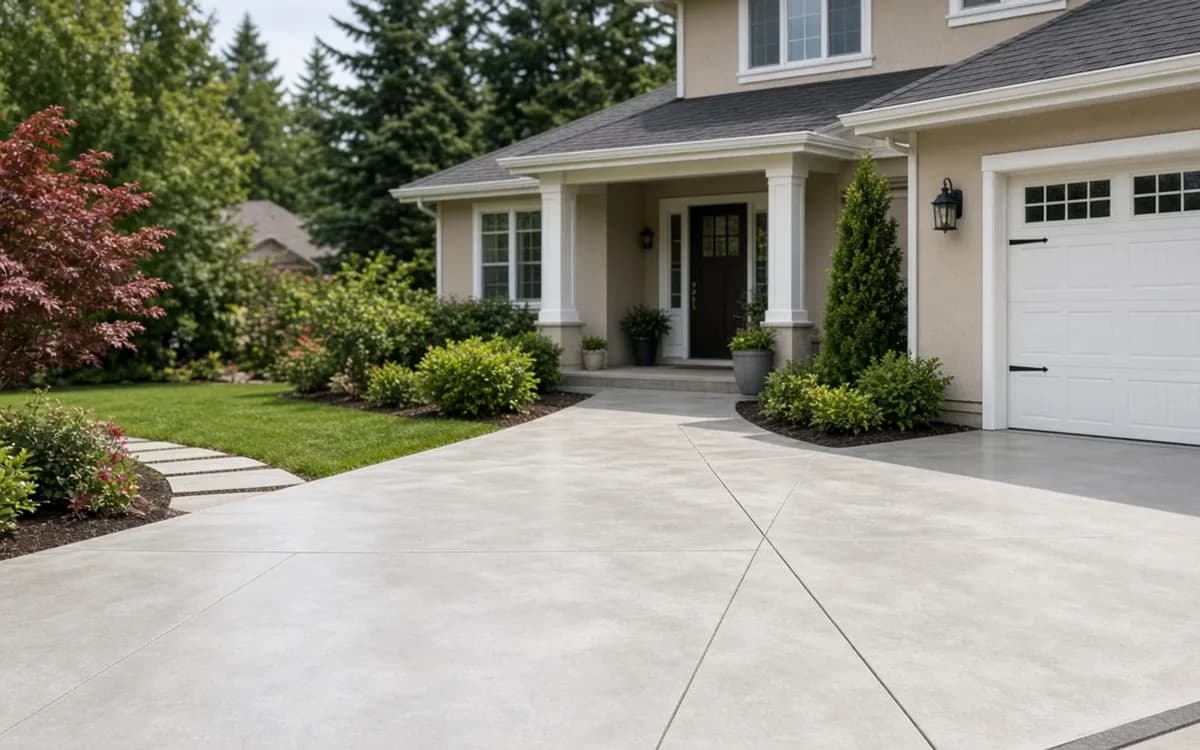
Concrete Finish Notes · Service guide
Grinding uses coarse diamond tooling to remove coatings, adhesives, lips and high spots and to open a surface profile for whatever finish follows. Leveling corrects low spots and settled slabs with overlays or by lifting them. HomeGuide prices leveling at $3 to $12 per square foot. Both suit owners with a defined surface problem, not owners hoping to cure structural movement by cutting the slab.
Grinding is the beginning of every polishing job and the whole of many preparation jobs, and the difference between the two is the target. A grinder can remove a failed epoxy, flatten a lip at a saw cut, take off carpet adhesive, or open a profile for a new coating, but it can only remove material. Low spots, settled corners and heaved joints need something added or moved, which is leveling, and leveling has its own methods and prices.
The numbers are simple once the method is named. HomeGuide's November 2025 guide prices leveling at $3–$12 per sq ft, with self-leveling overlays at $2 to $5 per square foot, mudjacking at $4 to $9 and polyurethane foam jacking at $8 to $25. Grinding as a stand-alone service is priced like the first passes of a polish, and HomeAdvisor's $3–$5 per sq ft per pass is a fair way to think about it.
This page explains what grinding can and cannot fix, how to write a tolerance into a proposal, what the profile number means when a coating or overlay follows, and how to tell a slab that needs leveling from one that needs a structural engineer. Read it with the polishing page when grinding is step one of a finish.
Want the numbers only? Read the concrete grinding & leveling cost guide for 2026 ranges, what moves the price, and sample budgets.
| Item | Low | High | Unit | Notes |
|---|---|---|---|---|
| Grinding pass (coating removal or prep) | $3 | $5 | per sq ft | HomeAdvisor; per pass |
| Self-leveling overlay | $2 | $5 | per sq ft | HomeGuide 2025; overlay area only |
| Mudjacking | $4 | $9 | per sq ft | HomeGuide 2025 |
| Polyurethane foam jacking | $8 | $25 | per sq ft | HomeGuide 2025 |
| Leveling minimum job fee | $300 | $700 | flat | HomeGuide 2025 |
| Basement access premium | $10 | $30 | percent | HomeGuide 2026 |
Grinding solves surface problems: old coatings, paint, sealers, mastic and carpet adhesive; trowel ridges and lips at joints or between pours; rain-damaged or scaled surfaces; laitance on a new slab; and a profile that is too smooth for a coating to bond. It also delivers the exposure classes on the CPC chart, 85–95% / 80–90%, because reaching Class B or C is a matter of how much surface is removed. Mordor Intelligence puts renovation of existing slabs at 42.72% of polished concrete work, and almost every one of those jobs starts with a grinder.
Grinding does not solve settlement, heave, curling that is still moving, or cracks with a cause underneath. A lip at a crack can be ground flat, and if the slab is still settling, the lip returns. A heaved joint from expansive soil or frost can be cut down, and it rises again. A pro who defines what the grinder will address and names what needs another method has done the job correctly.
Ask for that list in writing before work begins. It should name each crack, lip, low spot and contaminated area, state which will be ground, which will be filled, which will be leveled and which are outside the scope. The services overview shows how each of those items maps to a service, and the estimate request should include photos of every one of them.
Flatness is specified two ways in the trade. For new slabs, ACI 117 uses F-numbers measured on the fresh floor; for existing slabs being ground, the practical language is a gap under a straightedge, typically a 10-foot straightedge with a stated maximum gap such as 1/8 or 3/16 inch. Grinding can bring high spots down to that tolerance; it cannot bring low spots up, so a slab with both needs grinding plus a self-leveling overlay, or acceptance of the low areas.
Decide what the tolerance is for. A polished floor in a living room tolerates gentle undulation that the eye never sees; a floor receiving large-format tile or a thin coating tolerates very little. Tell the pro what finish follows so the tolerance and the profile fit it. Homes over a basement are 29.5% of U.S. households by our analysis of the federal government's 2024 household survey, and old basement slabs are the ones most likely to have both settled corners and lips, so a tolerance that names both is the honest one.
Expect the proposal to describe the grinder, the tooling, the number of passes and the extraction. Expect a walk-through with a straightedge before and after. Expect that a slab which cannot meet the tolerance by grinding alone will be priced with an overlay, and expect that price to be per square foot of overlay area, not the whole floor.
| Method | Fixes | Typical cost | Limits |
|---|---|---|---|
| Diamond grinding | Coatings, lips, high spots, profile | $3–$5 per pass per sq ft (HomeAdvisor) | Cannot raise low spots or stop movement |
| Self-leveling overlay | Low spots, undulation, worn surfaces | $2–$5 per sq ft (HomeGuide) | Adds thickness; needs a primer and a sound base |
| Mudjacking | Settled slabs, sunken sections | $4–$9 per sq ft (HomeGuide) | Heavy slurry; large injection holes; can resettle |
| Polyurethane foam jacking | Settled slabs, voids under slab | $8–$25 per sq ft (HomeGuide) | Higher cost; needs a specialist |
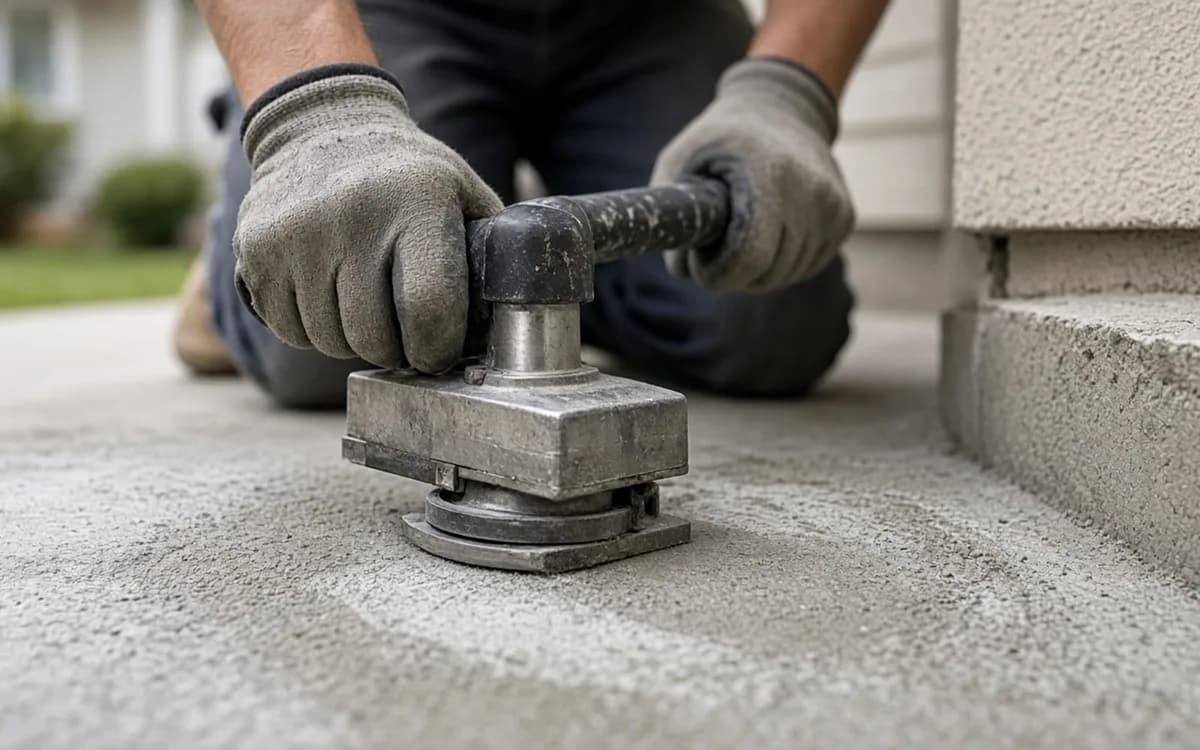
When a coating, an overlay or a sealer follows the grinding, the surface needs a texture that product can bond to, and the industry describes that texture as a Concrete Surface Profile. ICRI Guideline 310.2R defines CSP 1–10, from CSP 1, a near-smooth surface, up to CSP 10, a heavily roughened one. Thin sealers want a low profile; thick epoxies and overlays want CSP 3 to 5 or more, and ICRI's worked example targets CSP 3 to 5 after removing an old sealer.
Ask the coating or overlay manufacturer what profile the product needs, then ask the grinding pro to deliver it and say how it will be checked, usually against a set of rubber comparator chips. A profile that is too smooth is the leading cause of coating failure; one that is too rough telegraphs through thin products. The sealing page explains which products want which profile, and the comparison of polished concrete and epoxy shows why profile matters so much more for a coating than for a polish.
Grinding cost is passes and removal. Taking off a thin sealer is one coarse pass; removing a thick epoxy with a mesh reinforcement or a rubbery adhesive can be three or four passes with aggressive tooling and slow progress. The $3–$5 per sq ft figure per pass is the planning unit. Edges and stairs are hand work at a much slower rate. Basements add +10% to 30% per HomeGuide because the equipment is heavy and the obstructions are many.
Leveling cost is method and area. HomeGuide's $3–$12 per sq ft range hides the spread: a 100-square-foot overlay over a dished area of a basement might be a few hundred dollars plus a minimum fee, while lifting a settled 400-square-foot garage slab by foam is a four-figure job. Minimum job fees of $300 to $700 apply to small leveling work, and HomeGuide's small-job premium of $8–$15+ vs $3–$6 for polishing applies to grinding for the same reason: mobilization.
The calculator on this site models polishing; for grinding-only or leveling-only work ask each pro for a per-square-foot rate by method and a separate line for removal, edges, minimum fees and disposal of slurry or debris. Disposal is often forgotten and can be a few hundred dollars for a wet-ground floor.
A planetary grinder with three or four heads runs coarse metal-bond diamonds across the floor, with a vacuum extractor pulling dust through a HEPA filter for dry grinding or a water feed producing slurry for wet grinding. Coatings may be removed with polycrystalline diamond tooling or by scraping first. Hand grinders work edges and corners. For leveling, a primer goes down and a self-leveling compound is poured and spread, or holes are drilled and slurry or foam is pumped under the slab until it rises to grade.
Silica dust is the health issue. OSHA's respirable crystalline silica rule applies to any contractor grinding concrete, and it means engineered controls such as shrouded tools with extraction or water suppression, not just a dust mask. Ask the pro how they comply and what filtration their extractors use. Mordor Intelligence reports dry methods as 58% of polishing work, and the extraction on those systems is what makes dry grinding acceptable in an occupied house.
Timing is short. A day of grinding covers a large residential floor; overlays need a day to pour and a day or two to cure before a finish goes on; jacking is usually done in a day with immediate use. HomeGuide's 2–4 days for polishing includes the grinding passes, so grinding alone is the shorter end of that range.
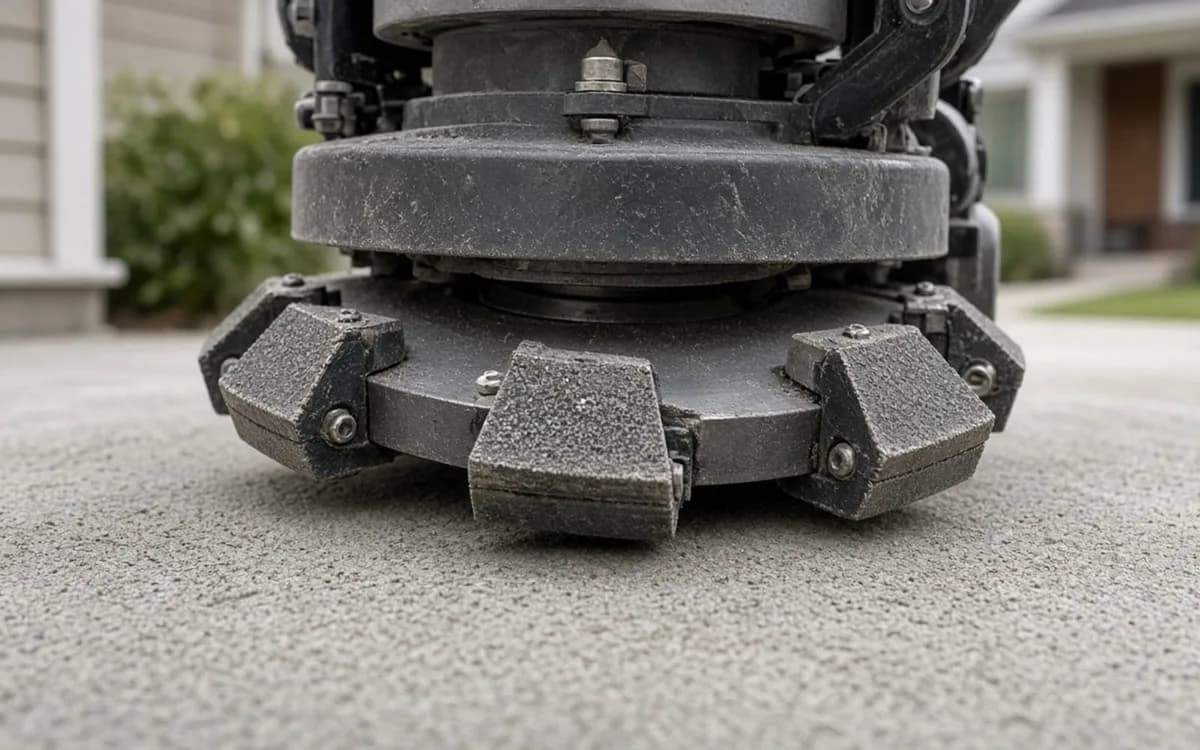
Over-grinding at high spots leaves dished areas and exposes aggregate unevenly, which shows badly if the floor is later polished. Under-grinding leaves adhesive ghosts that block stain and coatings. Grinding through a thin slab or an old topping can expose the base beneath. Each of these is a process problem, preventable by an assessment that measures slab thickness and by a pro who stops and reports rather than chasing a spot.
Slab problems look different. A crack with one side higher than the other, a corner that drops away from the wall, a joint that has lifted, efflorescence and damp patches, and a hollow sound under a tapped section all point to movement, voids or moisture. The same analysis puts unfinished basements at 41.1% of basement homes, and many of those slabs were placed without vapor retarders on unprepared fill. Grinding these slabs is fine; expecting grinding to fix them is not. Ask the pro to identify each condition that needs leveling, repair or an engineer before agreeing to any grinding as a solution.
Yes, mostly through what is under the slab. Expansive clay in the South and the plains heaves and shrinks with moisture, producing joints that rise and corners that drop. Frost in the Northeast and Midwest lifts unheated garage and porch slabs. Basements are 58% of Midwest homes per EIA, and old basement slabs are thin, often unreinforced, and easy to grind through. Slab-on-grade homes in the South and West, at 43% and 39% of housing, are more likely to need coating removal than lifting.
Moisture is the other regional variable. Humid climates and slabs without vapor retarders push moisture up through the concrete, which lifts coatings and causes efflorescence but does not affect a polished or penetrating-sealed floor as much. Tell the pro what the slab will receive so the moisture test fits it; the regional notes cover what local pros expect to find.
Compare the target first: tolerance, profile, and the list of conditions addressed and excluded. HomeGuide prices concrete leveling at $3–$12 per sq ft, and grinding down a lifting joint before it cracks a new finish usually costs far less. Then the method for each condition and its unit price. Then dust control, disposal, edges and minimum fees. Then what follows: is the pro also polishing, sealing or coating, and if not, has the follow-on contractor accepted the profile and tolerance? A grinding job done to the wrong profile for the next trade is a job done twice.
Two bids that name different methods for the same low spot are not comparable until you understand why. Ask the mudjacking bidder about resettlement and the foam bidder about cost, and ask both what they saw under the slab. Then read the reviews guide for how to check whether a pro's leveling work stayed level, and vote in the polls to see what other owners found under their floors.
Homeowner polls
No votes yet. Yours will be the first. · saved on this device
Older slabs often have thinner sections, unknown mixes and more patches, all of which show after grinding.
No votes yet. Yours will be the first. · saved on this device
No votes yet. Yours will be the first. · saved on this device
 Service guideConcrete Polishing
Concrete polishing grinds an existing slab with progressively finer diamond abrasives, hardens it with a densifier and refines it to a specified sheen and aggregate exposure.
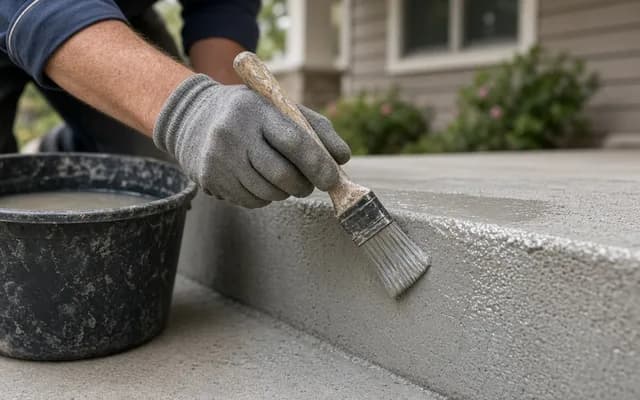 Service guideConcrete Sealing & Protection
Sealing and protection treatments defend a concrete floor against stains, moisture and wear, and they range from penetrating silicates and siloxanes that leave the look unchanged to film-forming acrylics, urethanes and epoxies that add gloss and a wear layer.
 Service guideConcrete Staining & Dyeing
Staining and dyeing add color to a concrete slab by penetrating the surface rather than covering it, so the aggregate, patches and variation remain part of the look.
No. Grinding removes the high side to meet the low side, which thins the slab and exposes aggregate unevenly, and if settlement continues the step returns. A settled slab needs lifting by mudjacking or foam, or an overlay over the low area, and the cause, usually washed-out or poorly compacted fill, should be understood first. Grinding is for lips and high spots, not for slabs that have moved.
Residential slabs are typically 3.5 to 4 inches; older basements can be 2 inches or less, and toppings over structural slabs can be under an inch. Grinding removes about 1/16 to 1/8 inch per aggressive pass. A pro should check thickness at a saw cut, a drain or a core before grinding deeply, and an existing topping or a thin slab may rule out a full aggregate exposure. Ask what the assessment found.
It removes the surface where oil sits, but oil that has soaked deep into a garage slab will remain as a darker area after grinding and will show through a polish or a stain. Degreasing before grinding helps; a poultice can draw some oil out; a coating hides it. If the stain matters to you, ask for a test grind in the worst spot before deciding on the finish.
It is the texture of the ground surface, described on ICRI's CSP 1 to 10 scale. Coatings and overlays need a specific roughness to bond; too smooth and they peel, too rough and they telegraph. The manufacturer states the profile in its data sheet, and the grinding pro delivers it and checks it against comparator chips. Asking for it in writing protects you if the coating fails.
Either works when done properly. Dry grinding with HEPA extraction is faster, cleaner to finish and the standard for polishing; it depends on the extraction being good. Wet grinding suppresses dust completely but produces slurry that must be contained, vacuumed and disposed of, and it can push water into cracks. In an occupied house, ask how the pro contains whichever they use.
Only if a polishable overlay is specified. Standard self-levelers are designed to go under flooring and are too soft to polish. Polishable overlays exist and can be ground and polished to a uniform look, which some owners prefer to a patched original slab, at a higher cost. Tell the pro the floor will be polished so the right product is used.
It depends on thickness and bond. A thin, failing coating may come off in a single pass at HomeAdvisor's $3 to $5 per square foot. A thick, well-bonded epoxy with a flake or quartz broadcast can take three or more passes with aggressive tooling and cost several times that. Ask for a test area and a per-pass rate rather than a single number.
 Free toolPolished concrete cost calculator: a planning range for your square footage
Size, material tier and complexity in, a realistic budget range out.
 Free toolConcrete floor options compared on the numbers
Side-by-side tables for the decisions that change the price most.
 Free toolConcrete finish quiz: can you read a polishing proposal?
9 questions that show what you already know and what to check next.
 Free toolPolls: what other homeowners planning concrete floors decided
See what other planners chose and add your vote.
Tell us the size, the condition of what is there now, and what you want to change. Concrete Finish Notes passes your request to independent local professionals, who reply with written, no-obligation estimates. The service is free to use.