Which sheen level are you choosing or did you choose?
CPC defines the levels by Distinctness of Image; HomeGuide prices matte at $3–$6 and high gloss at $6–$15 per sq ft.
No votes yet. Yours will be the first. · saved on this device
Loading...
Concrete Finish Notes · Honed / satin (CPC Level 2) vs High gloss (CPC Level 4)
Honed or satin finishes (CPC Level 2) cost less, hide dust and scuffs, and generally perform better underfoot when wet, which suits most homes. High gloss (CPC Level 4) costs more because it needs extra passes, looks dramatic and reflects light, but shows every footprint and needs more attention to slip resistance. Choose the lowest level that gives you the look you want.
Sheen is the decision that most changes both the price and the character of a polished floor. The same slab can look like soft honed stone or a showroom mirror depending on how many passes the contractor makes. The Concrete Polishing Council defines four appearance levels so that owners and contractors can agree on a measurable target rather than words like 'shiny'.
This page compares the two ends of that scale in real rooms, over time, in different light and climate, and at resale. It closes with the mistakes that most often cause sheen regret and a way to compare bids that describe gloss differently. Most homes land between the two, so the middle level is covered where it matters.
The same polishing process stopped at different points: a honed floor ends at a satin sheen with DOI 10 to 39, hides scuffs and glare and costs less; a high-gloss floor continues through the finest passes to DOI over 70, reflects light dramatically, costs more and shows every mark.
| Factor | Honed / satin (CPC Level 2) | High gloss (CPC Level 4) |
|---|---|---|
| Upfront cost | $3–$6 matte, $4–$8 low sheen (HomeGuide 2026) | $6–$15 (HomeGuide); $8–$15 (Angi) |
| Passes | Roughly 4–5 grinding and polishing passes | 7 or more; each extra pass $3–$5 per sq ft (HomeAdvisor) |
| Specification | DOI 10–39, gloss 5–25 (CPC chart) | DOI 70+, gloss over 50 (CPC chart) |
| Maintenance | Hides scuffs and dust; same cleaning | Shows scuffs, dust and footprints; burnish to restore |
| Slip when wet | Generally better; still test at entries | Can fall below ANSI A326.3 0.42 wet DCOF; guard with grit |
| Appearance | Soft, stone-like, low glare | Mirror reflection, showroom look, more light |
| Best for | Living areas, kitchens, basements, garages, sunlit rooms | Showrooms, low-traffic formal spaces, owners who want the mirror |
Honed wins in most homes. It costs less, needs fewer passes, hides the marks of daily life and rarely raises the slip question. CPC's appearance chart, DOI 0–9 to 70+, makes Level 2 a specified, testable finish rather than a compromise, and sampling it beside Level 3 in the room's light usually settles the question.
High gloss wins where light and drama are the point and traffic is low: a formal entry, a gallery-like living room, a retail floor. Budget HomeGuide's $3–$6 up to $6–$15 top tier, plan for burnishing to keep the reflection, and specify a slip-resistant guard at any entry. Ask the pro for gloss readings at closeout so 'high gloss' means over 50, not 'shiny.'
Honed and satin floors suit busy family spaces, kitchens, basements, garages, homes with pets and rooms with strong daylight. They look calm and stone-like, and they do not advertise every paw print or crumb. A Level 2 finish also forgives the small scuffs that come with furniture and daily life, so it stays looking finished between cleanings. It is also the level most forgiving of the small patches and trowel marks every existing slab carries.
High gloss suits formal rooms, entry halls and spaces where the owner wants the floor to be a feature. It amplifies light and can make a room feel larger, which appeals in basements with limited windows. It also suits owners who are willing to dust-mop often and to burnish traffic paths to keep the mirror. The sheen poll shows how other owners split between the levels. It rewards a slab with consistent color, since reflections exaggerate blotches.
Up front, HomeGuide prices matte to high gloss at $3–$6 up to $6–$15 per square foot, and HomeAdvisor attributes the difference to extra passes at $3–$5 per sq ft each. Angi's July 2026 guide shows the same spread, with matte at $2–$6/square foot, semigloss at $3–$8/square foot and high gloss at $8–$15/square foot. On a 1,000 square foot floor, one or two extra passes add thousands of dollars. That is the largest cost gap between the two options. Deciding the level before bids arrive keeps quotes comparable.
Over time, gloss floors need more attention to stay glossy. Traffic dulls high points first, and restoring them means burnishing with fine pads more often. Guards need renewing on the same two-to-five-year schedule HomeGuide gives for any polished floor. A satin floor dulls less visibly, so it can go longer between touch-ups. Neither needs the recoating a film sealer does, so both remain inexpensive to maintain. Budget a professional burnish every few years for a busy gloss floor.
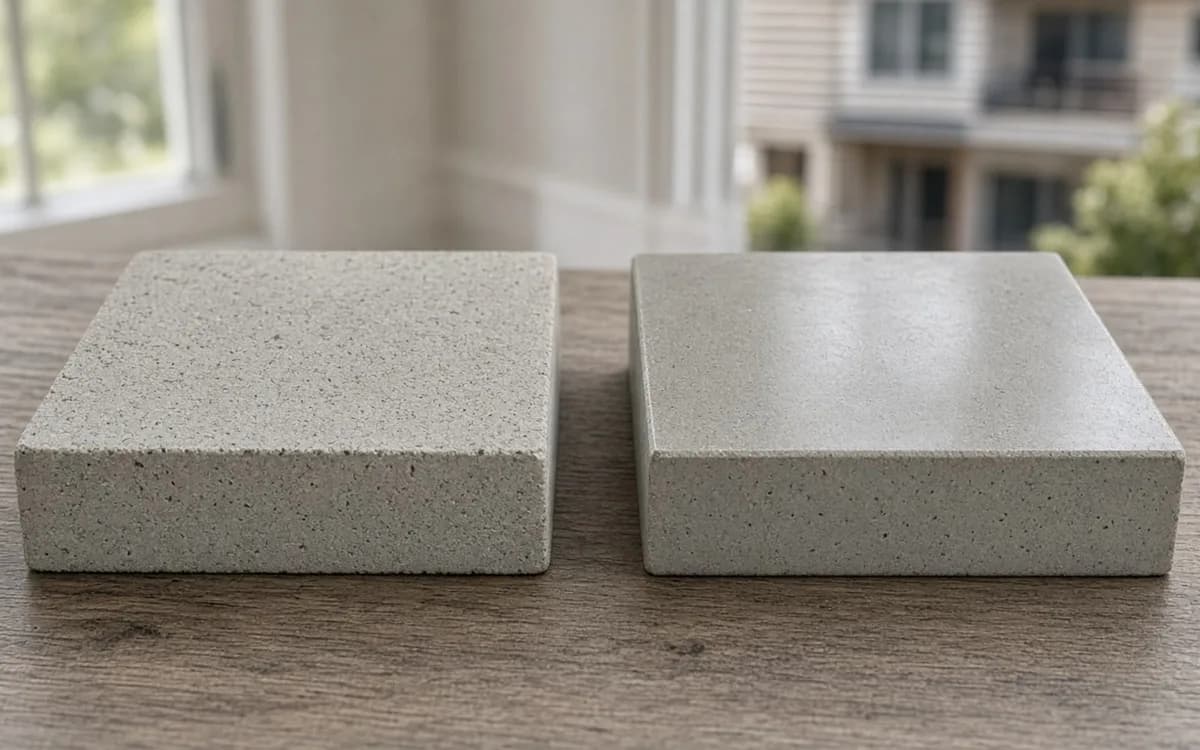
Glare is a real factor. In rooms with big south or west windows, a high-gloss floor reflects sunlight and can be uncomfortable at certain times of day. Satin diffuses light instead. In basements and interior rooms, gloss helps brighten the space. Consider where your light comes from before committing. Morning and evening sun at a low angle is the harshest test, so look at a mock-up at those times if you can.
Wet conditions matter more. ANSI A326.3 sets 0.42 wet DCOF as a minimum for level interior floors walked on wet. High-gloss floors can test below that when wet or dusty, especially at entries in rainy or snowy climates. A satin finish usually tests better. If you want gloss near an entry or sink, ask for a slip-resistant guard and a wet test, and plan for mats. Dust on a dry gloss floor can be nearly as slick as water.
No resale study isolates sheen, so the honest answer is that condition matters more than level. A satin floor in good condition looks natural and hard-wearing. A high-gloss floor in good condition looks striking, but one with dull traffic paths and scratches looks worn. Buyers see the average state of the floor, not the day it was finished. Keeping a gloss floor at its best therefore matters most in the months before listing.
Sheen is also reversible upward and downward. A satin floor can be taken to higher gloss with more passes, and a gloss floor can be honed down. That flexibility means a future owner can adjust the look without starting over. If you are unsure, start at satin; the polishing service can add passes later more easily than you can undo regret. Going down a level later costs a few passes but not a full restart.
The common mistake is choosing gloss from photos of commercial spaces, where lighting, cleaning crews and new slabs flatter the finish. Another is expecting a slab with soft paste or heavy patching to reach Level 4; some concrete will not take a high DOI evenly, and the result is patchy reflection. A mock-up at the intended level answers that before the full job. Ask to see a residential floor at the same level, not only commercial photos.
A third mistake is accepting a floor that is shiny because of a topical product rather than refinement. Some contractors apply a glossy coating to boost sheen, which wears quickly and changes maintenance. The Concrete Polishing Council's chart measures readings before any post-polish treatments are applied, so ask for readings taken on the polished concrete itself. If the sheen fades within weeks, a topical product is the likely cause.

Basements are one of the most common places for a polished floor, and our analysis of the federal government's 2024 household survey shows 29.5% of occupied homes sit over one, with 41.1% of those basements unfinished. A higher gloss can brighten a basement with few windows, but basements also collect dust, and gloss shows it. Many owners settle on Level 3 in the main living space and satin in storage and laundry areas, which keeps both cost and upkeep in check.
Kitchens call for caution with gloss because water, oil and food reach the floor every day. A satin finish with a guard is the practical default near sinks and ranges. Garages suit satin even more strongly: tire marks, grit and water from vehicles make a mirror finish hard to keep and potentially slippery at the apron. The sealing and protection service describes guards suited to these rooms.
Different sheens in different rooms of one house are normal and often look deliberate. Transitions work best at doorways or where the room's use changes, and a mock-up at each level helps you see the contrast before committing. Because a satin floor can be taken higher later, starting lower in doubtful rooms keeps your options open.
Name the level. The CPC chart defines Level 1 through Level 4 by Distinctness of Image, from DOI 0–9 to 70+, with optional gloss targets of <10 to >50 gloss. Ask each contractor which level they are pricing, what final grit they will reach, and whether they will take readings. The Council calls for 3 tests per 1,000 sq ft. Readings give both sides a shared definition of done.
When comparing bids, a higher level with the same number of passes as a lower-level bid deserves questions. So does a price that does not change when you ask for a different level. The calculator lets you see how sheen changes the estimate, and the polishing cost page shows the tiers side by side. A contractor confident in their process will explain the difference without hesitation.
Homeowner polls
CPC defines the levels by Distinctness of Image; HomeGuide prices matte at $3–$6 and high gloss at $6–$15 per sq ft.
No votes yet. Yours will be the first. · saved on this device
ANSI A326.3 sets a 0.42 wet DCOF minimum for level interior floors walked on wet.
No votes yet. Yours will be the first. · saved on this device
Yes. Because polishing is progressive, a Level 2 floor can be brought back and taken through the finer passes to Level 3 or 4 later, at roughly the per-pass cost HomeAdvisor cites. The reverse is also possible by honing down. This makes honed a low-risk starting point for an owner unsure how much shine they want.
It reflects more light, which brightens a room and can make it feel larger, especially in basements. It also reflects windows and fixtures, which some owners find distracting, and it shows dust. A Level 3 floor gets most of the brightness with less glare. Sample both in the room and look at them at night with the lights on.
In everyday use they mean roughly the same thing: a low-to-medium sheen with soft reflection. The Concrete Polishing Council groups them together as Level 2, satin or honed, with a DOI of 10 to 39. Some contractors use honed for the lower end of that range. Asking for the CPC level avoids the ambiguity.
Often yes. CPC Level 3 gives a clear reflection without the maintenance demands of a mirror finish, and HomeGuide's medium-gloss pricing sits between the extremes. Many residential floors land here. It still warrants the same wet-slip precautions near entries and sinks as a higher gloss.
Yes. Dust, hair and footprints stand out against a reflective surface, especially in raking light. Satin floors hide them better. Frequent dust mopping keeps any polished floor looking its best, and grit left on the surface also acts like sandpaper, dulling gloss faster in traffic lanes.
Some settling is normal. High points in traffic lanes dull slightly, and a guard can change the sheen a little as it wears. Regular burnishing with fine pads restores it. A floor that loses gloss dramatically in months may have a topical shine product rather than true refinement.
It can be in rooms with strong windows or overhead lights positioned where reflections reach a television or monitor. Consider the room layout and lighting. A satin finish largely avoids the issue, and rugs under seating areas reduce it on glossier floors.
 ComparisonPolished concrete vs Epoxy coating
Choose polished concrete when the slab is sound, reasonably clean and you are happy to see its character; it lasts decades and needs little upkeep.
 ComparisonAcid stain vs Concrete dye
Acid stain reacts chemically with the slab to create permanent, mottled earth tones and usually needs a sealer.
 ComparisonGrind and seal vs Full polish
Grind and seal smooths the slab with a few passes and relies on a sealer for sheen and protection, so it costs less up front but needs recoating.
 ComparisonMudjacking vs Polyurethane foam jacking
Mudjacking pumps a cement slurry under a sunken slab through larger holes; it costs less per square foot but adds weight and leaves bigger patches.
 Service guideConcrete Polishing
Concrete polishing grinds an existing slab with progressively finer diamond abrasives, hardens it with a densifier and refines it to a specified sheen and aggregate exposure.
 Service guideConcrete Staining & Dyeing
Staining and dyeing add color to a concrete slab by penetrating the surface rather than covering it, so the aggregate, patches and variation remain part of the look.
 Service guideConcrete Grinding & Leveling
Grinding uses coarse diamond tooling to remove coatings, adhesives, lips and high spots and to open a surface profile for whatever finish follows.
 Service guideConcrete Sealing & Protection
Sealing and protection treatments defend a concrete floor against stains, moisture and wear, and they range from penetrating silicates and siloxanes that leave the look unchanged to film-forming acrylics, urethanes and epoxies that add gloss and a wear layer.
 Free toolPolished concrete cost calculator: a planning range for your square footage
Size, material tier and complexity in, a realistic budget range out.
 Free toolConcrete finish quiz: can you read a polishing proposal?
9 questions that show what you already know and what to check next.
 Free toolPolls: what other homeowners planning concrete floors decided
See what other planners chose and add your vote.
Tell us the size, the condition of what is there now, and what you want to change. Concrete Finish Notes passes your request to independent local professionals, who reply with written, no-obligation estimates. The service is free to use.