Are you adding color to the floor?
HomeGuide prices dye at $1–$3 per sq ft and single-color stain at $3–$5.
No votes yet. Yours will be the first. · saved on this device
Loading...
Concrete Finish Notes · Acid stain vs Concrete dye
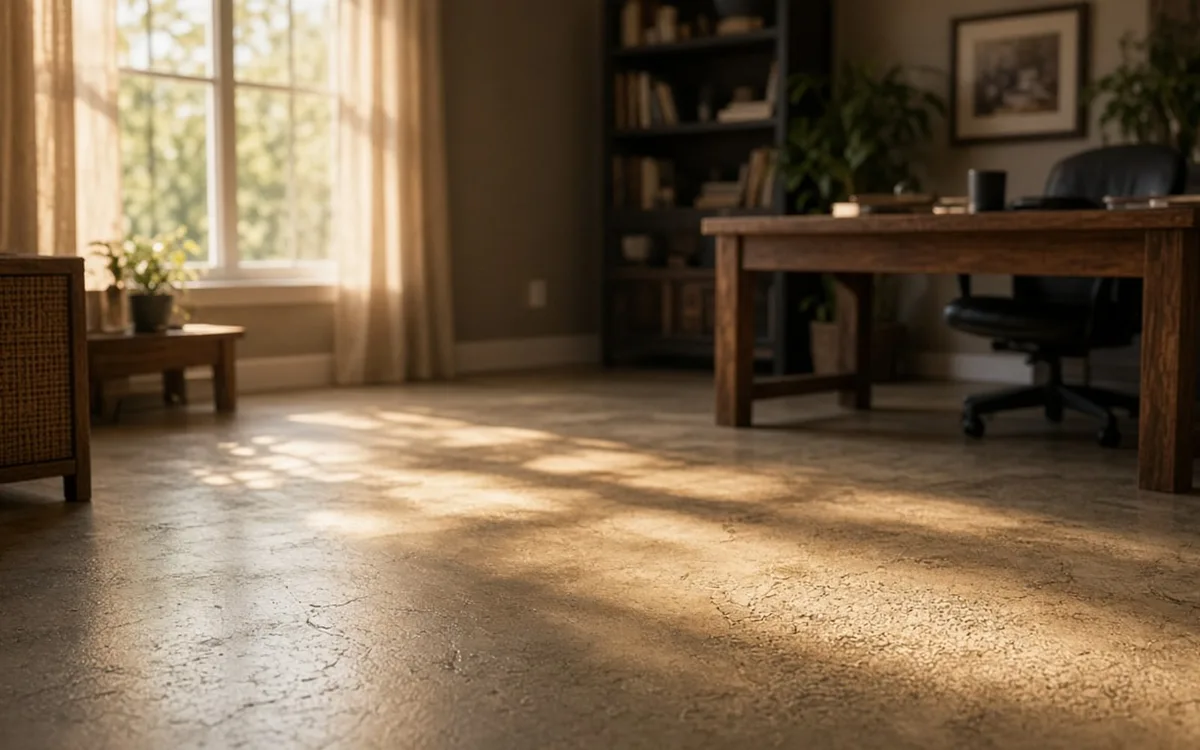
Acid stain reacts chemically with the slab to create permanent, mottled earth tones and usually needs a sealer. Dye is a pigment that penetrates the surface, offers a wider and more predictable palette, and is typically polished over inside a polished floor. Pick acid stain for variegated, natural color on a sealed floor; pick dye for controlled color on a polished one.
Both products put color into concrete rather than on top of it, which is why they are often confused. The difference is how the color forms. Acid stain depends on minerals in the slab and produces results that vary with each floor; dye delivers pigment directly and looks much the same on most slabs. That single distinction explains almost everything else on this page, from palette to maintenance to how well each hides patches.
This page covers where each product works well, what color costs over ten years, how sunlight and moisture affect the result, how each looks to buyers, and the mistakes that most often spoil a colored floor. Pricing comes from HomeGuide and HomeAdvisor, named where it appears. It also explains why the choice is often made for you by whether the floor is being polished at all.
Acid stain reacts with the concrete's minerals to produce mottled, translucent earth tones that are permanent and UV-stable but need a sealer; dye penetrates with pigment in a wide palette and is the standard for color inside a polished floor, protected by the polish itself but sometimes sensitive to sun.
| Factor | Acid stain | Concrete dye |
|---|---|---|
| Upfront cost | $3–$5 single color, to $25 for high-end designs (HomeGuide 2026) | $1–$3 added to a polished floor (HomeGuide 2026) |
| Palette | Earth tones, tans, browns, blue-greens; mottled | Wide, including blues, reds and blacks; more even |
| Lifespan | Permanent color; sealer wears every 1–3 years (acrylic) | As long as the polish; some dyes fade in direct sun |
| Maintenance | Depends on sealer; recoat film products | Same as polished concrete; guard reapplied every 2–5 years |
| Appearance | Variegated, translucent, rustic; varies with slab chemistry | More predictable; still translucent; shows patches |
| Process | Applied, reacted for hours, neutralized, rinsed, sealed | Applied at a mid grit inside the polish, then polished over |
| Best for | Sealed floors, patios, rustic interiors, sunny rooms | Polished interiors, modern palettes, floors that will be repolished |
Dye wins for a polished floor. It goes on inside the sequence, sits under the refined surface, costs HomeGuide's $1–$3 dye; $3–$5 stain and can be re-dyed and repolished where it wears. Choose a UV-stable dye in a sunlit room and confirm the grit stage in the proposal, as the staining page explains.
Acid stain wins for a floor that will be sealed rather than polished, and outdoors. Its color is a chemical change in the concrete and does not fade; the trade-off is a sealer that must be renewed and a palette limited to earth tones. It loses on heavily densified or very old concrete with little free lime, where the reaction is weak, and on any floor where the owner wants a blue, a red or a predictable tone.
Acid stain suits owners who want a floor that looks aged, marbled or leathery, and who accept that the final pattern is partly up to the concrete. It is common on sealed floors in living areas, on patios and in rustic or traditional interiors. Because stain reacts with lime, it takes unevenly across patches and troweling marks, which some owners love and others regret. Expect rooms poured on different days to look a little different from one another.
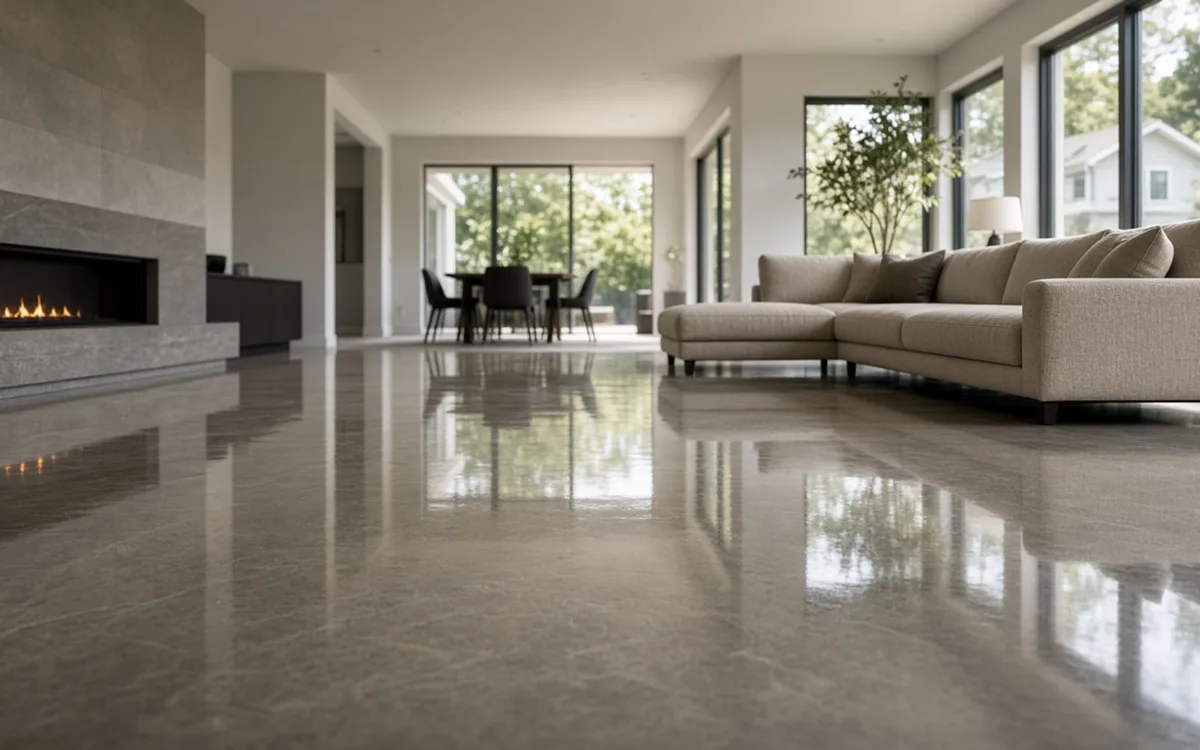
Dye suits owners who want a specific color, a modern look, or a deep tone like charcoal, navy or black that acid stains cannot produce. On a polished floor dye is added partway through the sequence and polished in, so it becomes part of the finished surface. It is also used to even out slabs with patchy natural color before polishing.
Up front, dye is the cheaper add-on. HomeGuide lists $1–$3 dye; $3–$5 stain per square foot for dye and single-color stain on a polished floor. Its dedicated staining guide places stained floors across $3–$15 per sq ft, with two colors, patterns and scoring pushing toward the top. Angi's July 2026 flooring guide shows the same climb, from $2–$6/square foot for simple designs through $5–$8/square foot for moderate to $8–$15/square foot for advanced. HomeAdvisor's staining add-on runs $0.85–$1.60 seal; $2–$10 stain including seal. The gap narrows once preparation is counted, because a stand-alone stain job pays for its own grinding or cleaning.
Over ten years, the protection matters more than the color. Acid stain is usually protected by a film sealer that wears and needs periodic recoating. Dye inside a polished floor is protected by the densified surface and a guard, which HomeGuide says is renewed every two to five years. The color itself lasts in both cases; what you pay for repeatedly is keeping the surface over it intact.
Acid stain is inorganic and very lightfast, so it suits sunrooms and floors near large windows. Some dyes, especially older solvent-based products, fade under strong direct sun; UV-stable formulations exist, so ask for them in bright rooms. Moisture affects the sealer over an acid stain more than the stain itself: a film over a damp slab can whiten, taking the look of the color with it. Basements are common ground for both: our analysis of the federal government's 2024 household survey found 29.5% of homes sit over a basement, and 58.9% of those report it finished. In humid basements, penetrating protection over either color is usually the safer choice.
Traffic wears the top of any floor. On a stained, sealed floor, wear appears in the sealer first as dull paths. On a dyed, polished floor, heavy abrasion slowly removes the surface and the dye within it, but the densified concrete resists that far better than a film. Garages with heavy traffic and salt are hard on both; a guard or sealer renewal schedule is essential. Entry mats and felt pads slow that wear on both.
There is no published resale data for colored concrete, so rely on condition and taste. A strong custom color or a busy stained pattern appeals to fewer buyers than a neutral tone. HomeGuide prices stained garage or basement floors at $5–$25 per sq ft, and color on concrete is a decorating choice that is harder to undo than paint. A dyed polished floor in a gray or warm neutral tends to read as a finished, modern surface. A stained floor with fresh sealer looks rich; one with worn, patchy sealer looks tired.
Reversibility differs too. Dye near the surface can be partly removed or changed by grinding and redyeing. Acid stain penetrates and reacts, so changing it usually means grinding deeper or covering it. If you expect to sell within a few years, choose a color you would accept as neutral, and keep the protective layer in good shape before listing. Changing a stained floor is therefore a bigger job than changing a dyed one.
The biggest mistake is expecting a manufacturer's color chart to match the finished floor. Both methods interact with the slab's own color, and acid stain especially can look quite different on your concrete. A mock-up is the only reliable preview. The second mistake is staining over residue: sealers, curing compounds and adhesive block the reaction and leave pale blotches. Grinding or thorough cleaning must come first. Ask to see the sample dry and sealed, since wet or unsealed color looks nothing like the finished result.
With acid stain, failing to neutralize and rinse properly leaves residue that prevents sealer adhesion and can cause flaking. With dye, applying at the wrong point in the grit sequence can leave the color too shallow or blotchy. Ask how the contractor will prepare, apply and protect the color, and compare their answer to the staining and dyeing service notes.
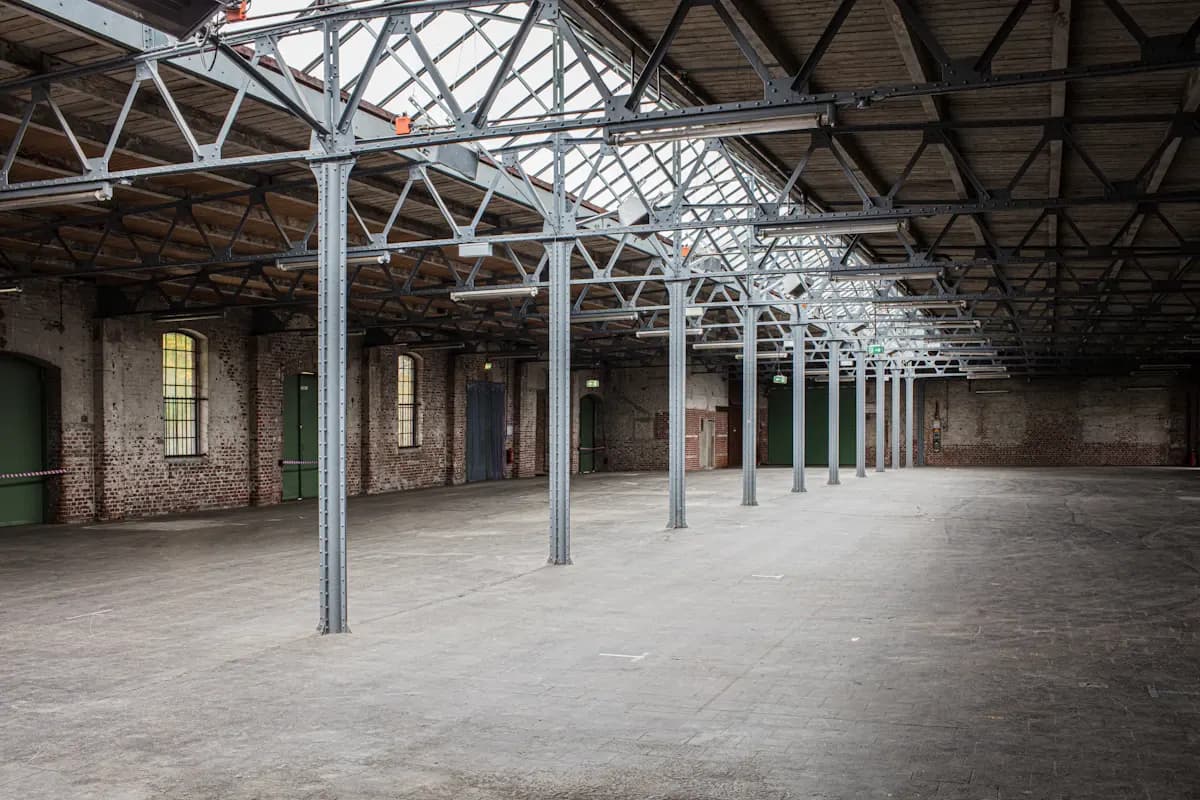
Older slabs carry repairs, and the two methods treat them differently. Acid stain reacts with the lime in cement, so patches made from other materials, and areas where old sealer soaked in, often take stain weakly or not at all. The result can be a pale shape where a wall or appliance once stood. Some owners like the history this shows; others find it distracting, and it cannot be corrected once the reaction is complete.
Dye does not rely on a reaction, so it colors patch materials and original concrete more evenly, though the two still absorb pigment at different rates. On a polished floor, dye applied mid-sequence can visibly reduce the contrast between old and new concrete. The materials guide explains how repair products interact with color, and why a filled crack stays visible as a line under either method.
For a slab with many repairs, the order of work matters. Cracks and patches should be filled and cured before color goes on, and the mock-up should cross at least one repair so you see the real contrast. If the contrast is still too strong, a darker tone or a second dye color often hides more than a lighter one.
Ask each bidder to name the product and color, the number of coats or applications, the surface preparation, when color goes on relative to grinding and polishing, and how it will be protected. For acid stain, confirm neutralizing and rinsing steps and the sealer type and coats. For dye, confirm the densifier and guard and whether the dye is UV-stable.
Then ask for a sample on your slab in the color you intend, including over a patch. Compare the mock-ups rather than the chart swatches. Finally, check whether the price includes resealing or guard renewal, and budget for it if not. The staining cost page shows the ranges your bids should fall within, and the color polls show which methods other owners chose.
Homeowner polls
HomeGuide prices dye at $1–$3 per sq ft and single-color stain at $3–$5.
No votes yet. Yours will be the first. · saved on this device
No votes yet. Yours will be the first. · saved on this device
No votes yet. Yours will be the first. · saved on this device
Yes, and skilled applicators often do: an acid stain for a base of mottled earth tone and a dye for accent color or to even out weak areas. On a polished floor, both must be applied at the right grit and the acid neutralized fully before densifying. The proposal should state the sequence and the sample should show the combination.
Water-based dye. Acid stains are mild acids that need ventilation, neutralizing and careful rinsing, and solvent-based dyes need ventilation too. Water-based dyes have low odor and dry fast. Either way the work area should be sealed off. Ask the pro which product and what ventilation they plan.
No. It needs available lime in the concrete to react, so very old, heavily weathered or previously sealed slabs may take color weakly. Some overlays and patches also react differently. A small test tells you quickly. If the stain barely develops, a dye or a water-based stain that does not rely on a reaction is the usual fallback.
It can, but UV exposure and weather make fading more likely than indoors, and the protective sealer takes a beating. Acid stain or integral color is more common outdoors. If you want a dyed patio, choose a UV-stable product and a durable exterior sealer, and expect to renew the sealer more often than on an indoor floor.
Yes. Stained concrete looks dull and chalky before sealing, and a sealer deepens and saturates the color, sometimes dramatically. That is why a sealed mock-up is a better preview than an unsealed one. Glossy sealers make colors look richer; matte sealers look closer to the raw stain.
Acid stains release fumes during reaction and need good ventilation. Solvent-based dyes carry stronger odors than water-based ones. In occupied homes, many contractors prefer water-based dyes for that reason. Ask for the product data sheet, ventilate well, and keep pets and children away until the area is dry and rinsed.
Yes. Saw-cut lines, stencils and tape masks work with both. Patterns increase labor substantially, and HomeGuide places stenciled or scored designs near the top of its staining range. Keep patterns simple on a first project, and see a sample of the scoring detail before committing to a whole floor.
 ComparisonPolished concrete vs Epoxy coating
Choose polished concrete when the slab is sound, reasonably clean and you are happy to see its character; it lasts decades and needs little upkeep.
 ComparisonHoned / satin (CPC Level 2) vs High gloss (CPC Level 4)
Honed or satin finishes (CPC Level 2) cost less, hide dust and scuffs, and generally perform better underfoot when wet, which suits most homes.
 ComparisonGrind and seal vs Full polish
Grind and seal smooths the slab with a few passes and relies on a sealer for sheen and protection, so it costs less up front but needs recoating.
 ComparisonMudjacking vs Polyurethane foam jacking
Mudjacking pumps a cement slurry under a sunken slab through larger holes; it costs less per square foot but adds weight and leaves bigger patches.
 Service guideConcrete Polishing
Concrete polishing grinds an existing slab with progressively finer diamond abrasives, hardens it with a densifier and refines it to a specified sheen and aggregate exposure.
 Service guideConcrete Staining & Dyeing
Staining and dyeing add color to a concrete slab by penetrating the surface rather than covering it, so the aggregate, patches and variation remain part of the look.
 Service guideConcrete Grinding & Leveling
Grinding uses coarse diamond tooling to remove coatings, adhesives, lips and high spots and to open a surface profile for whatever finish follows.
 Service guideConcrete Sealing & Protection
Sealing and protection treatments defend a concrete floor against stains, moisture and wear, and they range from penetrating silicates and siloxanes that leave the look unchanged to film-forming acrylics, urethanes and epoxies that add gloss and a wear layer.
 Free toolPolished concrete cost calculator: a planning range for your square footage
Size, material tier and complexity in, a realistic budget range out.
 Free toolConcrete finish quiz: can you read a polishing proposal?
9 questions that show what you already know and what to check next.
 Free toolPolls: what other homeowners planning concrete floors decided
See what other planners chose and add your vote.
Tell us the size, the condition of what is there now, and what you want to change. Concrete Finish Notes passes your request to independent local professionals, who reply with written, no-obligation estimates. The service is free to use.